
World-class training for the modern energy industry

Fundamentals of Seismic Processing (G071)

Tutor(s)

Rob Hardy: Director, Tonnta Energy Limited.

Overview

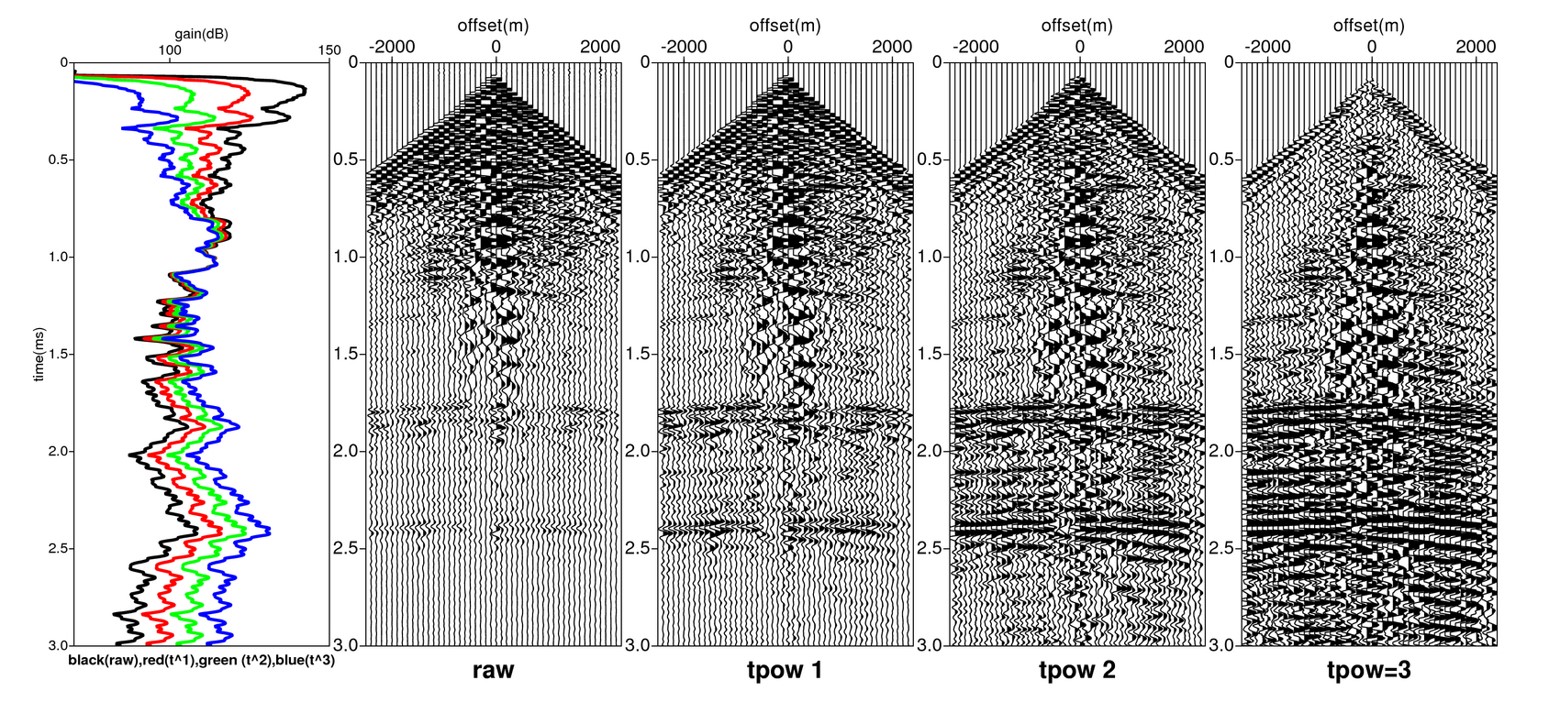
This course will provide participants with fundamentals needed to liaise with specialists and discuss workflows for seismic data acquisition and processing. Using modern case histories and basic theory, the course covers fundamentals, established workflows and advanced technology. Participants will use interactive processing tools to improve their understanding of the latest techniques, learn how to apply them effectively and efficiently to meet their objectives.

Duration and Logistics

Classroom version: A 2-day in-person course, comprising a mix of lectures with examples (90%), laptop-based exercises and discussion (10%). The manual will be provided in digital format and participants will be required to bring a laptop or tablet computer to follow the lectures and exercises.

Virtual version: Four 3-hour interactive online sessions presented over 4 days, comprising lectures, discussion and interactive exercises using case histories to illustrate the basic theory and impact of the techniques discussed. The participants will use a series of web-based software modules to experience the processing options available and learn how to combine the basic tools to build a flow which meets objectives. A digital manual and exercise materials will be distributed to participants before the course. Some reading and several exercises are to be completed by participants off-line.

Level and Audience

Fundamental. This course is aimed at geoscientists who wish to understand the fundamentals of seismic acquisition techniques and processing methods and to aid more effective liaison with specialists. We start from first principles, but it is helpful if participants have a basic knowledge of seismic acquisition and processing terminology and are actively working with seismic data.

Objectives

You will learn to:

  1. Discuss the most common seismic acquisition and processing techniques used in seismic exploration and production, and become more proficient in the terminology used to describe them.
  2. Outline how survey design, earth model building and selection of migration algorithm can affect accuracy of interpretation in depth.
  3. Recognize seismic processing parameter selection for specific objectives, such as amplitude interpretation for exploration and reservoir characterization.
  4. Discuss a typical seismic processing workflow covering data preparation, parameterization, noise and multiple suppression, velocity model building and the imaging process.
  5. Become aware of newer acquisition and processing techniques alongside their potential benefits and pitfalls.

Introduction to Subsurface Pressures (G085)

Tutor(s)

Richard Swarbrick: Manager, Swarbrick GeoPressure.

Overview

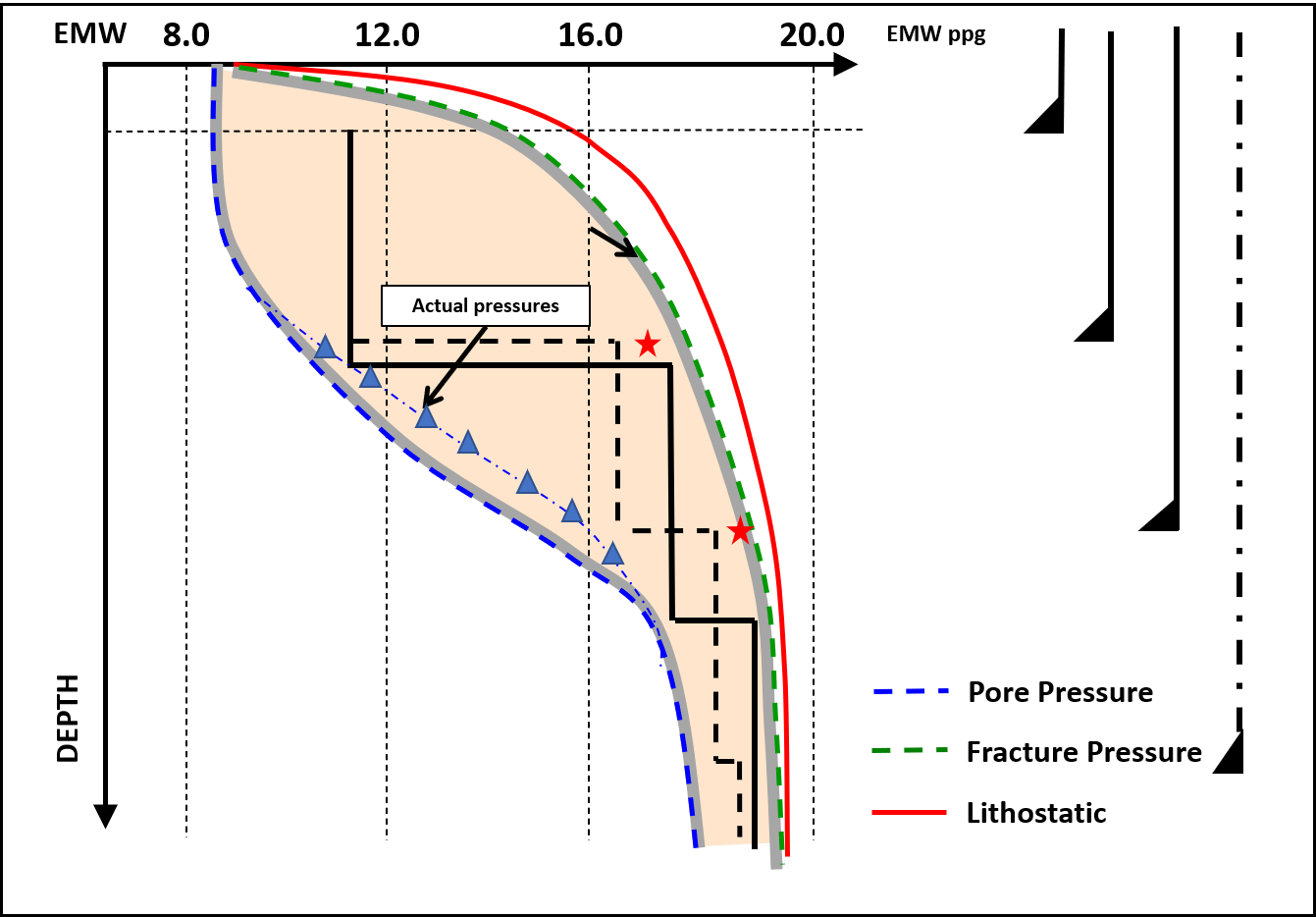
This course introduces attendees to subsurface fracture pressures and fluid pressures, their relevance to subsurface phenomena and assessing risk in deep boreholes. An understanding of pressure is critical for subsurface industries including oil/gas exploitation, carbon sequestration, geothermal energy, waste disposal and hydrogeology, as well as surface aspects such as slope failure. The course teaches the details of what data can be collected and how it can be visualized and interpreted, underpinning more detailed geological and engineering studies.

Duration and Logistics

Classroom version: A 2-day course comprising a mix of lectures, case studies and exercises. The manual will be provided in digital format and participants will be required to bring a laptop or tablet computer to follow the lectures and exercises.

Virtual version: Four 3.5-hour interactive online sessions presented over 4 days. A digital manual and exercise materials will be distributed to participants before the course. The course is rich in exercise material to build up participants’ understanding and confidence in a variety of techniques.

Level and Audience

Fundamental. Intended for all hydrologists, geologists, geophysicists and geomechanical and reservoir engineers. Knowledge of subsurface geology is not required but would be an advantage. Highly relevant to all who are studying the subsurface and especially those engaged in deep drilling and storage.

Objectives

You will learn to:

  1. Understand how fluid pressure and fracture pressure are relevant to subsurface geology.
  2. Evaluate the types of pressure data and measurements possible in the subsurface.
  3. Create plots and maps of pressure data to solve subsurface puzzles (e.g. compartmentalization of reservoirs; distinguishing between hydrodynamic vs hydrostatic flow conditions; and recognition of abnormal pressures).
  4. Appreciate the link between fluid pressure and fracture pressure, and appropriate coupling values.
  5. Recognize how and where pressure data relate to specific events (e.g. slope failure; surface fluid release phenomena; earthquakes and other ground movements).

Prospect Generation, Assessment and Risking (G026)

Tutor(s)

Rene Jonk: Director, ACT-Geo Consulting and Training; Honorary Professor, University of Aberdeen.

Overview

This hands-on course enables attendees to enhance their mapping skills and their critical evaluation of prospects. This course demonstrates how to use play fairway mapping and petroleum system analyses to identify plays and prospects with high potential, even in areas with limited data. Once participants identify prospects, the course outlines how to derive geologically map based, objective inputs for prospect assessment and risking. This stepwise approach creates well-documented results that are used to confidently rank opportunities and make smart business decisions.

Duration and Logistics

Classroom version: 5 days; a mix of classroom lectures and discussion and exercises. The manual will be provided in digital format and participants will be required to bring a laptop or tablet computer to follow the lectures.

Level and Audience

Fundamental. This course is intended for early career geoscientists, reservoir engineers and petrophysicists.

Objectives

You will learn to:

  1. Recall play element definitions and hone mapping skills.
  2. Understand tectonic phases and play types with respect to the history of basin evolution.
  3. Interpret and integrate well and seismic data.
  4. Undertake subsurface mapping of prospects and maturation to drillable status.
  5. Risk and rank prospects.
  6. Identify and assess risks and uncertainties related to geological factors (source, reservoir, seal, trap and preservation).
  7. Evaluate prospect success.

Geology for Non-geologists (G088)

Tutor(s)

Jonathan Evans: Director, GeoLogica; Chair of Trustees, Lyme Regis Museum.

Overview

The aim of this course is to provide an overview of fundamental geological topics in relation to the modern energy industry, including key geological terminology and concepts relevant to understanding and interpreting subsurface geology. Focus will be placed on petroleum geoscience and the basics of petroleum exploration, but the course will also cover geothermal systems, carbon capture and storage, and hydrogen energy.

Duration and Logistics

Classroom: A 1.5-day course comprising a mix of lectures, case studies and exercises. The manual will be provided in digital format and participants will be required to bring a laptop or tablet computer to follow the lectures and exercises.

Virtual version: Three 3.5-hour interactive online sessions presented over 3 days. Digital course notes and exercises will be distributed to participants before the course.

Level and Audience

Fundamental. The course is largely aimed at non-geologists who are interested in knowing more about the fundamentals of geology and how these relate to the modern energy industry.

Objectives

You will learn to:

  1. Understand the future of energy provision and the role that geoscience plays.
  2. Describe the fundamental principles of geology, including different rock types, geological time, stratigraphy and sedimentary basin formation.
  3. Understand the basics of petroleum geoscience, including the formation of oil and gas.
  4. Review the different types of reservoir rocks and their properties, including porosity and permeability.
  5. Recognize how we search for oil and gas, including using seismic and other data.
  6. Understand how we drill for oil and gas and how we acquire information from wells, such as log and core data.
  7. Recognize what technical staff in companies do and how they work together.
  8. Describe the basic principles of carbon capture and storage and how it is being adopted worldwide as a climate change mitigation tool.
  9. Understand the basics of geothermal energy, what it is and how it can be used.
  10. Appreciate how hydrogen energy can be used and stored underground.
 

Seismic Structural Interpretation and Analysis Workshop (G005)

Tutor(s)

Peter Hennings: Consulting Geologist and Research Scientist and Lecturer, UT Austin, Texas.

Overview

The course addresses interpretation of 2-D and 3-D seismic reflection data for unraveling the geometry and kinematic evolution of crustal structures, principally in sedimentary rocks. Topics include understanding how structures manifest themselves in seismic data and approaches to effective interpretation and kinematic analysis. Structural systems addressed include extensional, fold and thrust belts, salt tectonics and inversion. Applied topics include interpretation and analysis approaches, determination of geologic and basin history, fault system analysis, fault permeability structure and geomechanical evaluations, such as in situ stress determination and application to induced seismicity risking. Practical exercises are based on global seismic datasets and are reinforced by active in-class discussion.

Duration and Logistics

Classroom version: A 5-day classroom course, comprising a mix of lectures (40%), analysis of case studies (30%) and integrated exercises (30%). The manual will be provided in digital format and participants will be required to bring a laptop or tablet computer to follow the lectures and exercises.

Virtual version: Ten 3.5-hour interactive online sessions presented over 10 days. A digital manual and exercise materials will be distributed to participants before the course. Some reading and several exercises are to be completed by participants off-line.

Level and Audience

Fundamental. The course is intended for geoscientists who wish to strengthen their seismic interpretation and analysis skills by applying key interpretation techniques and strategies to a wide range of structural types and application goals.

Objectives

You will learn to:

  1. Understand the manifestation of 3-D structures in reflection seismic data.
  2. Develop effective structural interpretation perception – learning to think ‘kinemechanically’.
  3. Generate interpretations with geometric admissibility and kinematic compatibility.
  4. Understand imaging scale, artefacts and interpretation pitfalls.
  5. Gain experience in interpretation and analysis in all structural regimes.
  6. Understand how faults form, grow, interact, reactivate and impact fluid flow.
  7. Gain an introductory understanding of geomechanics as applied to interpretation.
  8. Become acquainted with fault stress analysis and fault seal risking.

The Hydrogen Landscape: Production, Policy and Regulation (G575)

Tutor(s)

Katriona Edlmann: Chancellor’s Fellow in Energy, The University of Edinburgh.

Overview

Future energy scenarios foresee a prominent and growing role for hydrogen. Demand is likely to rapidly exceed the capacity of typical above-ground energy storage technologies, necessitating the need for the geological storage of hydrogen in engineered hard rock caverns, solution mined salt caverns, depleted gas fields and saline aquifers. This course will provide participants with an overview of the current hydrogen landscape, including its likely role in the energy transition, production and economic challenges.

Duration and Logistics

Classroom version: A 1-day course comprising a mix of lectures, case studies and exercises. The manual will be provided in digital format and participants will be required to bring a laptop or tablet computer to follow the lectures and exercises.

Virtual version: Two 4-hour interactive online sessions presented over two days. Digital course notes and exercise materials will be distributed to participants before the course. Some exercises may be completed by participants off-line.

Level and Audience

Fundamental. Intended for subsurface scientists involved in hydrogen projects.

Objectives

You will learn to:

  1. Appreciate the role of geoscience in the hydrogen economy and the contribution hydrogen can make to the energy transition in support of Net Zero emission targets.
  2. Describe the different processes involved in hydrogen production and the associated lifecycle carbon intensity of this production.
  3. Recall details of the developing hydrogen supply chains, including infrastructure considerations, distribution networks and pathways for market growth.

Carbon Capture and Storage: Legal, Regulatory, Finance and Public Acceptance Aspects (G566)

Tutor(s)

Mike Stephenson: Director, Stephenson Geoscience Consultancy Ltd.

Overview

Carbon Capture and Storage (CCS) is a new technology that has a vital place within global efforts to decarbonise. It has a unique set of challenges, opportunities and risks to be understood and accommodated within appropriate legal, regulatory, and social and public licence frameworks. The course will provide up to date and relevant information to help in understanding opportunities and in managing risk. The course will cover: the role of CCS within a decarbonised energy system; risks of capture, transport and storage; aspects of monitoring; the importance of test and demonstration sites; legal and regulatory; finance; and public acceptance and social licence.

Duration and Logistics

Classroom version: A 1-day course comprising a mix of lectures, case studies and exercises. The manual will be provided in digital format and participants will be required to bring a laptop or tablet computer to follow the lectures and exercises.

Virtual version: Two 3.5-hour interactive online sessions presented over 2 days. A digital manual will be distributed to participants before the course, which will be a mix of lectures and exercises.

Level and Audience

Fundamental. This course will cater for in-company legal specialists, project managers, marketing and communications specialists; as well as planners and environmental scientists in regulatory roles in regions considering the development of CCS.

Objectives

You will learn to:

  1. Understand the place of CCS within a decarbonized energy system.
  2. Demonstrate the basics of the science and risk in capture, transport and storage.
  3. Illustrate the role of monitoring and MMV (Measurement, Monitoring and Verification).
  4. Examine how legal and regulatory frameworks respond to the challenges of CCS.
  5. Establish how CCS could be financed.
  6. Relate to and understand public opinion and social licence in relation to CCS.

Principles of Subsurface Energy Storage (G564)

Tutor(s)

Kevin Taylor: Professor in Energy Geoscience, The University of Manchester.

Overview

The aim of this course is to give an overview of the requirement, and the range of subsurface solutions, for energy storage. It will cover the key aspects of energy supply and demand, the role that subsurface energy storage can play in addressing this, and the key role that subsurface energy storage will play in decarbonizing energy as a key part of the energy transition. We will cover the fundamental geological, technical, environmental and societal aspects of hydrogen storage, compressed air storage, natural gas storage and heat storage. We also will briefly cover emerging solutions, such as chemical subsurface storage and geo-batteries.

Duration and Logistics

Classroom version: A 1-day course comprising a mix of lectures, case studies and exercises. The manual will be provided in digital format and participants will be required to bring a laptop or tablet computer to follow the lectures and exercises.

Virtual version: Two 3.5-hour interactive online sessions. Some short exercises (e.g. handling some basic data, estimating energy storage capacity, etc.) will be undertaken within the course. In-course questions / polls will be included. A digital manual and exercise materials will be distributed to participants before the course.

Level and Audience

Fundamental. The course is aimed at technical staff from a wide range of backgrounds, and an understanding of specific subsurface geoscience / engineering will not be assumed. The subject matter will be covered from first principles and will be of interest to staff from a range of backgrounds, including geological, engineering and commercial.

Objectives

You will learn to:

  1. Understand the nature of energy demand and supply within the context of the energy transition and the necessity for energy storage.
  2. Recognize the different ways in which energy can be stored in the subsurface, including natural gas storage, hydrogen storage, compressed air storage and heat storage.
  3. Appreciate the specific geological and technical requirements for different energy storage solutions, along with examples of where these are being deployed.
  4. Appreciate the challenges around subsurface storage, including fluids, gas and geomicrobiology aspects.
  5. Be able to frame subsurface energy storage within environmental, social and governance (ESG) considerations.

An Introduction to Clastic and Carbonate Depositional Systems (G064)

Tutor(s)

Jon Noad: Senior Palaeontologist at Stantec and President of Sedimental Services.

Overview

The aim of this course is to provide an overview of clastic and carbonate depositional settings. Different systems will be analysed in terms of their sedimentary structures, architecture and subsurface character. The first section will focus on clastic settings including aeolian, fluvial and shallow marine and especially the nature of the preserved sand bodies in the subsurface. The second section will explore the diverse topic of carbonate depositional settings, including the ranges of carbonate textures and facies that can be preserved and the different types of porosity. Each section will incorporate case studies, exercises and core examples.

Duration and Logistics

Classroom version: 3 days including a mix of lectures and exercises. The course manual will be provided in digital format and participants will be required to bring along a laptop or tablet to follow the lectures and exercises.

Virtual version: Three, 3.5 hour online sessions presented over 3 days. Digital course notes and exercises will be distributed to participants before the course.

Level and Audience

Fundamental. The course is largely aimed at geoscientists who are working on subsurface projects where a wide-ranging understanding of both clastic and carbonate depositional systems is required.

Objectives

You will learn to:

  1. Recognise different clastic environments of deposition including fluvial, aeolian deltaic and shallow marine.
  2. Recognise different sedimentary structures and sedimentary architectures.
  3. Understand the types of sand bodies and associated stacking patterns that are preserved in clastic depositional settings.
  4. Describe the heterogeneities in subsurface clastic reservoirs that can impact fluid flow.
  5. Appreciate how carbonates are classified and different carbonate settings are identified.
  6. Frame the main types of carbonate platform types and corresponding deposits.
  7. Understand the wide range of carbonate textures and facies that make up carbonate reservoirs.
  8. Recognise the different types of porosity and the impact of these on reservoir quality.

Lessons from Energy Transitions: Future Integrated Solutions that Sustain Nature and Local Communities, NE England, UK (G557)

Tutor(s)

Gioia Falcone: Rankine Chair of Energy and Engineering, University of Glasgow.

Bob Harrison: Director, Sustainable Ideas Ltd.

Overview

This course considers the past and future energy transitions in the northeast of England, and their impact and legacy on the region’s industrial sector, local communities and nature conservation. It is hoped that lessons learnt from the past experiences in the region will help a sustainable energy transition. The course will cover CCS, hydrogen generation, wind and nuclear power, geothermal energy and the repurposing of legacy assets.

Duration and Logistics

A 6-day field course with site visits supported by classroom sessions. The course will be based in the town of Hartlepool, County Durham, to provide easy access to nearby coastal and inland locations.

Level and Audience

Fundamental. The course is intended for professionals working in energy transition, nature conservation and community engagement; those responsible for policy on energy and conservation matters; and energy sector investors.

Exertion Level

The course requires an EASY exertion level. Outcrops include coastal sections and inland exposures all with easy access. There will be some walks along beaches and easy paths through dunes with a maximum distance of around 5km (3 miles) or less.

Objectives

You will learn to:

  1. Describe and explain the overall potential of the region for integrated solutions with the context of the present energy transition.
  2. Characterize the locations of potential projects and explain technical factors that affect these and their feasibility.
  3. Describe how wider factors can affect feasibility of the projects including the environmental and social impacts.
  4. Evaluate strategic choices for local and regional policy makers, as well as landowners and investors.
  5. Make predictions and assessments of other regions in the UK for the potential development of similar projects.