
World-class training for the modern energy industry

Reservoir Engineering Fundamentals: The Essentials in a Day (G037)

Tutor(s)

Mark Cook: Associate Reservoir Engineer at TRACS International Consultancy and Independent Engineer at Delta-T Energy Consultancy.

Overview

Have you been on reservoir engineering classes in the past, heard the terms, seen the equations but not used any of it directly yourself? Would you like someone to run over the basics and just pick out the essentials, the parts everyone really needs to know? This short, focused class is designed to explain how reservoir engineers make subsurface interpretations, use these to build models to make forecasts and use these in turn to influence significant investment decisions. The course will cover what types of models the reservoir engineer uses, from simple analytical (graphical and spreadsheet) tools to more complex numerical simulators. It will put in context the key fundamentals of rock and fluid properties, reservoir deliverability, well performance and process design. The course will also illustrate how these fundamentals and the commercial E&P context place constraints on forecasts, and why a significant associated range of uncertainty results. This will be done in plain language accessible to those working outside reservoir engineering with the aim of giving you what you need to know to understand the subject – just the essential details.

Duration and Logistics

Classroom version: A 1-day classroom course comprising a combination of lectures and exercises. The manual will be provided in digital format and participants should bring a laptop or tablet computer to follow the lectures and exercises.

Virtual version: Two 4.5-hour interactive online sessions presented over 2 days. A digital manual and exercise materials will be distributed to participants before the course. Some reading and several exercises are to be completed by participants off-line.

Level and Audience

Fundamental. Designed for those who interface with reservoir engineering professionals and need to understand the language, techniques and assumptions they make in forecasting reservoir performance under various development schemes. The class will provide an opportunity for learning, inspiration and discussion.

Objectives

You will learn to:

  1. Understand the principles of fluid flow in porous media (reservoirs).
  2. Recognize how fluid properties influence reservoir, well and processing performance.
  3. Distinguish the benefits and limitations of well testing.
  4. Understand how engineers decide on reservoir development methods, predict recovery factors and production profiles for oil and gas reservoirs.
  5. Appreciate that not all reservoir models need to be complex and understand when simple models suffice and when complex numerical simulation models are justifiable.
  6. Recognize tools used for reservoir monitoring and standards for reporting reserves.

How to Make a Good Reservoir Model: It’s Not the Software, It’s the Design (G036)

Tutor(s)

Mark Bentley: TRACS International Consultancy and Langdale Geoscience.

Overview

How can you tell the difference between a ‘good’ reservoir model and a ‘bad’ one? This short, focused class is designed to draw out the common reasons for ‘good’ and ‘bad’ outcomes, under the premise that models add value only when they add clear value to business decisions. The theme throughout the event will be the overriding issue of model design and the five areas of common error: model purpose; selection of elements; use of determinism and probability; model scale; and uncertainty handling. Advice will be given on how to review models, what questions to ask the model builders, and how to determine whether the output from models can be relied upon and used to support decisions. The course will close with a set of questions to ask yourself and others, suitable for reference in peer reviews or assists.

Duration and Logistics

Classroom version: A 1-day course comprising a mix of lectures, case studies and exercises. The manual will be provided in digital format and participants will be required to bring a laptop or tablet computer to follow the lectures and exercises.

Virtual version: Two 4-hour interactive online sessions presented over 2 days. A digital manual and exercise materials will be distributed to participants before the course. Some reading and several exercises are to be completed by participants off-line.

Level and Audience

Fundamental. Designed for people who want an update or refresh on working with reservoir models without having to spend a week out of the office. The class will provide an opportunity for learning, inspiration and discussion with other modelers.

Objectives

You will learn to:

  1. Explain the common causative factors for modelling ‘disappointments’.
  2. Define model purpose and explain the use of framing.
  3. Understand the fluid sensitivity to selection of model elements.
  4. Describe techniques for handling small-scale detail in large models.
  5. Be able to select between techniques for quantifying uncertainty.
  6. Implement QC tips to evaluate your (and other people’s) models.

The Essentials of Rock Physics and Seismic Amplitude Interpretation (G075)

Tutor(s)

Eleanor Oldham: Senior Geophysicist, Merlin Energy Resources.

Overview

This course introduces participants to the principles, workflows and limitations of interpreting seismic data using rock physics. The principal topics to be covered include how AVO works, what should the interpreter expect, rock physics inputs for seismic models, rock properties from seismic and rock physics in prospect risking.

Duration and Logistics

Classroom version: A 4-day in-person course, comprising a mix of lectures and interactive learning through worked Excel examples. The course manual will be provided in digital format.

Virtual version: Eight 3-hour live online sessions presented over 8 days, comprising a mix of lectures and interactive learning through worked Excel examples. The course manual will be provided in digital format.

Level and Audience

Fundamental. The course is largely aimed at geoscientists, reservoir engineers and petrophysicists wanting an introduction to the subject of rock physics and seismic amplitude interpretation.

Objectives

You will learn to:

  • Construct a simple AVO model and apply it to seismic interpretation in different AVO settings.
  • Illustrate the characteristics of seismic wavelets and approaches to synthetic well ties with reference to models.
  • Demonstrate the use of rock physics for seismic modelling and Gassmann’s equation in fluid substitution.
  • Tackle a variety of rock physics issues, including fluid substitution in shaly and laminated sands, modelling of tight sands and log editing.
  • Differentiate AVO techniques and practical AVO issues, including the potential for interpretation ambiguity and data quality.
  • Apply band limited impedance with respect to net pay prediction and their limitations.
  • Implement the use of Bayesian update to evaluate probability in inversion and risking.

Fundamentals of Seismic Processing (G071)

Tutor(s)

Rob Hardy: Director, Tonnta Energy Limited.

Overview

This course will provide participants with fundamentals needed to liaise with specialists and discuss workflows for seismic data acquisition and processing. Using modern case histories and basic theory, the course covers fundamentals, established workflows and advanced technology. Participants will use interactive processing tools to improve their understanding of the latest techniques, learn how to apply them effectively and efficiently to meet their objectives.

Duration and Logistics

Classroom version: A 2-day in-person course, comprising a mix of lectures with examples (90%), laptop-based exercises and discussion (10%). The manual will be provided in digital format and participants will be required to bring a laptop or tablet computer to follow the lectures and exercises.

Virtual version: Four 3-hour interactive online sessions presented over 4 days, comprising lectures, discussion and interactive exercises using case histories to illustrate the basic theory and impact of the techniques discussed. The participants will use a series of web-based software modules to experience the processing options available and learn how to combine the basic tools to build a flow which meets objectives. A digital manual and exercise materials will be distributed to participants before the course. Some reading and several exercises are to be completed by participants off-line.

Level and Audience

Fundamental. This course is aimed at geoscientists who wish to understand the fundamentals of seismic acquisition techniques and processing methods and to aid more effective liaison with specialists. We start from first principles, but it is helpful if participants have a basic knowledge of seismic acquisition and processing terminology and are actively working with seismic data.

Objectives

You will learn to:

  1. Discuss the most common seismic acquisition and processing techniques used in seismic exploration and production, and become more proficient in the terminology used to describe them.
  2. Outline how survey design, earth model building and selection of migration algorithm can affect accuracy of interpretation in depth.
  3. Recognize seismic processing parameter selection for specific objectives, such as amplitude interpretation for exploration and reservoir characterization.
  4. Discuss a typical seismic processing workflow covering data preparation, parameterization, noise and multiple suppression, velocity model building and the imaging process.
  5. Become aware of newer acquisition and processing techniques alongside their potential benefits and pitfalls.

Introduction to Subsurface Pressures (G085)

Tutor(s)

Richard Swarbrick: Manager, Swarbrick GeoPressure.

Overview

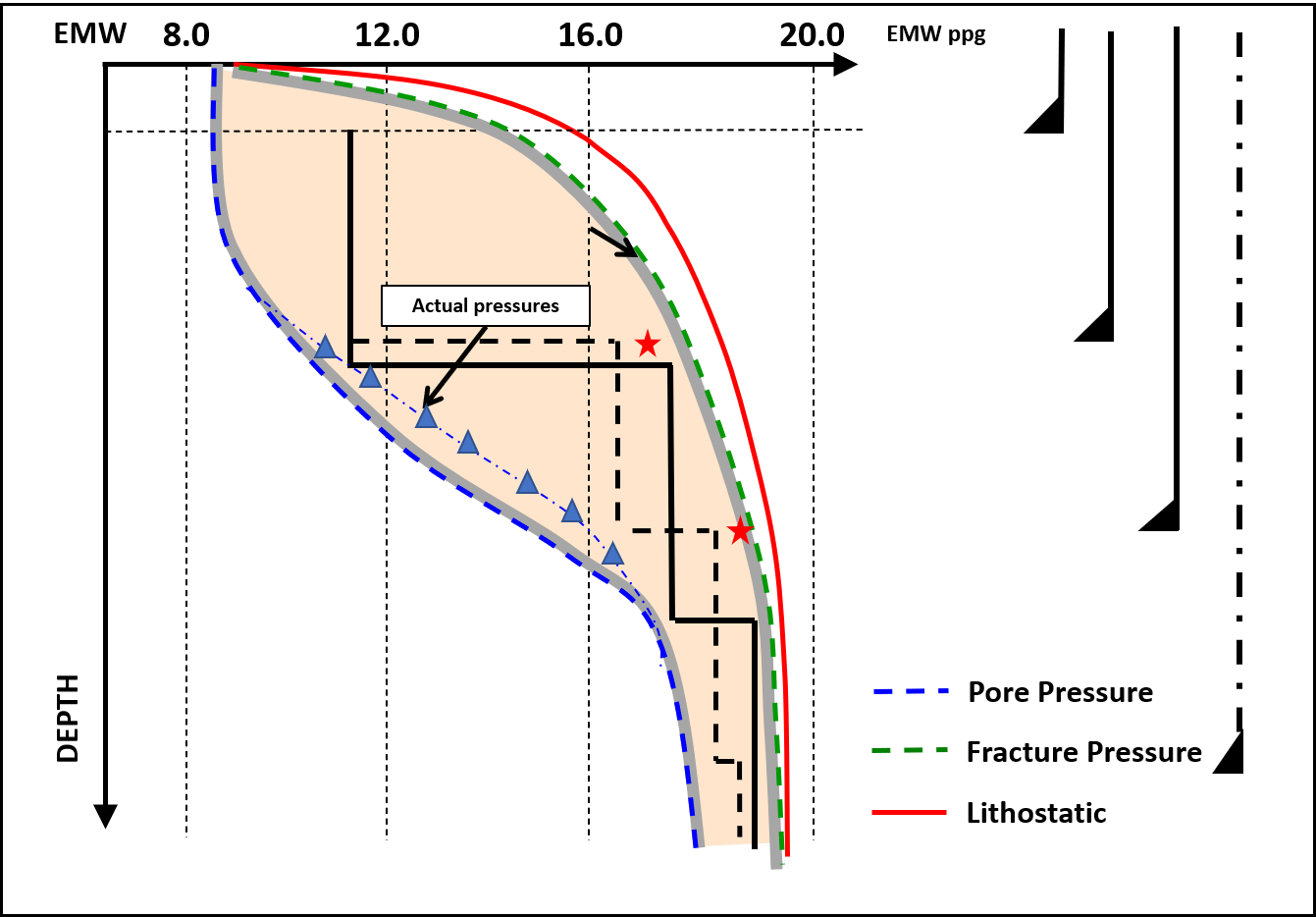
This course introduces attendees to subsurface fracture pressures and fluid pressures, their relevance to subsurface phenomena and assessing risk in deep boreholes. An understanding of pressure is critical for subsurface industries including oil/gas exploitation, carbon sequestration, geothermal energy, waste disposal and hydrogeology, as well as surface aspects such as slope failure. The course teaches the details of what data can be collected and how it can be visualized and interpreted, underpinning more detailed geological and engineering studies.

Duration and Logistics

Classroom version: A 2-day course comprising a mix of lectures, case studies and exercises. The manual will be provided in digital format and participants will be required to bring a laptop or tablet computer to follow the lectures and exercises.

Virtual version: Four 3.5-hour interactive online sessions presented over 4 days. A digital manual and exercise materials will be distributed to participants before the course. The course is rich in exercise material to build up participants’ understanding and confidence in a variety of techniques.

Level and Audience

Fundamental. Intended for all hydrologists, geologists, geophysicists and geomechanical and reservoir engineers. Knowledge of subsurface geology is not required but would be an advantage. Highly relevant to all who are studying the subsurface and especially those engaged in deep drilling and storage.

Objectives

You will learn to:

  1. Understand how fluid pressure and fracture pressure are relevant to subsurface geology.
  2. Evaluate the types of pressure data and measurements possible in the subsurface.
  3. Create plots and maps of pressure data to solve subsurface puzzles (e.g. compartmentalization of reservoirs; distinguishing between hydrodynamic vs hydrostatic flow conditions; and recognition of abnormal pressures).
  4. Appreciate the link between fluid pressure and fracture pressure, and appropriate coupling values.
  5. Recognize how and where pressure data relate to specific events (e.g. slope failure; surface fluid release phenomena; earthquakes and other ground movements).

Prospect Generation, Assessment and Risking (G026)

Tutor(s)

Rene Jonk: Director, ACT-Geo Consulting and Training; Honorary Professor, University of Aberdeen.

Overview

This hands-on course enables attendees to enhance their mapping skills and their critical evaluation of prospects. This course demonstrates how to use play fairway mapping and petroleum system analyses to identify plays and prospects with high potential, even in areas with limited data. Once participants identify prospects, the course outlines how to derive geologically map based, objective inputs for prospect assessment and risking. This stepwise approach creates well-documented results that are used to confidently rank opportunities and make smart business decisions.

Duration and Logistics

Classroom version: 5 days; a mix of classroom lectures and discussion and exercises. The manual will be provided in digital format and participants will be required to bring a laptop or tablet computer to follow the lectures.

Level and Audience

Fundamental. This course is intended for early career geoscientists, reservoir engineers and petrophysicists.

Objectives

You will learn to:

  1. Recall play element definitions and hone mapping skills.
  2. Understand tectonic phases and play types with respect to the history of basin evolution.
  3. Interpret and integrate well and seismic data.
  4. Undertake subsurface mapping of prospects and maturation to drillable status.
  5. Risk and rank prospects.
  6. Identify and assess risks and uncertainties related to geological factors (source, reservoir, seal, trap and preservation).
  7. Evaluate prospect success.

Geology for Non-geologists (G088)

Tutor(s)

Jonathan Evans: Director, GeoLogica; Chair of Trustees, Lyme Regis Museum.

Overview

The aim of this course is to provide an overview of the fundamental geological topics relevant to the modern energy industry. Focus will be placed on petroleum geoscience and the basics of petroleum exploration, but the course will also cover geothermal systems, carbon capture and storage, and hydrogen energy.

Duration and Logistics

Classroom: A 2-day course comprising a mix of lectures, case studies and exercises. The manual will be provided in digital format and participants will be required to bring a laptop or tablet computer to follow the lectures and exercises.

Virtual version: Four 3.5-hour interactive online sessions presented over 4 days. Digital course notes and exercises will be distributed to participants before the course.

*A day in the field can be included where logistics allow, to observe a variety of rock types and for participants to gain a better understanding of key geological themes.

Level and Audience

Fundamental. The course is largely aimed at non-geologists who are interested in knowing more about the fundamentals of geology and how these relate to the modern energy industry.

Objectives

You will learn to:

  1. Describe the fundamental principles of geology, including different rock types, geological time and stratigraphy.
  2. Understand the basics of petroleum geoscience, including the formation of oil and gas.
  3. Review the different types of reservoir rocks and their properties, including porosity and permeability.
  4. Recognize how we search for oil and gas, including using seismic and other data.
  5. Understand how we drill for oil and gas and how we acquire information from wells, such as log and core data.
  6. Recognize what technical staff in companies do and how they work together.
  7. Describe the basic principles of carbon capture and storage and how it is being adopted worldwide as a climate change mitigation tool.
  8. Understand the basics of geothermal energy, what it is and how it can be used.
  9. Appreciate how hydrogen energy can be used and stored underground.
 

Seismic Structural Interpretation and Analysis Workshop (G005)

Tutor(s)

Peter Hennings: Consulting Geologist and Research Scientist and Lecturer, UT Austin, Texas.

Overview

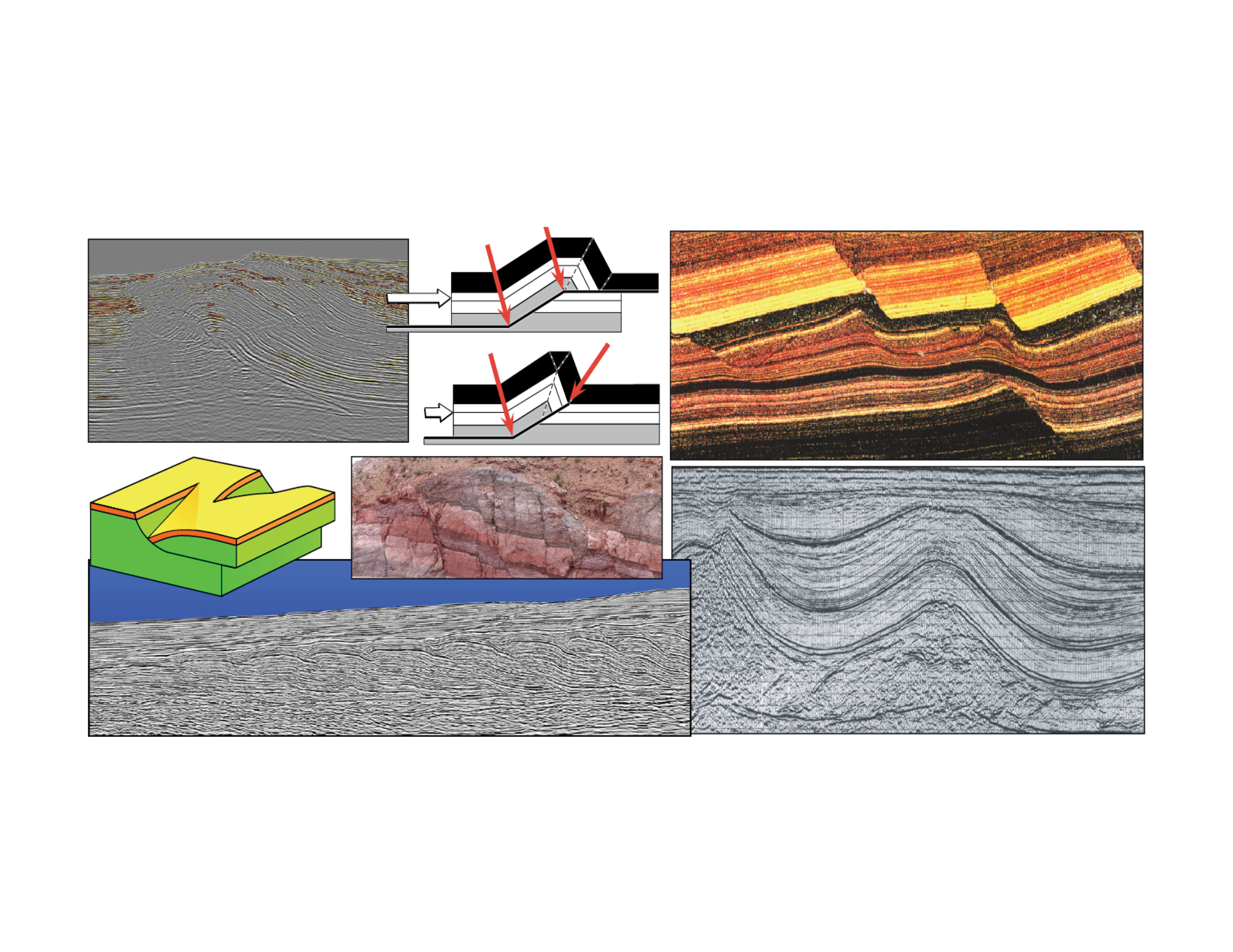
The course addresses interpretation of 2-D and 3-D seismic reflection data for unraveling the geometry and kinematic evolution of crustal structures, principally in sedimentary rocks. Topics include understanding how structures manifest themselves in seismic data and approaches to effective interpretation and kinematic analysis. Structural systems addressed include extensional, fold and thrust belts, salt tectonics and inversion. Applied topics include interpretation and analysis approaches, determination of geologic and basin history, fault system analysis, fault permeability structure and geomechanical evaluations, such as in situ stress determination and application to induced seismicity risking. Practical exercises are based on global seismic datasets and are reinforced by active in-class discussion.

Duration and Logistics

Classroom version: A 5-day classroom course, comprising a mix of lectures (40%), analysis of case studies (30%) and integrated exercises (30%). The manual will be provided in digital format and participants will be required to bring a laptop or tablet computer to follow the lectures and exercises.

Virtual version: Ten 3.5-hour interactive online sessions presented over 10 days. A digital manual and exercise materials will be distributed to participants before the course. Some reading and several exercises are to be completed by participants off-line.

Level and Audience

Fundamental. The course is intended for geoscientists who wish to strengthen their seismic interpretation and analysis skills by applying key interpretation techniques and strategies to a wide range of structural types and application goals.

Objectives

You will learn to:

  1. Understand the manifestation of 3-D structures in reflection seismic data.
  2. Develop effective structural interpretation perception – learning to think ‘kinemechanically’.
  3. Generate interpretations with geometric admissibility and kinematic compatibility.
  4. Understand imaging scale, artefacts and interpretation pitfalls.
  5. Gain experience in interpretation and analysis in all structural regimes.
  6. Understand how faults form, grow, interact, reactivate and impact fluid flow.
  7. Gain an introductory understanding of geomechanics as applied to interpretation.
  8. Become acquainted with fault stress analysis and fault seal risking.

The Hydrogen Landscape: Production, Policy and Regulation (G575)

Tutor(s)

Katriona Edlmann: Chancellor’s Fellow in Energy, The University of Edinburgh.

Overview

Future energy scenarios foresee a prominent and growing role for hydrogen. Demand is likely to rapidly exceed the capacity of typical above-ground energy storage technologies, necessitating the need for the geological storage of hydrogen in engineered hard rock caverns, solution mined salt caverns, depleted gas fields and saline aquifers. This course will provide participants with an overview of the current hydrogen landscape, including its likely role in the energy transition, production and economic challenges.

Duration and Logistics

Classroom version: A 1-day course comprising a mix of lectures, case studies and exercises. The manual will be provided in digital format and participants will be required to bring a laptop or tablet computer to follow the lectures and exercises.

Virtual version: Two 4-hour interactive online sessions presented over two days. Digital course notes and exercise materials will be distributed to participants before the course. Some exercises may be completed by participants off-line.

Level and Audience

Fundamental. Intended for subsurface scientists involved in hydrogen projects.

Objectives

You will learn to:

  1. Appreciate the role of geoscience in the hydrogen economy and the contribution hydrogen can make to the energy transition in support of Net Zero emission targets.
  2. Describe the different processes involved in hydrogen production and the associated lifecycle carbon intensity of this production.
  3. Recall details of the developing hydrogen supply chains, including infrastructure considerations, distribution networks and pathways for market growth.

Carbon Capture and Storage: Legal, Regulatory, Finance and Public Acceptance Aspects (G566)

Tutor(s)

Mike Stephenson: Director, Stephenson Geoscience Consultancy Ltd.

Overview

Carbon Capture and Storage (CCS) is a new technology that has a vital place within global efforts to decarbonise. It has a unique set of challenges, opportunities and risks to be understood and accommodated within appropriate legal, regulatory, and social and public licence frameworks. The course will provide up to date and relevant information to help in understanding opportunities and in managing risk. The course will cover: the role of CCS within a decarbonised energy system; risks of capture, transport and storage; aspects of monitoring; the importance of test and demonstration sites; legal and regulatory; finance; and public acceptance and social licence.

Duration and Logistics

Classroom version: A 1-day course comprising a mix of lectures, case studies and exercises. The manual will be provided in digital format and participants will be required to bring a laptop or tablet computer to follow the lectures and exercises.

Virtual version: Two 3.5-hour interactive online sessions presented over 2 days. A digital manual will be distributed to participants before the course, which will be a mix of lectures and exercises.

Level and Audience

Fundamental. This course will cater for in-company legal specialists, project managers, marketing and communications specialists; as well as planners and environmental scientists in regulatory roles in regions considering the development of CCS.

Objectives

You will learn to:

  1. Understand the place of CCS within a decarbonized energy system.
  2. Demonstrate the basics of the science and risk in capture, transport and storage.
  3. Illustrate the role of monitoring and MMV (Measurement, Monitoring and Verification).
  4. Examine how legal and regulatory frameworks respond to the challenges of CCS.
  5. Establish how CCS could be financed.
  6. Relate to and understand public opinion and social licence in relation to CCS.