

Geoscientists need to advance their skills in predicting how an exploration prospect may fit into its mineral system and portfolio, knowing the possible value from future data acquisition programs and understanding the likelihood of them happening. This is future-facing exploration.
By Graham Banks, Route To Reserves and Southern Geoscience Consultants
There are numerous statements in exploration industry, corporate and academic literature about projects and exploration prospects being “de-risked” by additional data, analysis or analogues.
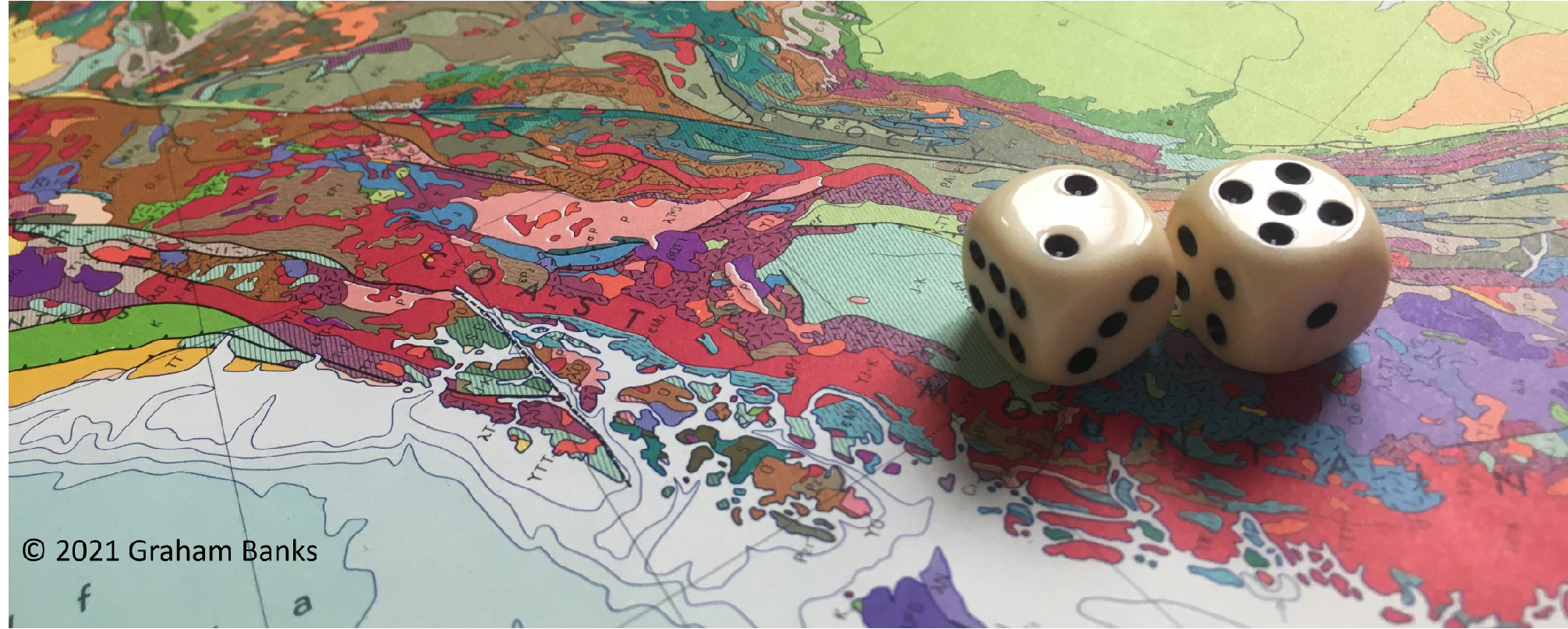
Unfortunately, this message is not correct. After gaining more information and knowledge, organisations may still proceed with unwise decisions, or continue along a course of action that erodes value for the benefactor/investor. In terms of “de-risking” a mineral prospect, additional information does not change the “risk” that the prospect could become a discovery. The dice were rolled by Nature millions to billions of years ago. The extra information serves to reaffirm or change the team’s perception about the success and failure scenarios of their prospect.
Let’s continue with the way industry uses “de-risking” for one more paragraph. One would assume that a mineral deposit would be “de-risked” after >$100 million had been spent over a decade drilling tens of kilometres of core, conducting a positive feasibility study and receiving the go-ahead to start mining. Yet we see news articles reporting how some ore reserves shrink after mining has started, despite all that data collection and modelling.
Two other common statements in exploration literature and corporate statements are that: (a) early exploration is “high risk, high reward”, and (b) progressing an exploration project reduces the risk. Statements like these may persuade investors to fund geoscience surveys and analyses, but high risk events can arise any time between early stage exploration and mining e.g.:
- A mine event leading to injuries or fatalities.
- Political decisions to raise mining sector taxes.
- Economic conditions leading to commodity devaluation.
These types of erroneous statements may originate from an inaccurate understanding of “risk” amongst geoscientists. Or worse, a variety of inaccurate definitions and uses of “risk” amongst geoscientists. The implications can be severe: disagreement, reluctance to co-operate, overconfidence in a questionable prospect, hazards at the drilling rig, confused investors, wasted dollars, loss of credibility, etc.
Exploration geoscientists frequently use words like risk, value and uncertainty to promote their work and projects to management, investors, policy makers, etc. Therefore, it is crucial that geoscientists use these terms correctly and consistently. What is your definition of geological risk: a landslide; the drill bit not getting through the permafrost; not enough soil geochemistry data? Inconsistent vocabulary doesn’t help decision makers.
Few geoscientists are taught the implications of using words like risk, value, probability and uncertainty during university geoscience classes or professional development courses. Which is strange, because universities and training courses deliver standard definitions and categories for lithologies, species of fossils, sediment deposition settings, chemical formulas of minerals, etc.
So, where do geoscientists learn to use such terms accurately and appropriately? This Holistic Exploration Workflow for Critical Minerals Exploration course led by Graham Banks and Steven Fehr bridges a knowledge gap between higher education and the minerals-mining industry. Graham and Steve have spent most of their careers conducting and QCing exploration programs and business opportunities, through the lens of geoscience integrated with strategy, risk, uncertainty, probability and value of information analysis.
This professional development course guides attendees through the correct uses of risk, value, uncertainty, probability of success for critical mineral exploration and modelling. It also informs attendees about biases, the mineral system, deterministic and probabilistic approaches, accuracy versus precision, different types of value, and the value of acquiring new geoscience information.
Three other subject matter experts share their industry knowledge during the course to broaden its themes into a holistic exploration strategy:
Amit Sharma (Mining Sector Lead, Matrix Solutions Inc.) will explain the Environmental, Stakeholder and Governance considerations (ESG) required at each of regional, district and local exploration phases. Incorporating ESG into the early exploration phase is important to: raise additional capital; check the future mining operation could be feasible; practice environmental stewardship; ensure correct stakeholder engagement; understand the regulatory landscape, water resources and climate adaptation, etc.
Colm Murphy (Chief Geoscientist, Bell Geospace) will show how full tensor gravity gradiometry is adept at mapping sub-surface structure.
Robert Hearst (Consulting Geophysicist – Americas, Southern Geoscience Consultants) will summarise the use of geophysical techniques to identify mineral system ingredients.
Most mineral exploration courses and tasks are about increasing interpretation detail and precision for already-collected data. Usually in a small geographic area. Often located next to historic (i.e. not presently viable) mines. This is history-facing exploration. The big-picture consequence is that “conventional” mineral exploration and prospecting is not efficient. Only a few big discoveries are made each year, despite $ billions spent. According to Rio Tinto, the chance of a greenfield mineral target becoming a “world-class” mine is 1 in 3333. Many exploration and geoscience projects should have stopped at an early stage. In recent years, the industry generated $1 for every $2 spent. Investors are not receiving sufficient return on their investment. And now, mineral exploration needs to go deeper under sediment-vegetation cover and into under-explored regions. How can geoscientists help decision-makers better allocate budget into a deep rock volume with sparse information?
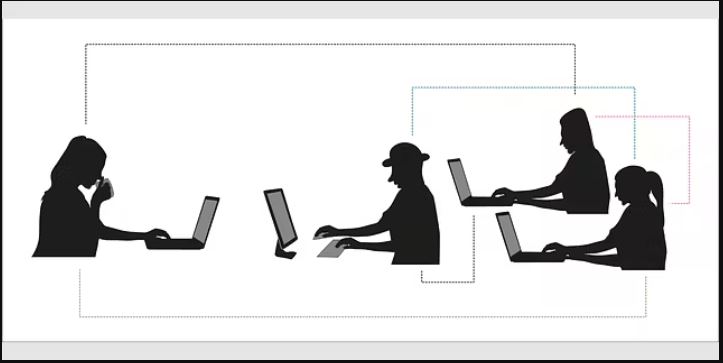
Geoscientists need to advance their skills in predicting: (a) how an exploration prospect may fit into its mineral system and portfolio, (b) the possible value from future data acquisition programs and (c) the likelihood of them happening. This is future-facing exploration: the drilling programs and results haven’t happened yet. Geoscientists need an efficient method to increase exploration chance of success, e.g., rate exploration programs and portfolios by a mineral system’s possible extent and value. Exploration expenditure may have most impact when directed at the weakest links in the team’s success case model. Graham Banks and Steven Fehr’s course teaches the foundations of that logic:
-
Understand some of the techniques and tasks of an industry exploration geoscientist.
-
Put a mineral exploration project into province, mineral system and play context.
-
See mineral exploration as a high-risk game of chance, that requires a probability of success estimate and approach.
-
Adapt best-practice exploration techniques from other commodities into the critical minerals sector.
-
Create and efficiently communicate maps and cross sections to estimate the migration pathways and deposition locations of commodities.
-
Design a mineral system framework and translate it into the data surveys that would improve confidence in an exploration project.
-
Recognise the value of collaboration, multiple working hypotheses and the team’s range of experiences (the opposite of precision).
-
Identify and mitigate the (often detrimental) biases that geoscientists bring to projects.
-
Integrate environmental, social and governance (ESG) factors into the exploration workflow at their correct timings and scales.
-
Add value (not just cost) to the decision-making process, to improve Decision Quality.
Let’s return to the first question of this article. Why do geoscientists seek more data if it does not “de-risk” a mineral prospect or change the “risk” that the prospect could become a discovery? Some reasons to acquire information should be to: (a) provide decision-makers with more confidence and certainty when making decisions, (b) narrow the uncertainty range of each parameter in the success case geological model, (c) reassess and revise how business opportunities have been ranked.
If the topics in this professional development course resonate with your exploration tasks and requirements, or address your team’s challenges, book a seat while you can.
Graham Banks (Route To Reserves, Southern Geoscience Consultants)
https://www.linkedin.com/in/graham-banks-aba5bb26/
route2reserves@gmail.com, graham.banks@sgc.com.au
Steven Fehr
https://www.linkedin.com/in/stevefehr/
Amit Sharma (Matrix Solutions Inc.)
https://www.linkedin.com/in/amit-sharma-a979b935/
Colm Murphy (Bell Geospace)
https://www.linkedin.com/in/colm-murphy-6b378910/
Robert Hearst (Southern Geoscience Consultants)
https://www.linkedin.com/in/rob-hearst-53a15919/