World-class training for the modern energy industry

Understanding Seismic Data: Time, Depth and Geology (G082)

Tutor(s)

David Kessler: President, SeismicCity Inc.

Ron Kerr: Seismic Processing Consultant.

John Byrd: President, ByrdGEO; Adjunct Professor of Geology, University of Utah.

Overview

This course is designed to provide seismic interpreters, managers, geophysicists and geologists with a broad understanding of seismic imaging and processing. Emphasis will be placed on an understanding of industrial methods and workflows, differentiation of signal from artifacts, and connecting seismic data to geological settings for prospect evaluation and generation. The limited amount of quantitative seismic theory that is included is linked to the fundamentals of seismic data acquisition and processing, imaging, model building and interpretation through the incorporation of case studies. The eight course sessions continually build on the material from previous sessions and are tied to the underlying geology.
Duration and Logistics

A 4-day in-person classroom course, consisting of lectures and exercises. A digital manual will be provided for the course.

Level and Audience

Intermediate. The course is intended for seismic interpreters and geologists involved in the use and evaluation of seismic data.

Objectives

You will learn to:

  1. Outline the principal strengths and limitations of depth imaging.
  2. Assess the uncertainties of depth imaging and strategies to reduce these.
  3. Establish the fundamentals of marine- and land-based seismic from acquisition to pre-processing.
  4. Examine the processing steps leading to post- and pre-stack time migration, and post-stack depth migration.
  5. Evaluate various migration parameters used in the application of pre-stack depth migration and how they affect the PSDM image.
  6. Gauge the accuracy of time to depth conversion by application of pre-stack depth migration, as well as seismic to well tie and residual depth correction.
  7. Demonstrate the fundamental differences between depth and time migration and the improved imaging results when depth migration is utilized to resolve lateral velocity variations.
  8. Evaluate the link between the pre-stack depth image and the underlying geological settings.
  9. Analyze the complex structural geometries associated with salt tectonics and their significant associated imaging challenges.
  10. Differentiate signal from artifacts.
  11. Assess the construction of geological models utilizing our common understanding of velocity estimation, anisotropic parameters and different geologic settings.
  12. Connect seismic data to geological settings for prospect evaluation and generation.
Quality Control of Land Seismic Processing (G079)

Tutor(s)

Rob Hardy: Director, Tonnta Energy Limited.

Overview

This course will provide participants with fundamentals needed to liaise with specialists and discuss workflows and quality control for land seismic data processing. Using modern case histories and basic theory, the course covers fundamentals, established workflows and advanced technology. Demonstrations will use interactive processing tools to improve the students’ understanding of the latest techniques and how to quality control effectively and efficiently to meet their objectives.

Objectives

You will learn to:

  1. Discuss the most common land seismic acquisition and processing techniques used in seismic exploration and production and become more proficient in the terminology used to describe them.
  2. Recognise seismic processing parameter selection for specific objectives such as amplitude interpretation for exploration and reservoir characterisation.
  3. Discuss quality control of land seismic processing workflows covering data preparation, parameterisation, noise & multiple suppression, velocity model building, imaging and post-migration processing.
  4. Become aware of newer acquisition and processing techniques alongside their potential benefits & pitfalls.

Level and Audience

Fundamental. This course is aimed towards geoscientists seeking fundamentals of land seismic processing methods and those who wish to more effectively liaise with specialists and apply quality control. We start from first principals, but it is helpful if participants have a basic knowledge of land seismic acquisition and processing terminology and are actively working with seismic data.

Duration and Logistics

Classroom: A 2-day course comprising a mix of lectures and case studies. The manual will be provided in digital format and participants will be required to bring a laptop or tablet computer to follow the lectures and exercises.

Virtual version: Four 3-hour interactive online sessions presented over 4 days comprising lectures, discussion and demonstrations using case histories to illustrate the basic theory and impact of the techniques discussed. A digital manual and exercise materials will be distributed to participants before the course. Some reading and several exercises can be completed by participants off-line.

Onshore Seismic Processing and Imaging (G081)

Tutor(s)

Ron Kerr: Seismic Processing Consultant.

David Kessler: President, SeismicCity Inc.

Overview

This course will introduce the fundamentals of land seismic acquisition including receiver types and their spectrum indication. Land-based seismic data presents unique challenges, and the course will subsequently follow the processes after acquisition to include all the main processing steps of a modern land 3D dataset.

Duration and Logistics

Fundamental. Intended for geoscientists who work with seismic data and are also required to understand land seismic acquisition and processing projects and work with imaging professionals.

Level and Audience

Classroom version: A 2-day classroom course day including a mix of lectures and exercises. The manual will be provided in digital format and participants will be required to bring a laptop or tablet computer to follow the lectures and exercises.

Virtual version: Four 3.5-hour interactive online sessions presented over four days. Digital course notes and exercise materials will be distributed to participants before the course. Some exercises may be completed by participants off-line.

Objectives

You will learn to:

  1. List common onshore seismic source and receiver types and their spectrum indication.
  2. Describe source/receiver line spacing & intervals and their relationship to acquisition footprints and seismic resolution.
  3. Have a clear picture of main processing steps affecting phase and amplitude and understand the concepts of surface-consistency.
  4. Explain in plain language how FWI works and the key factors to velocity model building.
  5. List the types of data used in data processing.
  6. Identify the main components of the seismic wavefield and what they are used for.
  7. Describe the main collections/domains for manipulating seismic data.
  8. Explain the main steps in a processing sequence.
  9. List the main types of noise and describe attenuation methods for these.
  10. Describe the various velocities used in seismic and how to access them.
  11. Identify multiples and explain methods to attenuate them.
  12. Discuss the need for regularization.
  13. Describe the migration process and list the difference between Time/Depth Migrations.

An Introduction to Offshore Seismic Data Acquisition (G041)

Tutor(s)

Malcolm Lansley: Consultant Geophysicist.

Overview

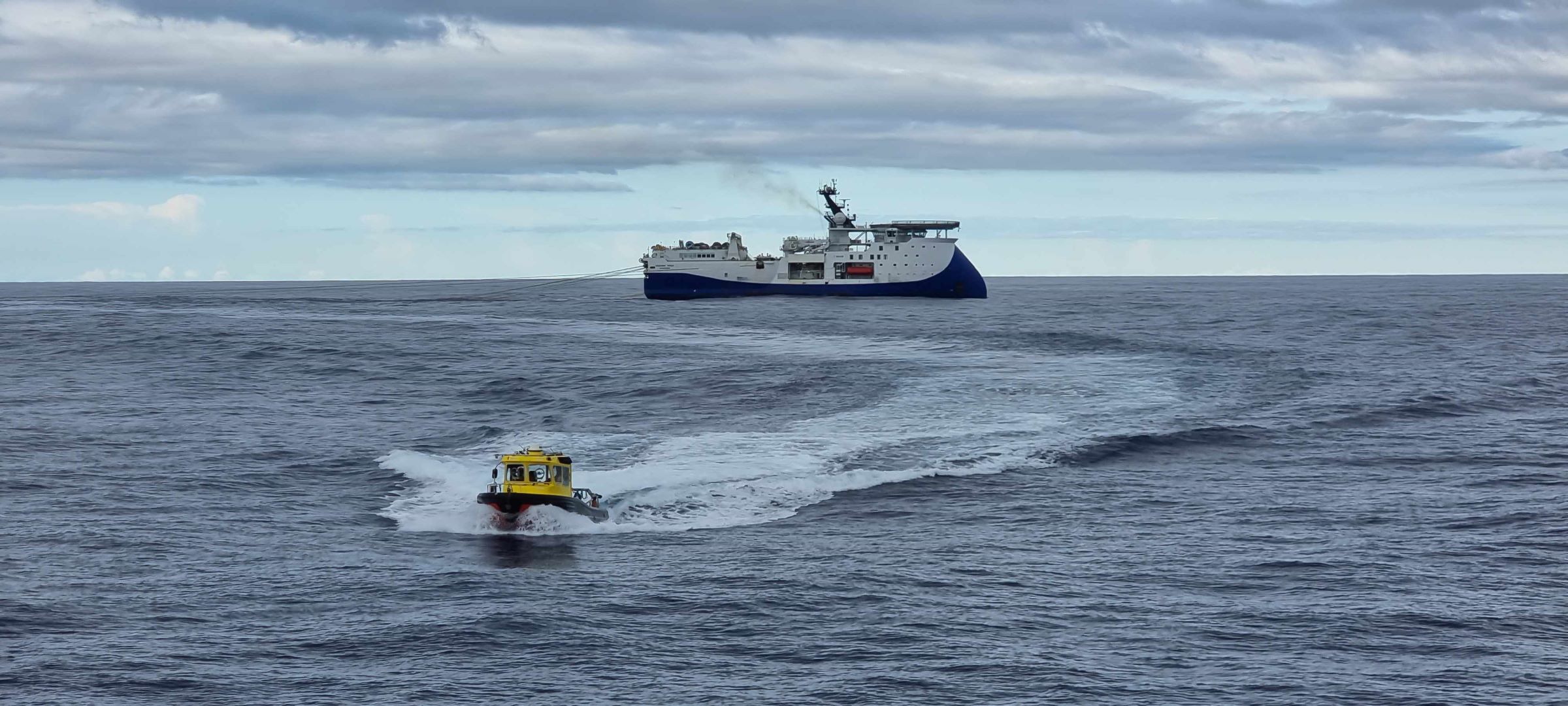
Participants will learn the steps necessary to plan successful offshore seismic acquisition projects and will also learn how to work with contractors to ensure that projects are executed safely and according to plan.

Duration and Logistics

Classroom version: A 1-day classroom course comprising a mix of lectures (90%) and exercises (10%). An optional workshop where a client’s project data may be reviewed can be added. The manual will be provided in digital format and participants will be required to bring a laptop or tablet computer to follow the lectures and exercises. Multiple choice quizzes will be utilized to reinforce learnings.

Virtual version: Two 4-hour interactive online sessions presented over 2 days. A digital manual and exercise materials will be distributed to participants before the course. Some reading and several exercises are to be completed by participants off-line. Multiple choice quizzes will be utilized to reinforce learnings.

Level and Audience

Fundamental. Intended for early career geoscientists and technical support staff who routinely work with seismic data and who would like to manage seismic acquisition projects and interact effectively with data acquisition professionals.

Objectives

You will learn to:

  1. Revisit the fundamental principles of seismic wave propagation.
  2. Review seismic vessel and equipment options for data acquisition and logistics in different marine environments.
  3. Understand key project parameters required to design a successful project.
  4. Review the bid tender process and be able to recommend contract specifications.
  5. Outline a management plan for Health, Safety and Environmental compliance.
  6. Appreciate the importance of employing qualified field QC personnel to ensure the successful completion of data acquisition projects.

An Introduction to Onshore Seismic Data Acquisition (G040)

Tutor(s)

Malcolm Lansley: Consultant Geophysicist.

Overview

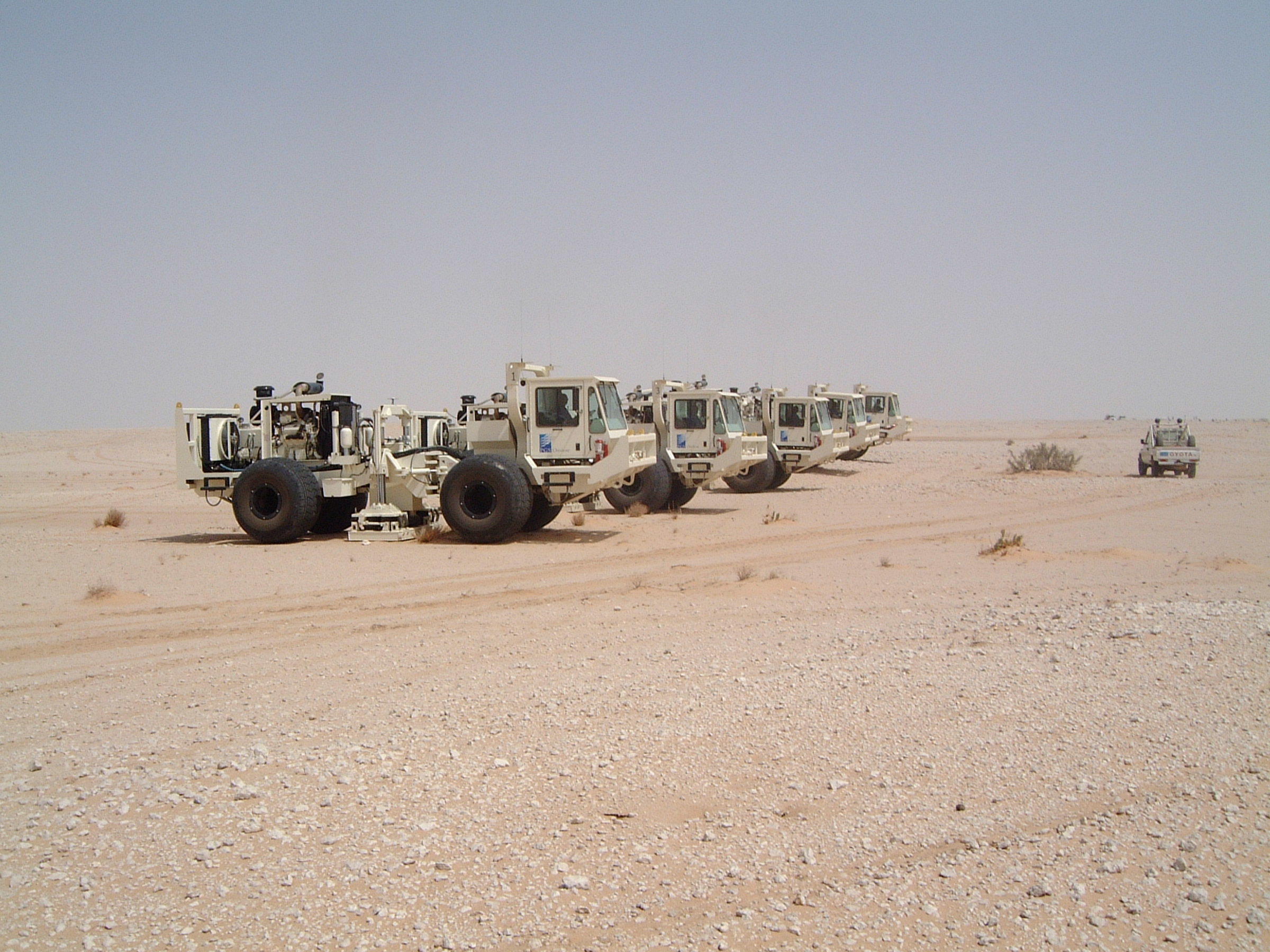
Participants will learn the steps necessary to plan successful onshore seismic acquisition projects and will also learn how to work with contractors to ensure that projects are executed safely and according to plan.

Duration and Logistics

Classroom version: A 1-day classroom course comprising a mix of lectures (90%) and exercises (10%). An optional workshop where a client’s project data may be reviewed can be added. The manual will be provided in digital format and participants will be required to bring a laptop or tablet computer to follow the lectures and exercises. Multiple choice quizzes will be utilized to reinforce learnings.

Virtual version: Two 4-hour interactive online sessions presented over 2 days. A digital manual and exercise materials will be distributed to participants before the course. Some reading and several exercises are to be completed by participants off-line. Multiple choice quizzes will be utilized to reinforce learnings.

Level and Audience

Fundamental. Intended for early career geoscientists and technical support staff who routinely work with seismic data and who desire to manage seismic acquisition projects and interact effectively with data acquisition professionals.

Objectives

You will learn to:

  1. Revisit the fundamental principles of seismic wave propagation.
  2. Review equipment options for data acquisition and logistics.
  3. Understand key project parameters required to design a successful project.
  4. Review the bid tender process and recommend contract specifications.
  5. Outline a management plan for Health, Safety and Environmental compliance.
  6. Appreciate the importance of employing qualified field QC personnel to ensure the successful completion of data acquisition projects.

The Essentials of Rock Physics and Seismic Amplitude Interpretation (G075)

Tutor(s)

Eleanor Oldham: Senior Geophysicist, Merlin Energy Resources.

Overview

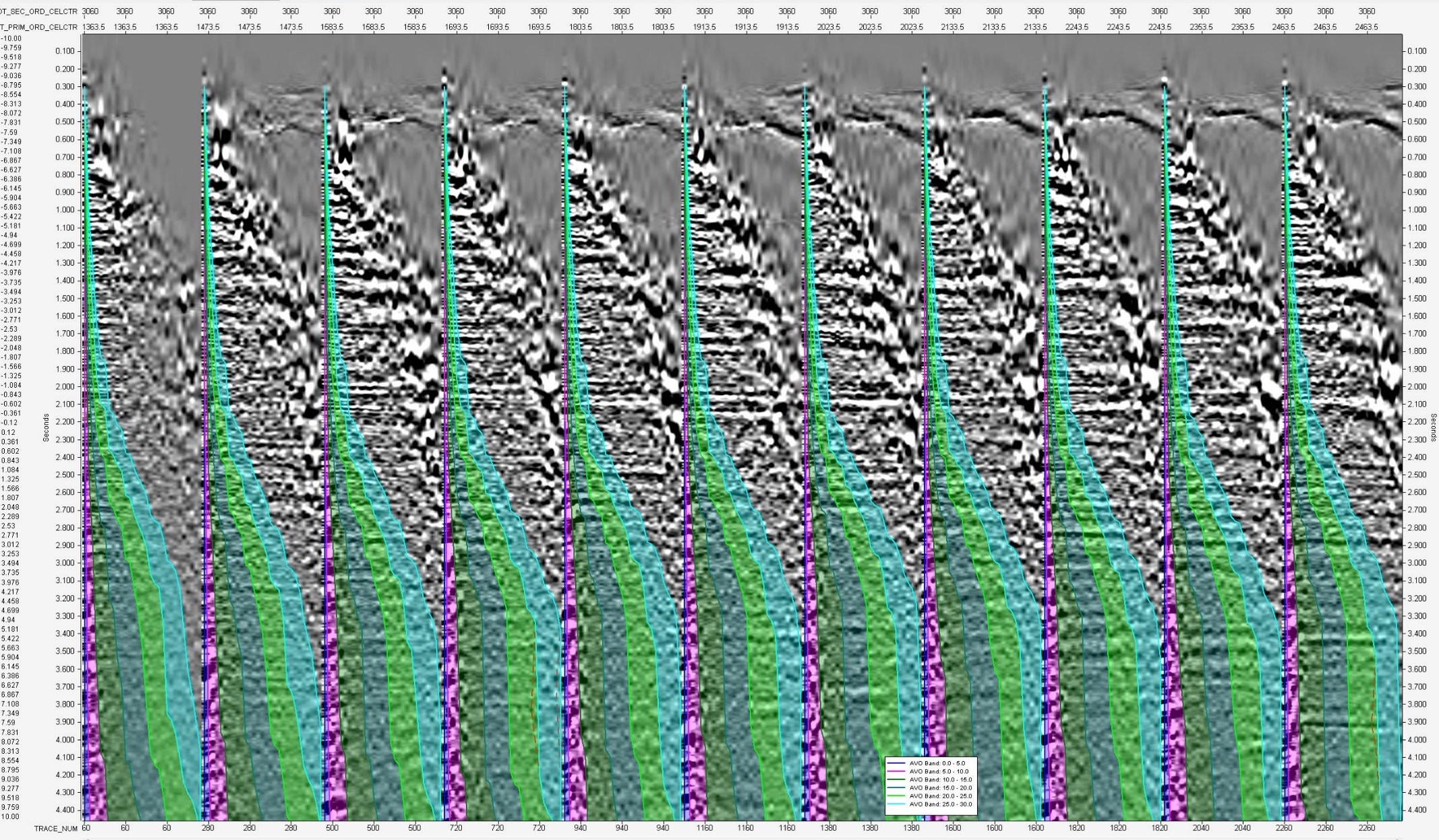
This course introduces participants to the principles, workflows and limitations of interpreting seismic data using rock physics. The principal topics to be covered include how AVO works, what should the interpreter expect, rock physics inputs for seismic models, rock properties from seismic and rock physics in prospect risking.

Duration and Logistics

Classroom version: A 4-day in-person course, comprising a mix of lectures and interactive learning through worked Excel examples. The course manual will be provided in digital format.

Virtual version: Eight 3-hour live online sessions presented over 8 days, comprising a mix of lectures and interactive learning through worked Excel examples. The course manual will be provided in digital format.

Level and Audience

Fundamental. The course is largely aimed at geoscientists, reservoir engineers and petrophysicists wanting an introduction to the subject of rock physics and seismic amplitude interpretation.

Objectives

You will learn to:

  • Construct a simple AVO model and apply it to seismic interpretation in different AVO settings.
  • Illustrate the characteristics of seismic wavelets and approaches to synthetic well ties with reference to models.
  • Demonstrate the use of rock physics for seismic modelling and Gassmann’s equation in fluid substitution.
  • Tackle a variety of rock physics issues, including fluid substitution in shaly and laminated sands, modelling of tight sands and log editing.
  • Differentiate AVO techniques and practical AVO issues, including the potential for interpretation ambiguity and data quality.
  • Apply band limited impedance with respect to net pay prediction and their limitations.
  • Implement the use of Bayesian update to evaluate probability in inversion and risking.

Seismic Processing Workflows (G072)

Tutor(s)

Rob Hardy: Director, Tonnta Energy Limited.

Overview

This course will provide participants with the skills needed to liaise with specialists and implement workflows for seismic data acquisition and processing. Using modern case histories and basic theory, the course covers fundamentals, established workflows and advanced technology. Participants will use interactive processing tools to improve their understanding of the latest techniques and learn how to apply them effectively and efficiently to meet their objectives.

Duration and Logistics

Classroom version: A 3-day in-person course, comprising a mix of lectures with examples (90%), laptop-based exercises and discussion (10%). The manual will be provided in digital format and participants will be required to bring a laptop or tablet computer to follow the lectures and exercises.

Virtual version: Six 3-hour interactive online sessions presented over 6 days, comprising a mix of lectures, discussion and interactive exercises using case histories to illustrate the basic theory and impact of the techniques discussed. The participants will use a series of web-based software modules to experience the processing options available and learn how to combine the basic tools together to build a flow which meets objectives. A digital manual and exercise materials will be distributed to participants before the course. Some reading and several exercises are to be completed by participants off-line.

Level and Audience

Intermediate. This course is aimed at geoscientists seeking an overview of seismic acquisition techniques and processing methods, and those who wish to liaise effectively with specialists to improve their decision making and deliver objectives. A geophysics refresher is provided but it is helpful if participants have a basic knowledge of seismic acquisition and processing terminology and are actively working with seismic data.

Objectives

You will learn to:

  1. Compare the most common seismic acquisition and processing techniques used in seismic exploration and production, and become more proficient in the terminology used to describe them.
  2. Establish how survey design, earth model building and selection of migration algorithm can affect accuracy of interpretation in depth.
  3. Optimize the impact of seismic processing parameter selection for specific objectives such as amplitude interpretation for exploration and reservoir characterization.
  4. Demonstrate a typical seismic processing workflow covering data preparation, parameterization, noise and multiple suppression, velocity model building, and the imaging process, discussing likely issues at each step.
  5. Compare newer acquisition and processing techniques alongside their potential benefits and pitfalls.
  6. Liaise effectively with specialists, develop workflows and optimize decisions based on quality and cost.

Fundamentals of Seismic Processing (G071)

Tutor(s)

Rob Hardy: Director, Tonnta Energy Limited.

Overview

This course will provide participants with fundamentals needed to liaise with specialists and discuss workflows for seismic data acquisition and processing. Using modern case histories and basic theory, the course covers fundamentals, established workflows and advanced technology. Participants will use interactive processing tools to improve their understanding of the latest techniques, learn how to apply them effectively and efficiently to meet their objectives.

Duration and Logistics

Classroom version: A 2-day in-person course, comprising a mix of lectures with examples (90%), laptop-based exercises and discussion (10%). The manual will be provided in digital format and participants will be required to bring a laptop or tablet computer to follow the lectures and exercises.

Virtual version: Four 3-hour interactive online sessions presented over 4 days, comprising lectures, discussion and interactive exercises using case histories to illustrate the basic theory and impact of the techniques discussed. The participants will use a series of web-based software modules to experience the processing options available and learn how to combine the basic tools to build a flow which meets objectives. A digital manual and exercise materials will be distributed to participants before the course. Some reading and several exercises are to be completed by participants off-line.

Level and Audience

Fundamental. This course is aimed at geoscientists who wish to understand the fundamentals of seismic acquisition techniques and processing methods and to aid more effective liaison with specialists. We start from first principles, but it is helpful if participants have a basic knowledge of seismic acquisition and processing terminology and are actively working with seismic data.

Objectives

You will learn to:

  1. Discuss the most common seismic acquisition and processing techniques used in seismic exploration and production, and become more proficient in the terminology used to describe them.
  2. Outline how survey design, earth model building and selection of migration algorithm can affect accuracy of interpretation in depth.
  3. Recognize seismic processing parameter selection for specific objectives, such as amplitude interpretation for exploration and reservoir characterization.
  4. Discuss a typical seismic processing workflow covering data preparation, parameterization, noise and multiple suppression, velocity model building and the imaging process.
  5. Become aware of newer acquisition and processing techniques alongside their potential benefits and pitfalls.

Workflows for Seismic Reservoir Characterization (G004)

Tutor(s)

Patrick Connolly: Director, Patrick Connolly Associates; Visiting Lecturer, University of Leeds, UK.

Overview

This course will provide participants with the skills needed to design and implement workflows for seismic reservoir characterization using established best-practice and emerging technology. The course covers seismic conditioning, colored inversion, AVO theory including elastic and extended elastic impedance, DHIs, seismic net pay, well ties, rock physics and deterministic and probabilistic inversion, including the application ODiSI.

Duration and Logistics

A 4-day classroom course comprising a mix of lectures with examples (70%) and laptop-based exercises and discussion (30%). The manual will be provided in digital format and participants will be required to bring a laptop or tablet computer to follow the lectures and exercises.

Level and Audience

Advanced. Intended for practicing seismic interpreters. Participants should have a basic knowledge of the seismic method, including acquisition and processing, with a minimum of three years working with seismic data. However, the subject matter of this course, AVO and inversion, is covered from basic principles.

Objectives

You will learn to:

  1. Appreciate the benefits of colored inversion – how and why it works and how to get the best results from a colored inversion application.
  2. Understand the relationships between reflectivity and impedance, and between time and frequency.
  3. Understand the model for AVO measurements and the difficulties in making accurate AVO measurements.
  4. Understand the concepts behind AVO analysis, including intercept-gradient crossplots and the theoretical relationship between elastic and AVO properties.
  5. Optimize AVO products for subsequent characterization work and create seismic products that correlate with specific reservoir properties.
  6. Appreciate the risks of using attributes with no physical relationship with the desired objective.
  7. Appreciate the limitations of the seismic net pay method and to know when it is, and is not, applicable.
  8. Understand the principles and pros and cons of deterministic and probabilistic inversion and how to select the appropriate inversion strategy for any given problem.