
World-class training for the modern energy industry

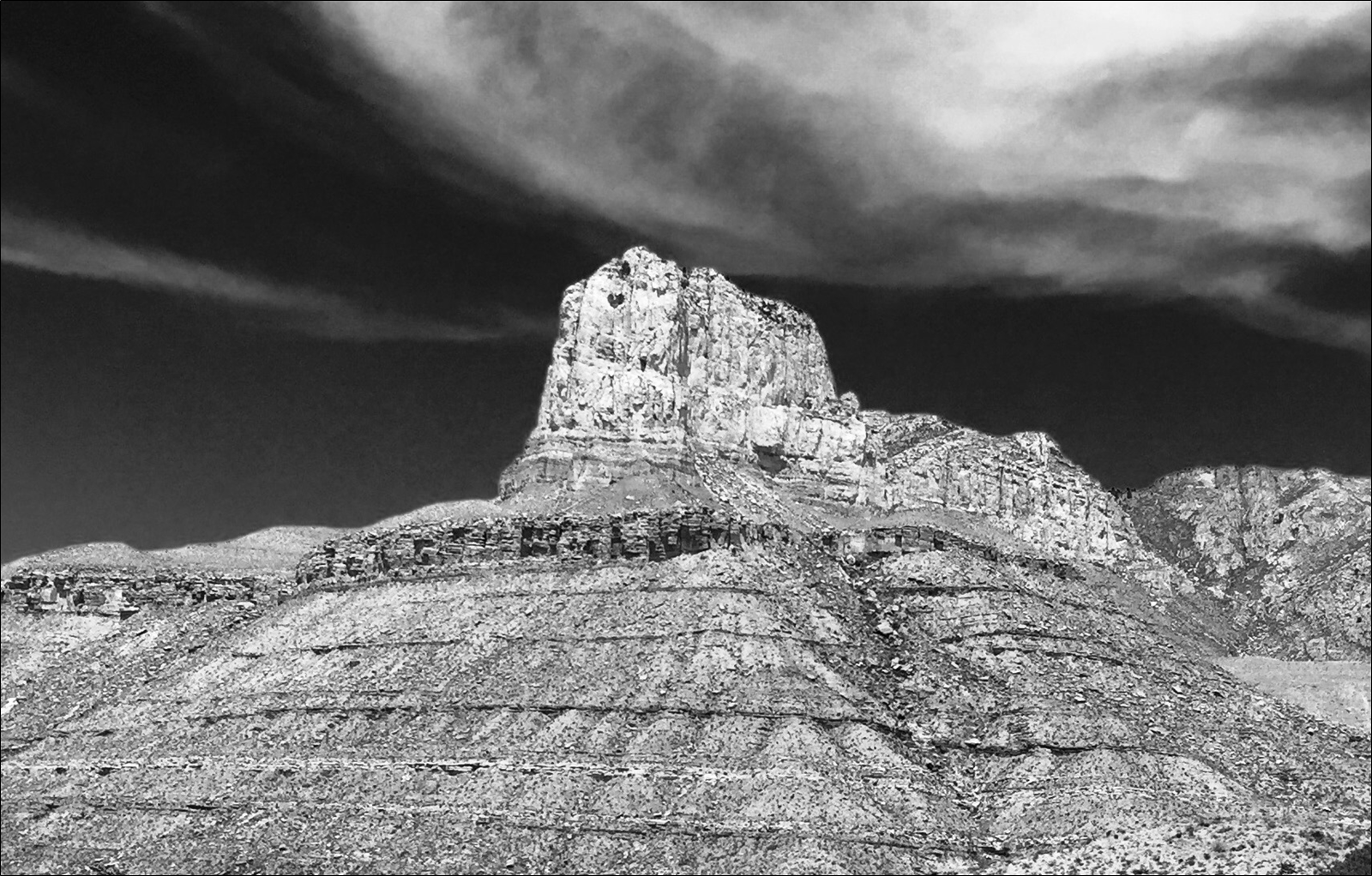
Sequence Stratigraphy of the Permian Basin, Texas and New Mexico (G002)

Tutor(s)

Rene Jonk: Director, ACT-Geo Consulting and Training; Honorary Professor, University of Aberdeen.

Overview

This field course is designed for geoscientists and engineers exploring and developing plays in mixed carbonate-siliciclastic systems; it is relevant to those working in the Permian Basin. The course will enhance each participant’s ability to distinguish depositional facies and play elements, based on seismic features, stratal geometries, sequence stratigraphy, diagenetic changes impacting reservoir quality and depositional models. Subsurface data from the Permian Basin, including seismic, well logs and cores, will be used to establish a sequence stratigraphic framework for the basin, with emphasis on the prediction of play element presence and quality, both for conventional and unconventional resources, including discussions on production behavior and strategies.

Duration and Logistics

A 5-day field course; a mix of field activities (60%) and classroom lectures and exercises (40%), with long days (typically 10 hours). The course begins and ends in El Paso, Texas. The first night is spent in El Paso; subsequent nights are spent in Carlsbad, New Mexico.

Level and Audience

Advanced. This course is intended for geoscientists, petrophysicists, engineers and managers who are seeking a comprehensive examination into the seismic stratigraphy of the Permian Basin.

Exertion Level

This class requires a MODERATE exertion level. Fieldwork is in west Texas and southeast New Mexico, where the weather is arid and usually hot, although cold and wet weather is possible in the spring and fall when daily temperatures range from 5–25°C (40–80°F). The course includes walks of a moderate length (up to 3.2km/2 miles) with an ascent of 305m (1000 ft), frequently over very steep and uneven ground. Transport on the course will be by mini-van. Most of the driving is on black-top roads, with some driving on graded dirt roads.

Objectives

You will learn to:

  1. Analyze exposures of carbonate shelf and ramp to siliciclastic basinal systems, in order to relate depositional facies to seismic scale geometries and sequence stratigraphy.
  2. Examine seismic scale outcrop geometries, document outcrop facies and demonstrate similarities to productive intervals in the Permian Basin.
  3. Understand how subaerial exposure, marine diagenesis and early near-surface dolomitization can affect ultimate reservoir porosity and permeability and overall reservoir geometry in subsurface.
  4. Assess changes in carbonate facies and relate these changes to depositional environments.
  5. Apply Walter’s Law and chronostratigraphic principles in core, well log and seismic interpretation, and relate to prediction of play elements and best productive intervals for unconventional resources.
  6. Analyze sequence stratigraphy for carbonates and mixed carbonate-clastic depositional systems.
  7. Interpret carbonate sequence stratigraphic patterns from outcrop, well log and seismic data.
Sequence Stratigraphy and its expression on Seismic, Logs and Cores (G001)

Tutor(s)

Rene Jonk: Director, ACT-Geo Consulting and Training; Honorary Professor, University of Aberdeen.

Overview

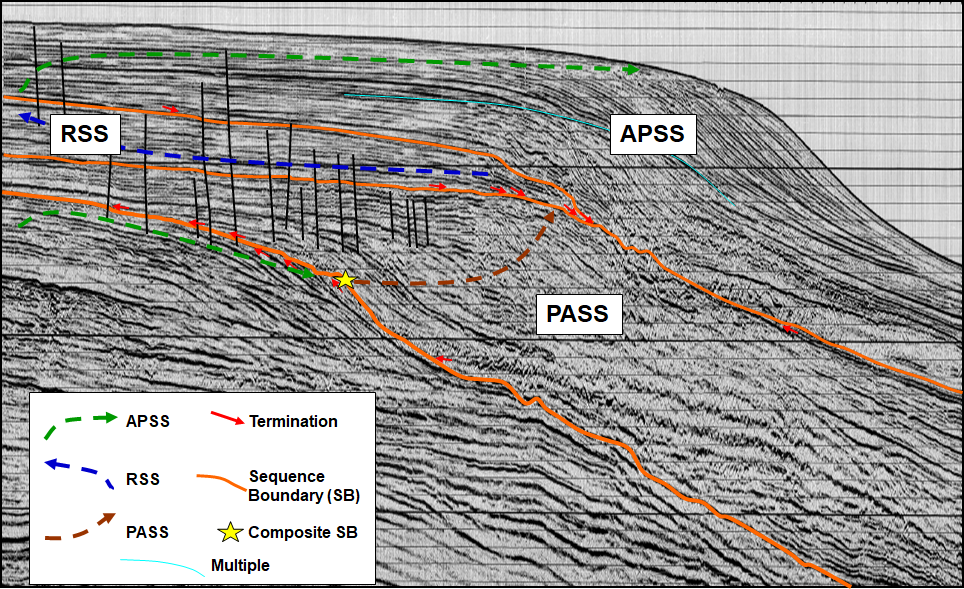
The application of sequence stratigraphy allows for making geologic interpretations of cores, well logs, seismic and outcrop data within a predictive stratigraphic framework. These predictions can be applied to play and prospect definition and evaluation, pre-drill predictions and discovery appraisal and field development strategies. This course introduces the sequence stratigraphic method and presents workflows and tools to describe, correlate and map strata within a predictive framework using typical subsurface (core, well log and seismic) data. The terminology of surfaces, systems tracts, sequence sets and stratigraphic hierarchy will be described and applied to subsurface data exercises in terrestrial, shallow marine and deep marine depositional settings across clastic and carbonate settings and applied to conventional and unconventional play types. The emphasis will be on the recognition and mapping of play elements (source, seal, reservoir and trap) from exploration to production scales.

Duration and Logistics

Classroom version: A 4-day course comprising a mix of classroom lectures and discussion (50%), and hands-on exercises with subsurface datasets (50%). The lecture materials will be provided in digital format and participants will be required to bring a laptop or tablet computer to follow the lectures and exercises. Exercises manuals will be printed for each student to enhance learning by interpreting using pencil on paper.

Virtual version: Ten 3-hour interactive online sessions presented over 5 days. A digital manual and hard-copy exercise materials will be distributed to participants before the course. Some reading and several exercises are to be completed by participants off-line.

Level and Audience

Intermediate. This course is intended for geoscientists (reservoir modellers, seismic interpreters, sedimentologists), reservoir engineers and petrophysicists who want to understand and apply the concepts of sequence stratigraphy to solve business problems.

Objectives

You will learn to:

  1. Understand the sequence stratigraphic method, terminology and application.
  2. Contrast the various approaches to sequence stratigraphy.
  3. Apply the concept of facies, facies stacking and shoreline trajectories to define sequences, surfaces and system tracts.
  4. Evaluate depositional controls on sequences in non-terrestrial, shallow marine and deep marine environments.
  5. Assess and interpret cores, well logs and seismic lines to characterize and map hydrocarbon play elements in different settings using the sequence stratigraphic method.
  6. Implement sequence stratigraphic methods to predict play element presence, adequacy and risk from seismic data for exploration play and prospect definition.
  7. Apply sequence stratigraphic frameworks to evaluate connectivity in discovery appraisal and field development.
  8. Apply sequence stratigraphic methods to define seal adequacy for subtle and stratigraphic traps in various depositional settings.