World-class training for the modern energy industry


Meet the Expert: 5 Minutes with Rene Jonk
 December 4, 2025
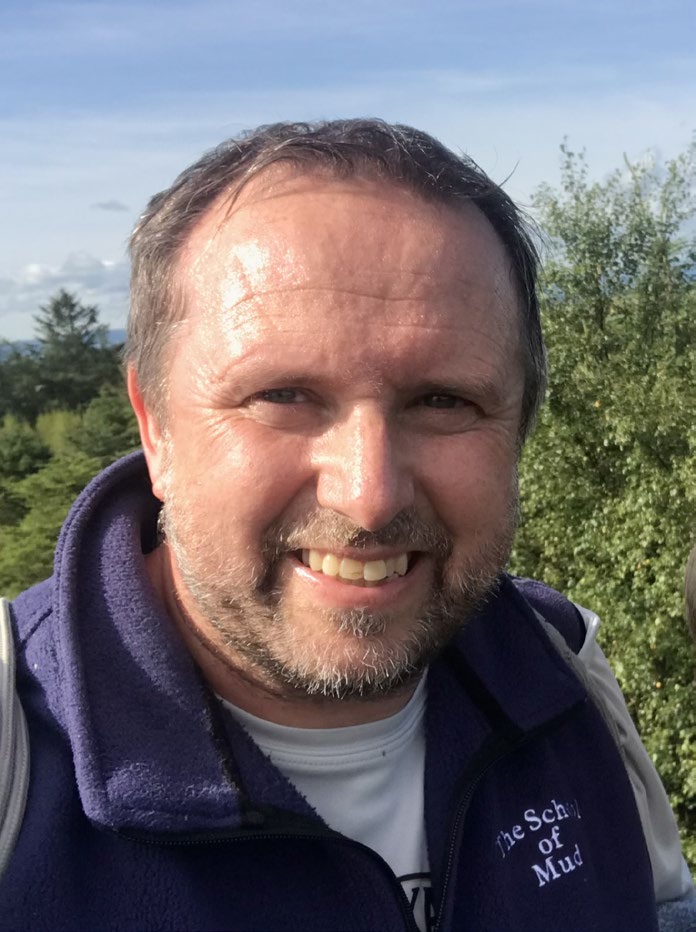
We sat down with Rene Jonk to talk all things geoscience training!
What is your field and specialization?
I would say I cover a range of geoscience (stratigraphy, petroleum systems, structural geology) disciplines broadly and like working with all data types (outcrop, core, logs and seismic), so it’s hard to claim a specific specialization!
I spend a significant amount of time looking and thinking about the mud side of any geology story, as that is critical to understanding most subsurface problems holistically. So perhaps I am known a bit as a “mud guy” to some in the community.
Tell us a bit about your journey into teaching
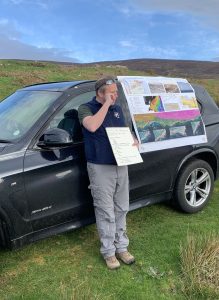
My dad was a geography teacher and from an early age I was fascinated watching him (and other teachers I interacted with at school) deliver taught content in different styles and manners in the classroom and also outdoors. I realized visual props (maps, sections, drawings) were a powerful teaching aid, as was showing/learning by doing.
I always was excited to try my hand at “teaching” at various stages of my career, from tutoring one-on-one for high-school math/physics, through being a lab assistant for undergraduate geology curriculum to designing and delivering classroom and field-based training while at ExxonMobil and Apache.
I was fortunate to come across great teachers over my career and learned many teaching styles from them. In the end though, everyone has their own delivery style, and I continue to improve mine, with a large focus on learning-by-doing and making a class as interactive as possible.
Tell us about a favourite memory from fieldwork or field training?
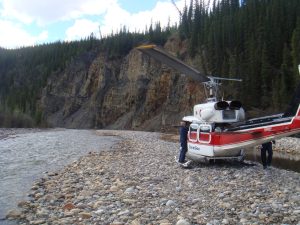
Wow! There are so many! Difficult to high-grade just one of them! A great experience I had was doing remote fieldwork in the Mackenzie Mountains of Canada; being dropped by helicopter for two weeks away from “civilization”. As you can imagine, the logistical and safety aspects of such an expedition take on quite a bit of time and effort. We planned for all sorts of possible calamities, including dealing with injury while remote, adverse weather, equipment malfunction, bear encounters etc. But in the end, one of the biggest safety issue we had was the destruction of our expensive down sleeping bags by small rodents (shrews or voles) who presumably used it to make their burrows more comfortable! It just goes to show that there are always unplanned components in field-based activities to flexibly deal with on-the-spot!
Tell us what do you find is the key to making your courses successful?
Making a training course interactive, lectures that include “showing-by-doing” and having plenty of exercise materials that allow participants to practice in a “safe” (no wrong answers!) environment is important. Additionally, I will always customize delivery based on the interactions and questions students ask, there are always more lecture materials, exercises and stories that can be pulled into a delivery!
Tell us a fun fact about yourself that most people don’t know
I love music and musical instruments. I play the trumpet, guitar and harmonica (not all at the same time!). I haven’t had as much time to devote to this since having kids, but perhaps that will come back into the fold again as the kids get older. I have noticed many geologists have a passion for music and instruments as well and it is always a good conversation starter or even better, an opportunity for a bit of a jam session.
What is the biggest challenge facing the sector today from your perspective?
There is no denying the general field of geoscience is facing the toughest outlook at least over the duration of my career. Many educational programs are closing all over the world and there have been a lot of job redundancies, particularly in the oil and gas industry, over the last 10 years.
I think a big challenge we have is making the case for the value of geoscience in surface and subsurface problems the world is facing and will continue to face in the future. We seem rather inept as a community to articulate the value of the discipline to company leaders, politicians, other related technical disciplines or the general public for that matter.
I also worry about the (mis)use of AI workflows in “by-passing” critical subsurface evaluations of noisy and ambiguous data. Or even considering the right question and analytical workflow to follow to tackle a problem or make a prediction. In the end, subsurface evaluations are all about making predictions, and I feel the ability that geoscientists have in that realm are being lost and forgotten.
What would be your advice to junior geoscientists starting their careers today?
I do not tend to provide much in the way of “advice”, everyone has their own preferences and tendencies (“you do you”) and it is not for me to suggest I know what someone should or shouldn’t do. But if I had to give one piece of advice it is to maintain your professional network from being a student onwards. Hopefully that is relatively easy, as you study something you love with people you share that passion with! Find a professional society that shares your interests and passions and become an active member and volunteer to help out with events.
Do you have a geology joke?
I had the privilege of working and delivering training with some witty geoscientists, so there are many jokes and one-liners!
One of my favourite one-liners is “clinothems are like dinosaurs, thin on one end, thick in the middle and thin at the other end”. A great way to visualize! I heard that one from one of my mentors, Kevin Bohacs. Not sure if it’s a Kevin-original or he heard it from one of his mentors back in the day!