World-class training for the modern energy industry


Meet the Expert: 5 Minutes with Zane Jobe
 January 12, 2026
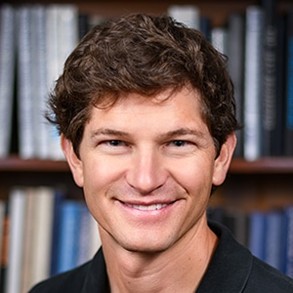
We sat down with Zane Jobe to talk about teaching and fieldwork adventures!
What is your field and specialization?
I am a sedimentary geologist, specializing in deep-marine depositional environments, both modern-seafloor and ancient (outcrop and subsurface) analogs for reservoirs.
Tell us a little about your journey into teaching
I led my first field trip as a graduate student in southern Chile, and really enjoyed the process of helping others discover what I found exciting! I was lucky during my 7 years in industry to revamp Shell’s field training program and lead several field trips every year.
Tell us about a favourite memory from fieldwork or field training?
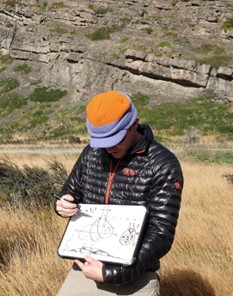
I have lots of “Type II fun” stories (i.e., not fun at the time but upon later reflection are rewarding), mostly involving the wind and sideways snow in southern Chile. The one that comes to mind is a grueling hike up a steep slope in the howling wind, but at the top finding a small sheltered spot where we could toss hand-sized rocks up into the wind and watch them disappear over the ridge!
Tell us what do you find is the key to making your courses successful?
Integrating the subsurface that participants are familiar with (e.g., a particular field) into the field training to translate the learnings from a specific outcrop into something that is actionable.
Tell us a fun fact about yourself that most people don’t know
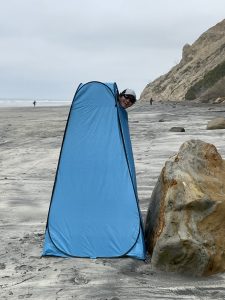
I am terrified of clowns!
What is the biggest challenge facing the sector today from your perspective?
The advancement of 3D critical thinking skills, which is best learned in the field (and to a lesser extent, using virtual field trips) – the lack of funding and opportunities for professionals and students to get in the field to learn these skills is worrying.
What would be your advice to junior geoscientists starting their careers today?
Because many folks will be in development and operational/execution roles, I think it is important to advocate for opportunities to integrate larger-scale datasets in an exploration context in order to hone those 3D and 4D spatial-reasoning skills. Oh, and learn QGIS and python!
Do you have a geology joke?