World-class training for the modern energy industry


Exploring Modern Depositional Systems in the Field
 February 19, 2026

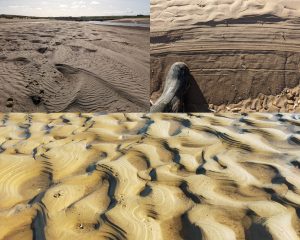
Most of our depositional systems field courses focus on the analysis of lithified units but in some cases, it is possible to include modern sediments and explore the range of depositional processes operating and the resultant spatial distribution and internal attributes of potential reservoir units. Two of our courses offer such an opportunity, with one able to include local outcrops and the second using core to showcase ancient examples.
G070: Modern and Ancient Tide- and Wave-influenced Depositional Systems: Subsurface Uncertainties in Shallow Marine Reservoirs, SE England, UK
Tide- and wave-influenced marginal marine hydrocarbon reservoirs offer a range of subsurface interpretation and development challenges. This course uses both modern and ancient systems to analyze the architecture, internal characteristics, distribution and reservoir quality of a variety of sand-dominated deposits. Modern deposits of the North Norfolk coastline are used to explore the range of depositional processes operating and the resultant spatial distribution and internal attributes of potential reservoir units. These will be compared with Lower Cretaceous outcrops preserving a range of tidal-influenced and marine embayment deposits. Focus is placed on the key development challenges in these marginal marine clastic systems.
G030: Modern and Ancient Carbonate Lakes of the Western U.S.: Lessons for Interpreting the Cretaceous Pre-Salt Reservoirs in the South Atlantic, Utah, Nevada and California
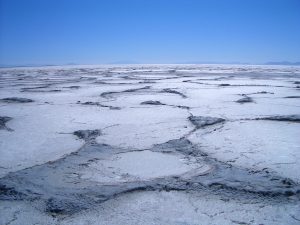
The pre-salt “microbialite” reservoirs of offshore Brazil and West Africa (such as the Barra Velha Formation of the Santos Basin) are highly problematic reservoirs. While there are no modern or ancient analogs for the Barra Velha and its equivalents, the modern rift basin lakes in western U.S. can be used to demonstrate a range of issues relevant to understanding the reservoirs. This course combines field visits with classroom lectures and core examination, and throughout the course comparisons are made with the pre-salt reservoirs from the South Atlantic to provide a forum for discussion to aid understanding of these reservoirs.
Both of these courses can be delivered off-the-shelf or customized to incorporate your data sets, case studies and specific technical requirements. We can also arrange similar courses covering fluvial and aeolian depositional systems. For more information on what we can offer please visit our Services and Course Library pages.