World-class training for the modern energy industry

Geoenergy Production, Injection and Storage Engineering (G546)

Tutor(s)

Gioia Falcone: Rankine Chair of Energy and Engineering, University of Glasgow.

Overview

This course covers fundamental aspects and best practices of production, injection and storage engineering for different geoenergy applications, where the subsurface is used as a source (hydrocarbons, geothermal energy), or as a periodic/seasonal store (natural gas, compressed air, hydrogen, thermal energy), or as a sink (CO2, radioactive waste). The course focuses on an integrated system approach, to ensure compatibility between subsurface and surface engineering processes, and to understand scalability of technologies that may play a pivotal role in the transition to a sustainable energy future.

Duration and Logistics

Classroom version: A 3-day course comprising a mix of lectures, case studies and exercises. The manual will be provided in digital format and participants will be required to bring a laptop or tablet computer to follow the lectures and exercises.

Virtual version: Five 3.5-hour interactive online sessions presented over 5 days. A digital manual will be distributed to participants before the course. Some reading is to be completed by participants off-line.

Level and Audience

Advanced. The course is intended for geoscientists, geoengineers, project managers and regulators wishing to learn how to design, manage and monitor integrated geoenergy systems, from the subsurface to the surface (and vice versa), including the associated uncertainties and risks.

Objectives

You will learn to:

  1. Appreciate the different ways in which the subsurface can be exploited for different geoenergy applications.
  2. Bring together the different elements of a production/injection/storage geoenergy system towards integrated design and management.
  3. Identify the uncertainties and risks of different geoenergy projects over their lifetimes.
  4. Assess the impact of different operational requirements on overall system design and performance.
  5. Optimize system performance under constraints.
Aquifer Thermal Energy Storage (G519)

Tutor(s)

Matthew Jackson: Chair in Geological Fluid Dynamics, Imperial College London.

Overview

This course covers all subsurface aspects of Aquifer Thermal Energy Storage (ATES) and includes a brief overview of surface engineering and infrastructure requirements. The course includes an introduction to ATES, aquifer characterization for ATES, including geological and petrophysical considerations, ATES performance prediction, including modelling and simulation, and engineering considerations, including ATES system management and optimization.

Duration and Logistics

Classroom version: A 3-day course comprising a mix of lectures, case studies and exercises. The manual will be provided in digital format and participants will be required to bring a laptop or tablet computer to follow the lectures and exercises.

Virtual version: Five 3.5-hour interactive online sessions presented over 5 days. A digital manual exercise will be distributed to participants before the course. Some reading and exercises are to be completed by participants off-line.

Level and Audience

Advanced. The course is relevant to geoscientists and engineers and is intended for recent graduates and professionals with experience of, or a background in, a related subsurface geoscience or engineering area.

Objectives

You will learn to:

  1. Describe the underlying principles of ATES and the context of its deployment worldwide.
  2. Evaluate the properties of an aquifer for ATES deployment.
  3. Perform aquifer characterization for ATES.
  4. Appreciate the engineering considerations for efficient and sustainable ATES operation.
  5. Understand modelling and simulation of ATES.
  6. Optimize single and multiple ATES projects.
  7. Evaluate surface infrastructure requirements and operation.
  8. Review the regulatory considerations for deployment and operation.

Geothermal Resources Assessment: Quantification and Classification (G515)

Tutor(s)

Gioia Falcone: Rankine Chair of Energy and Engineering, University of Glasgow.

Overview

This course covers the principles of geothermal resources assessment, encompassing quantification and classification best practices. Leveraging lessons learnt from the oil and gas sector, the course highlights the need for transparency in the approach. It presents the challenges and opportunities of comparing the assessment of different energy resources within a mixed energy portfolio, towards the transition to a sustainable Net zero future.

Duration and Logistics

Classroom version: A 2-day course comprising a mix of lectures, case studies and exercises. The manual will be provided in digital format and participants will be required to bring a laptop or tablet computer to follow the lectures and exercises.

Virtual version: Four 3.5-hour interactive online sessions presented over 4 days. A digital manual will be distributed to participants before the course. Some reading is to be completed by participants off-line.

Level and Audience

Advanced. The course is intended for energy policy makers, energy stakeholders in charge of investment and funding decisions, and oil and gas professionals transitioning towards sustainable energy opportunities.

Objectives

You will learn to:

  1. Understand the need for energy resource assessment.
  2. Describe different resource estimation methods.
  3. Interpret resource assessments according to different frameworks.
  4. Identify the uncertainties and risks associated with a geothermal resource assessment.
  5. Assess the impact of project definition on resource quantification and classification.
  6. Discuss the technical, economic, social and environmental nexus of energy resources assessment.

Geothermal Technologies and Well Design (G514)

Tutor(s)

Gioia Falcone: Rankine Chair of Energy and Engineering, University of Glasgow.

Overview

This course covers fundamental aspects of geothermal engineering, linking the subsurface to the point of sale (or point of use). It encompasses the main geothermal energy uses, focusing on deep geothermal resources exploitation methods, where wells are required. The course also covers conventional and unconventional geothermal technologies, including closed-loop solutions and hybrid energy development opportunities.

Duration and Logistics

Classroom version: A 2-day course comprising a mix of lectures, case studies and exercises. The manual will be provided in digital format and participants will be required to bring a laptop or tablet computer to follow the lectures and exercises.

Virtual version: Four 3.5-hour interactive online sessions presented over 4 days. A digital manual will be distributed to participants before the course. Some reading is to be completed by participants off-line.

Level and Audience

Advanced. The course is intended for geoscientists wishing to learn the engineering aspects of geothermal project implementation, and oil and gas professionals transitioning towards sustainable energy opportunities.

Objectives

You will learn to:

  1. Understand the different way in which a given geothermal energy resource can be exploited, and the associated uses.
  2. Describe how open-loop and closed-loop engineering solutions work.
  3. Interpret operational aspects of typical geothermal well designs.
  4. Identify the uncertainties and risks of different exploitation methods, vis-à-vis resource sustainability over project lifetime.
  5. Assess the impact of different well performance and well integrity aspects on ultimate recovery.
  6. Discuss and analyse case studies involving different geothermal technologies.

Geology and Fractures for High Enthalpy Geothermal (G507)

Tutor(s)

David McNamara: Lecturer in the Department of Earth, Ocean and Ecological Sciences, University of Liverpool.

Overview

This course covers aspects of geoscience relevant to high enthalpy geothermal systems. It will introduce the geothermal system play concept and geothermal field classification. Teaching materials and exercises will provide skill development in how to characterize important aspects of the geology of these geothermal systems from structural networks, permeability, geomechanics and more.

Duration and Logistics

Classroom version: A 3-day course comprising a mix of lectures, case studies and exercises. The manual will be provided in digital format and participants will be required to bring a laptop or tablet computer to follow the lectures and exercises.

Virtual version: Five 3.5-hour interactive online sessions, comprising three lecture sessions and two practical sessions (one on working with borehole image logs in geothermal wells and interpreting these datasets, and the other on stress field characterization from well data). The sessions are presented over 5 days. A digital manual and exercise materials (including well logs) will be distributed before the course. Some reading and exercises are to be completed by participants off-line.

Level and Audience

Advanced. The course is intended for all career stage industry professionals and early career researchers with a geoscience or geo-engineering background, including those with a familiarity in oil and gas production.

Objectives

You will learn to:

  1. Recognize the geological components of a geothermal system play.
  2. Understand the range of data required to characterize a fractured geothermal reservoir.
  3. Characterize fracture and stress data from a geothermal reservoir that can be used in geomechanical models and flow models.
  4. Determine potential geological controls on well permeability.

Subsurface Pressures for Injection of Fluids and Gases (G504)

Tutor(s)

Richard Swarbrick: Manager, Swarbrick GeoPressure.

Overview

This course covers all aspects of subsurface pressures with particular emphasis on pre-drill estimates and the conditions for injection and storage of fluids and gas, including hydrogen and CO2. Methods for estimating pressures from rock and fluid properties will be reviewed, as well as the processes that determine them in the subsurface prior to drilling. The impact of rock strength relative to fluid pressure at depth will also be discussed, in relation to injection rate limitations and storage volumes.

Duration and Logistics

Classroom version: A 3-day course comprising a mix of lectures, case studies and exercises. The manual will be provided in digital format and participants will be required to bring a laptop or tablet computer to follow the lectures and exercises.

Virtual version: Five 3.5-hour interactive online sessions presented over 5 days. A digital manual and exercise materials will be distributed to before the course. Some reading and are to be completed by participants off-line.

Level and Audience

Advanced. Intended for geoscientists and engineers who are involved in drilling into reservoirs for the purpose of injecting, storing and producing fluid. Some knowledge of subsurface geology and the basics of drilling wells would be an advantage.

Objectives

You will learn to:

  1. Understand how subsurface pressures determine safe injection, storage and production from deep reservoirs.
  2. Appreciate the processes that govern safe drilling, with particular emphasis on pore fluid and fracture pressures.
  3. Describe how to analyze subsurface pressure data and calibrate to estimate pore pressures from a variety of drilling and logging data.
  4. Relate regional and local rock stress magnitudes to failure of seals.
  5. Evaluate how to assess volumes that can be safely sequestered in underground storage.
  6. Interpret typical pressure profiles, in terms of subsurface fluid processes, such as lateral drainage (open aquifers) and lateral transfer (enhanced pressures and a drilling surprise).
  7. Perform basic pressure prediction calculations and estimate storage volumes.
  8. Review and critique relevant case study material.

Sand-rich Turbidite Systems: From Slope to Basin Plain, Pyrenees, Spain (G016)

Tutor(s)

Henry Pettingill: Senior Associate, Rose & Associates LLP; President, Geo Ventures International Inc.

Overview

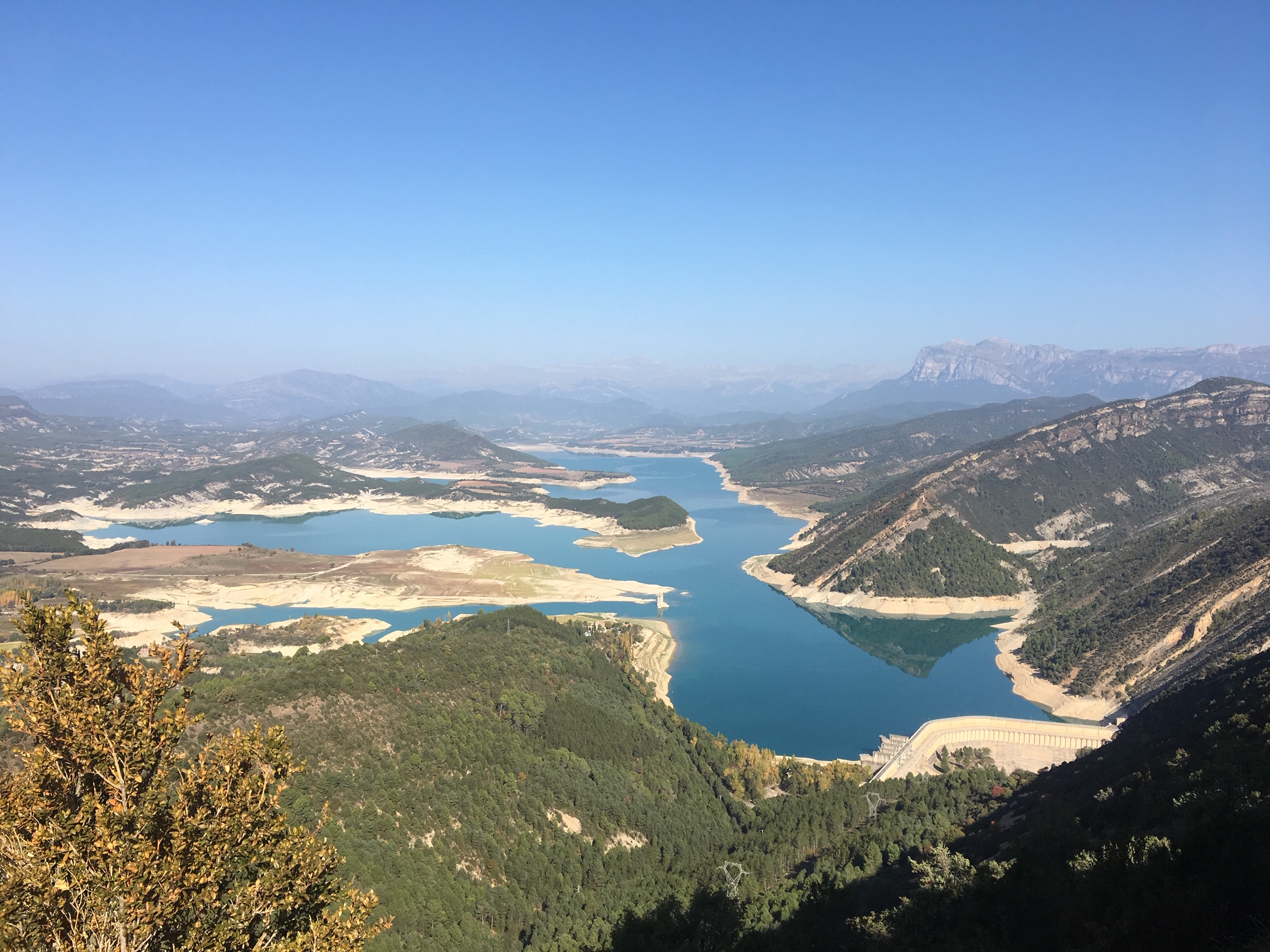
This course in the Central Pyrenees will visit spectacular outcrops of Eocene deep marine clastics in the confined mini-basin settings of the Ainsa and Jaca basins. Shelf-slope-basin relations are examined in detail and reveal features such as ponding in sub-basins, system architecture and reservoir stacking patterns. Identification of facies types is emphasized at both reservoir and exploration prospect scales. The use of the outcrops as analogs for producing oil and gas fields is discussed and 3-D models of the basin infill and deep marine deposition will be shown. Attendees are encouraged to bring their own data for discussion as either presentations or as posters.

Duration and Logistics

A 6-day field course comprising a mix of outcrop examination and discussion (70%), core examination (15%) and supporting classroom lectures (15%). The course is conducted in the Central Pyrenees of northern Spain, with attendees arriving in and departing from Barcelona, Spain. The course materials are supplied as a short, printed field guide with supporting lecture material provided in digital format – if you wish to access this while on the course you will need to bring a laptop or tablet computer.

Level and Audience

Advanced. Suitable for geoscientists and reservoir engineers seeking to understand deepwater clastic reservoir distribution, prediction and compartmentalization. Appropriate for asset teams looking to develop a common understanding of their deepwater clastic reservoirs.

Exertion Level

This class requires an EASY exertion level. Travel between outcrops will be by small coach and there are several short hikes of 2–3km (1.2–1.8 miles) over uneven ground, but nothing overly strenuous. The weather can be variable and ranges from hot and dry to cold and very wet, with fall temperature ranges of 5–30°C (40–85°F), so please be prepared. Field days start around 9am and finish at 6–7pm. (Please note that meals are taken rather late by North American and northern European standards.)

Objectives

You will learn to:

  1. Recognize genetically linked facies deposited by submarine gravity flow processes within a partitioned foredeep, from slope to basin plain.
  2. Identify the transitions between the various components of the system (channel, lobe, etc.), their controls and predictive aspects.
  3. Characterize the geometry and scale of sand bodies and their stacking patterns in outcrop and compare with reservoir units in analogous subsurface settings.
  4. Assess the relation between syndepositional tectonics and partitioned mini-basins that act as receiving basins.
  5. Assess and predict the control of sand body geometry and reservoir architecture on reservoir production characteristics.
  6. Assess high-frequency cyclicity recorded in the sediments and relate these patterns to intrinsic and extrinsic basin controls.
  7. Apply predictive models for the infill of facies and stacking patterns based on the interplay between mini-basin geometry/development and sediment infill.

Workflows for Seismic Reservoir Characterization (G004)

Tutor(s)

Patrick Connolly: Director, Patrick Connolly Associates; Visiting Lecturer, University of Leeds, UK.

Overview

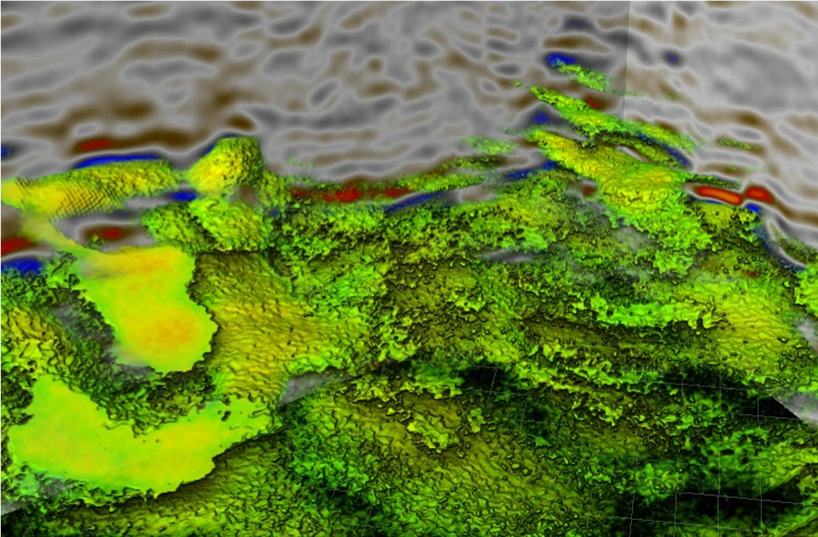
This course will provide participants with the skills needed to design and implement workflows for seismic reservoir characterization using established best-practice and emerging technology. The course covers seismic conditioning, colored inversion, AVO theory including elastic and extended elastic impedance, DHIs, seismic net pay, well ties, rock physics and deterministic and probabilistic inversion, including the application ODiSI.

Duration and Logistics

A 4-day classroom course comprising a mix of lectures with examples (70%) and laptop-based exercises and discussion (30%). The manual will be provided in digital format and participants will be required to bring a laptop or tablet computer to follow the lectures and exercises.

Level and Audience

Advanced. Intended for practicing seismic interpreters. Participants should have a basic knowledge of the seismic method, including acquisition and processing, with a minimum of three years working with seismic data. However, the subject matter of this course, AVO and inversion, is covered from basic principles.

Objectives

You will learn to:

  1. Appreciate the benefits of colored inversion – how and why it works and how to get the best results from a colored inversion application.
  2. Understand the relationships between reflectivity and impedance, and between time and frequency.
  3. Understand the model for AVO measurements and the difficulties in making accurate AVO measurements.
  4. Understand the concepts behind AVO analysis, including intercept-gradient crossplots and the theoretical relationship between elastic and AVO properties.
  5. Optimize AVO products for subsequent characterization work and create seismic products that correlate with specific reservoir properties.
  6. Appreciate the risks of using attributes with no physical relationship with the desired objective.
  7. Appreciate the limitations of the seismic net pay method and to know when it is, and is not, applicable.
  8. Understand the principles and pros and cons of deterministic and probabilistic inversion and how to select the appropriate inversion strategy for any given problem.

Reservoir Characterization of Deepwater Systems, San Diego, California (G046)

Tutor(s)

Rene Jonk: Director, ACT-Geo Consulting and Training; Honorary Professor, University of Aberdeen.

Overview

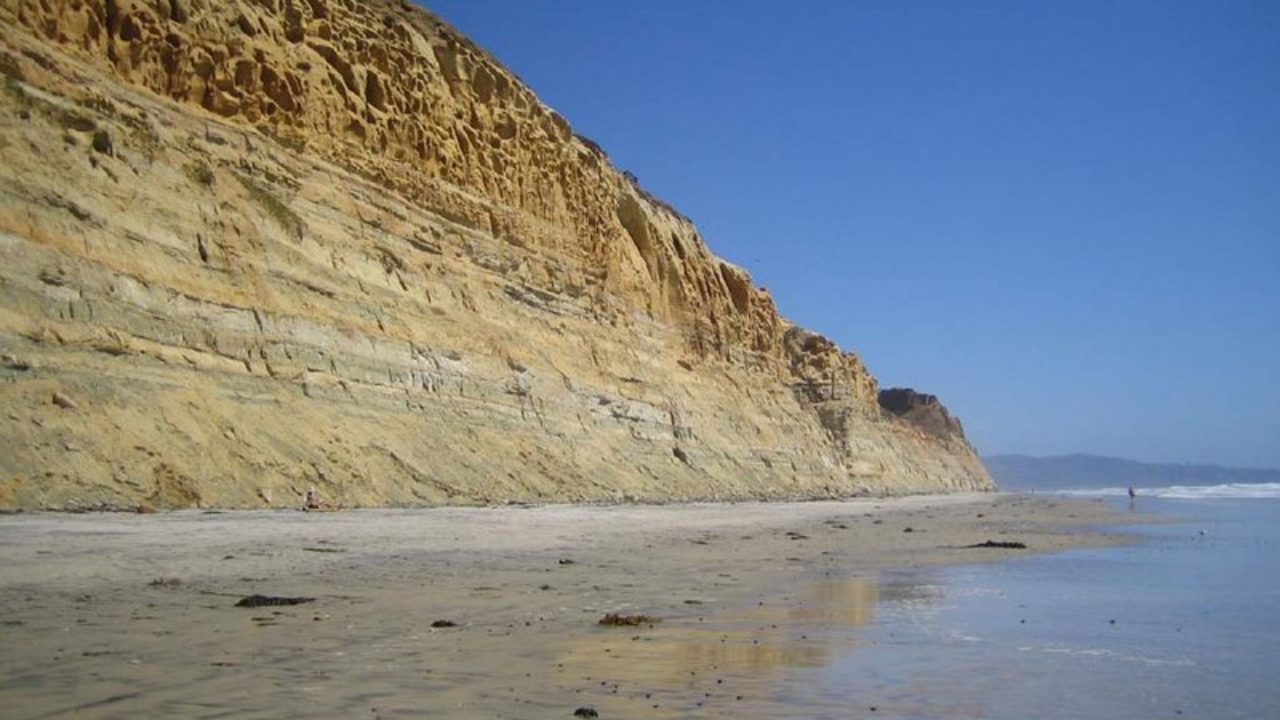
Submarine canyons and deepwater channels are the primary conduits for the transfer of coarse sediments from the shelf to deep-water fans and they are today major targets for petroleum exploration. Southern California has had a long and complex geologic history that has involved many episodes of deepwater sedimentation in a variety of settings ranging from the Paleozoic passive margin of the North American craton to Mesozoic forearc and arc settings to Cenozoic transform, pull-apart, and continental borderland basins. These settings feature deep-water deposits in which both large and small submarine channels and fans played major roles as sediment transport routes and sites of sedimentation.

Duration and Logistics

6 days; a mix of outcrop examination and discussion (70%) and supporting classroom lectures (30%).  The field course is conducted in southern California along the coastline north of San Diego.

Level and Audience

Advanced. Geologists, geophysicists, and petroleum engineers working on deep water reservoirs from exploration to production.

Exertion Level

This class requires a MODERATE exertion level. Access to the coastal cliff outcrops is via sandy beaches, with most walks under 2 km. Some shallow wading on a sandy beach is also necessary in order to visit some outcrops.

Objectives

You will learn to:

  1. Review deepwater lithofacies nomenclature and definitions, common lithofacies associations, and interpret lithofacies in outcrops and cores.
  2. Interpret environments of deposition (EoD’s) and related reservoir architecture, lithofacies associations, and diversity.
  3. Interpret sequence stratigraphic surfaces in outcrop, logs, and seismic in DW settings and related to vertical stacking of facies.
  4. Use core and well-logs to interpret EoD’s.
  5. Evaluate reservoir geometry and connectivity in different EoD’s.
  6. Recognise the Do’s and Don’ts of using outcrops as reservoir analogs
  7. Apply outcrop information as analog for reservoir model building
  8. Evaluate seismic response, including geometry, facies, and acoustic response in deepwater EoD’s
  9. Apply the criteria for the identification of Composite Sequences, Sequence Sets, and Depositional Sequences and their components in outcrops, cores, well logs, and seismic
  10. Use interpretation and mapping techniques for cores, well-logs, and seismic lines in deepwater settings, from Exploration to Production business scales
  11. Apply criteria and mapping strategies for play elements in deepwater depositional settings
  12. Identify and map play fairways in deepwater settings.

Understanding Faults, Fault Seal and Fault Rupture: Applications to Fluid Trapping, Pressure Containment and Induced Seismicity, Moab, Utah (G058)

Tutor(s)

Bob Krantz: Consulting Geologist and Adjunct Professor, University of Arizona.

Peter Hennings: Research Professor, UT Austin, Texas.

Overview

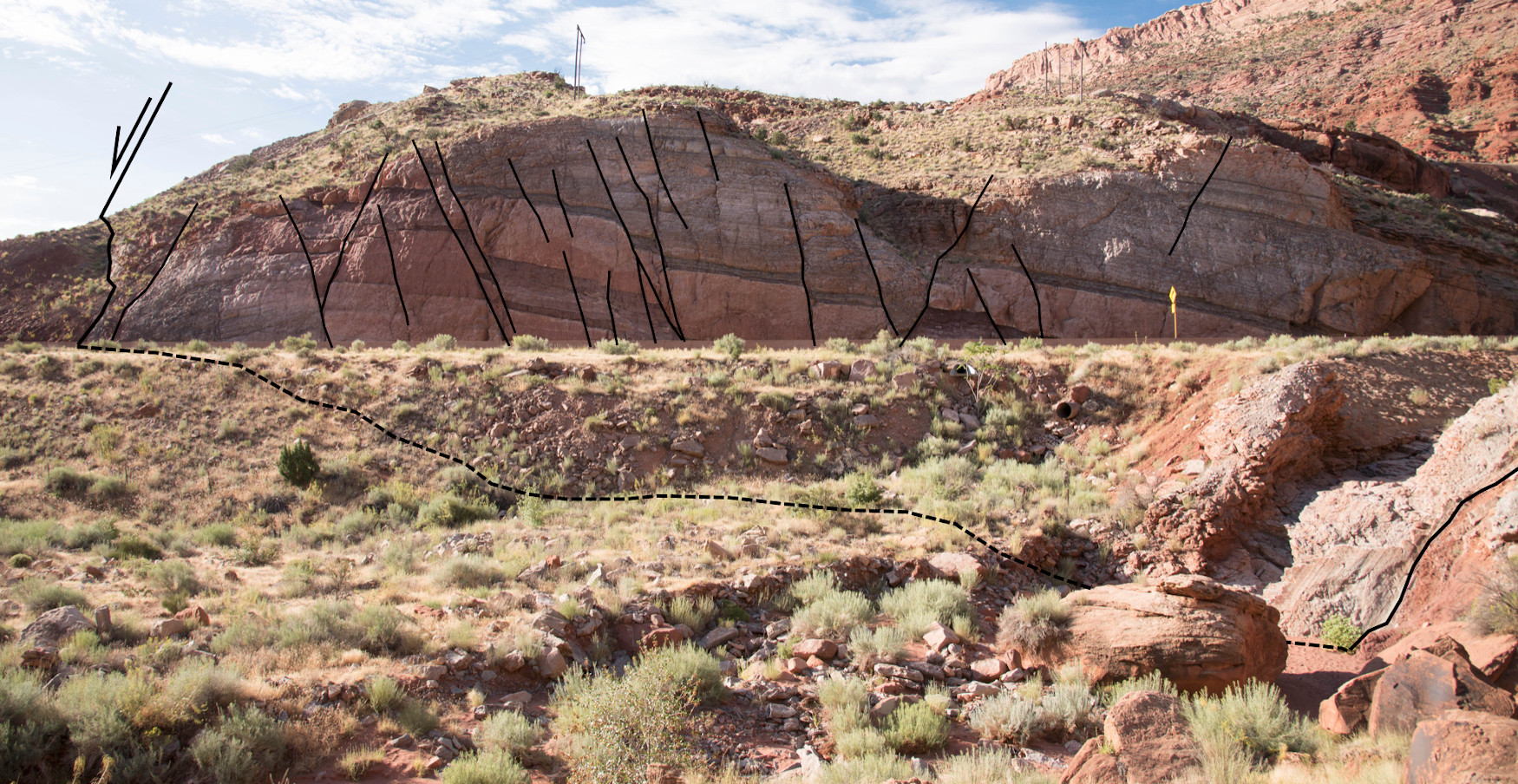
This course provides an analysis-level treatment of fault geometry, characterization of seal effectiveness, and assessment of rupture hazard with application to hydrocarbon exploration, reservoir development and management, fluid pressure containment analysis for CCS, and induced seismicity hazard assessment. The Moab fault system and surrounding geology provide exceptional examples of trap-scale structures with fault zone characteristics that vary depending on offset and juxtaposed rock type, and which are documented to have both sealed and leaked over geologic time in patterns that are clearly expressed. Reframing these outcrops to subsurface application is immensely valuable in understanding static and dynamic fault behavior.

Duration and Logistics

6 days; classroom lectures (30%), practical exercises (30%) and field visits to some of Earth’s best-exposed and thoroughly studied outcropping fault systems (40%).

The course is based in Moab, Utah, with participants arriving in and departing from Grand Junction, Colorado.

Level and Audience

Advanced. This course is intended for geoscientists and reservoir engineers who work with layered faulted reservoirs. Participants would benefit from having a basic familiarity with structural geology.

Exertion Level

This class requires a MODERATE exertion level. The fieldwork will involve walking up and down slopes over rough ground. There will be walks of up to 1.6km (1 mile) on most days, the most strenuous being an ascent (and descent) of 100m (330 ft) over rocky ground as part of a 3.2km (2 miles) walk. The altitude of the field area ranges from 1200–1750m (4000–5800 ft), which may lead to unexpected shortness of breath for some. The weather should be pleasant with typical highs of 27°C (80°F) in the fall, but early morning temperatures may be below 5°C (40°F) and highs could reach 32° (90° F) on some days. Transport will be by mini-van or SUV on paved and graded dirt roads.

Objectives

You will learn to:

  1. Describe fault geometry and how they form, displace and link in 2-D and 3-D.
  2. Understand how fault systems evolve over geologic time.
  3. Characterize controls on mechanical stratigraphy.
  4. Apply 3-D fault framework interpretation methods.
  5. Identify fault zone deformational fabrics and mechanics.
  6. Develop reservoir compartmentalization models.
  7. Understand static and dynamic fault seals, fault permeability and seal effectiveness.
  8. Predict fault reactivation likelihood for application to seal failure, containment breach, and induced seismicity.