World-class training for the modern energy industry

An Introduction to Climate Science (G523)

Tutor(s)

Chris Stokes: Professor, Department of Geography, Durham University.

Overview

This course provides an introduction to climate science, with a particular focus on the physical science of climate change across a range of timescales – past, present and future. The course will begin with an overview of the modern climate system, then examine the science of climate change, including the patterns and causes both in the past and at present. A particular focus will be on recent ‘global warming’ and some of the observed changes in the atmosphere and ocean, together with some of the most serious impacts of a warming planet. This will include observed changes in the cryosphere (glaciers, permafrost, sea ice) and associated sea level rise, but will also cover some of the human health impacts, including extreme weather events such as drought and heatwaves, and efforts to address the current climate ‘emergency’ (e.g. the Paris Climate Agreement). The course will end with a consideration of how climate science is communicated and the role of the media, including discussion of some of the major misconceptions / controversies around anthropogenic climate change.

Duration and Logistics

Classroom version: A 1.5-day course comprising a mix of lectures, case studies and exercises. The manual will be provided in digital format and participants will be required to bring a laptop or tablet computer to follow the lectures and exercises. 

Virtual version: Three 3.5-hour interactive online sessions presented over 3 days. A course handbook and exercise materials will be distributed to participants before the course. Some reading and exercises are to be completed by participants off-line and in preparation for sessions.

Level and Audience

Fundamental. The course is intended for industry professionals and those interested in climate science from both the public and private sectors, or with a personal interest in understanding climate change. It is suitable for penultimate-year undergraduate university students and above.

Objectives

You will learn to:

  1. Understand the physical science underpinning past, present and future climate change, including the attribution of recent warming to human activities.
  2. Understand how and why global climate has changed and will change, and be able to assess uncertainties.
  3. Describe the key impacts of climate change on various physical systems (e.g. the oceans and cryosphere), the linkages between them and their relevance to human activities.
  4. Understand how climate change impacts extreme weather events and human health.
  5. Evaluate and interpret various climate and paleoclimate datasets, including future climate scenarios and their associated uncertainties.
  6. Critically evaluate the various misconceptions and controversies around ‘global warming’, including the role of the media and efforts to communicate climate science.
  7. Assess the effects and importance of mitigation scenarios (such as the Paris Climate Agreement) on global climate change and the role of the IPCC (Intergovernmental Panel on Climate Change).
Challenges for the Social and Economic Impact Assessment of GeoEnergy Transition Projects (G539)

Tutor(s)

Eddie Smyth: Director, Intersocial Ltd.

Alistair Donohew: Director, Kovia Consulting Ltd.

Overview

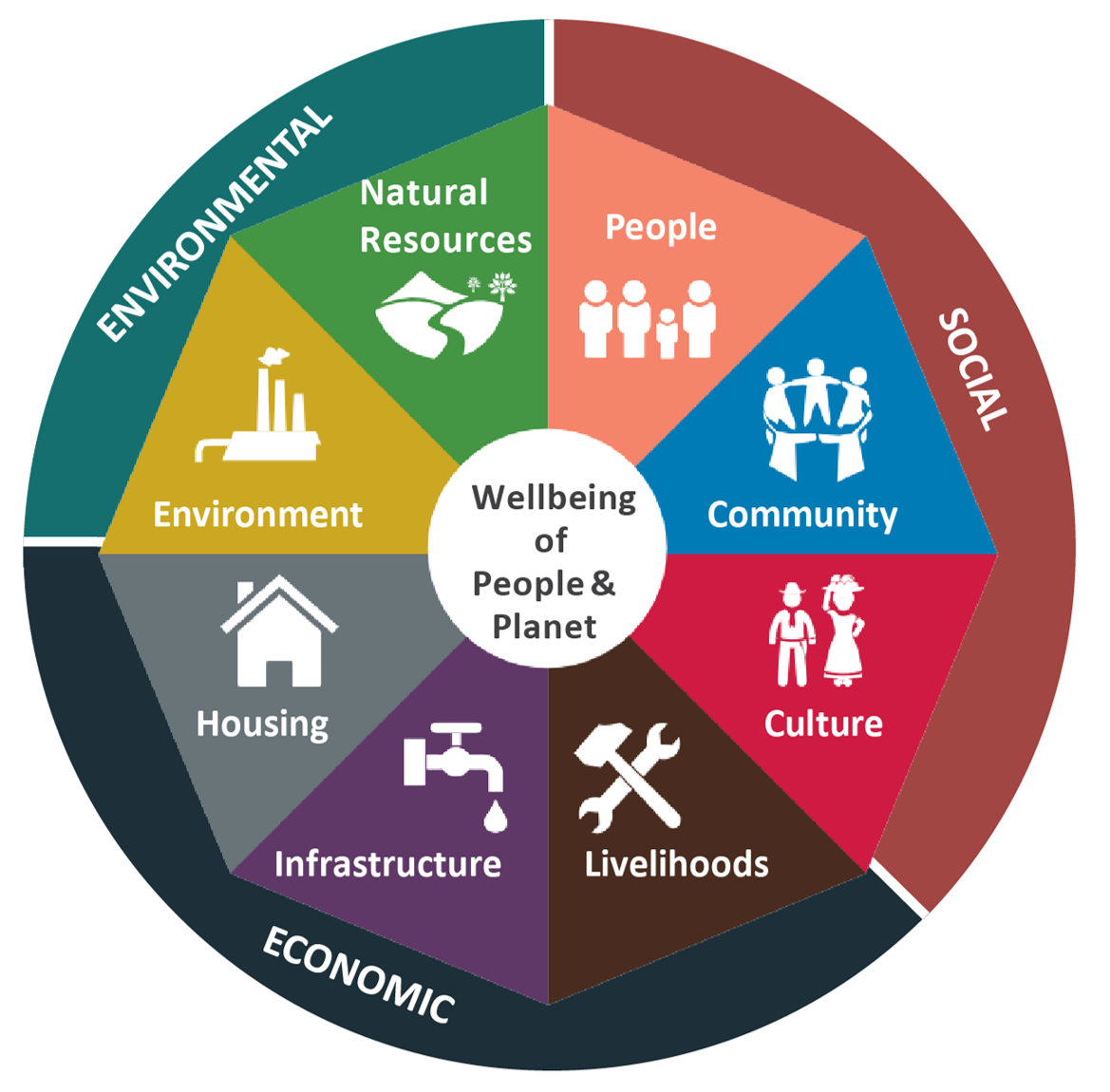
Geoenergy projects typically create social, environmental and economic effects, which can range from job creation to the resettlement of communities. Ideally all potential effects are considered during the siting and development of projects to optimize the overall impact. However, the way that projects are assessed can vary and this training will provide a comparative review of international and UK methodology and practice.

Level and Audience

Fundamental. The course is aimed at post-graduate geoscientists, as well as regulators, consultants and developers. Impact assessment practitioners will also find the course instructive.

Duration and Logistics

Classroom version: A half-day course comprising a mix of lectures, case studies and exercises. The manual will be provided in digital format and participants will be required to bring a laptop or tablet computer to follow the lectures and exercises.

Virtual version: One 3.5-hour interactive online session. Digital course notes and exercise materials will be distributed to participants before the course. Some exercises may be completed by participants off-line and there will be links provided to useful additional and applied learning.

Objectives

You will learn to:

  1. Understand the physical, social, environmental and economic context of geoenergy projects.
  2. Understand the range of impacts of geoenergy projects and how they can be interrelated and how different groups and receptors can be affected by them.
  3. Explain impact assessment methodologies and how they can shape geoenergy project development and delivery.
  4. Describe the range of impact assessment practices at UK and international level.
  5. Explain clear challenges for geoenergy projects, as well as for those assessing them.

Carbon Capture and Storage: The Geoscience Fundamentals (G540)

Tutor(s)

Richard Worden: Professor in the Department of Earth Ocean and Ecological Sciences, University of Liverpool, UK.

Overview

This course will provide participants with the fundamental geoscience concepts of Carbon Capture and Storage (CCS) projects; namely subsurface CO2 storage volumetrics, CO2 flow in the subsurface away from injector wells, the goal of safe and permanent storage of CO2 and cost-benefit issues linked to aquifer depth, well design, etc. The course is aimed at non-specialist staff so basic geoscience concepts will be explained throughout. The need for CCS will be laid out with evidence as to why geoscientists know it can be effective at mitigating greenhouse gas emissions. The course will deal with CO2 as a fluid phase and how much can be stored in the subsurface. It will deal with how quickly CO2 can be injected and the factors that influence injection rate. The range of consequences of injecting large volumes of CO2 into the subsurface will also be covered, including the risk of minor Earth tremors. The range of possible CO2 leakage mechanisms will be presented, and the course will conclude with a consideration of monitoring strategies and risk assessment approaches.

Duration and Logistics

Classroom version: A 1-day course comprising a mix of lectures, case studies and exercises. The manual will be provided in digital format and participants will be required to bring a laptop or tablet computer to follow the lectures and exercises.

Virtual version: Two 4-hour interactive online sessions presented over 2 days. Digital course notes and simple exercise materials will be distributed to participants before the course. Some exercises may be completed by participants off-line if desired.

Level and Audience

Fundamental. Intended for a non-specialist audience (technical assistants, engineers, geoscience support staff) to raise awareness of the geoscience background to CCS – how it works, possible consequences of injecting large volumes of fluid into the deep subsurface, monitoring strategies and key risks associated with it. The geoscience subject matter is covered from basic principles to make it accessible to non-specialist staff. Basic numeracy will be assumed but most exercises will be based on spreadsheet-based calculations using prepared Excel files. There will be opportunities for discussion about key topics in breakout groups, with feedback to the class. Simple group exercises will be used to illustrate key points.

Objectives

You will learn to:

  1. Appreciate why CCS is needed to cut global carbon emissions.
  2. Develop an understanding of the role of geoscience in CCS and the role of CCS in CO2 emissions reductions.
  3. Appreciate what CO2 injection projects have occurred so far and how they differ from industrial CCS planned in the UK.
  4. Understand how and why CCS works, including basic geological concepts about rocks, fluids in those rocks and the key physical properties of rocks involved in CCS projects.
  5. Understand CO2 as a fluid in the subsurface and how it differs from water, oil and natural gas.
  6. Build an appreciation of how much CO2 can be stored in both old (depleted) oil and gas fields and saline aquifers, and understand the benefits of depleted hydrocarbon fields vs saline aquifers.
  7. Develop a basic understanding of the flow properties of porous rocks and the rate at which CO2 can be injected through a well during CCS, including an appreciation of the role of heterogeneity on the success of CCS projects.
  8. Understand the range of detrimental and beneficial effects that CO2 can have on the host aquifer, from geomechanical to geochemical.
  9. Grasp the critical importance of the role of top-seal and fault-seal properties and how they influence CO2 storage, from risk of fracking, or induced seismicity, to mineral dissolution.
  10. Understand the ways that CO2 could escape from planned CCS sites.
  11. Develop an awareness of the range of monitoring strategies that could be employed to ensure safe and long-term storage of CO2.

Groundwater in a Geoenergy Context (G534)

Tutor(s)

Alistair Donohew: Director, Kovia Consulting Ltd.

Overview

This course examines all aspects of groundwater – from the geological features that affect it, to how it relates to GeoEnergy Transition projects and the wider context of groundwater regulations and management. It is a useful introduction to help access other advanced courses. The course will include some tasks that relate to the practical application of knowledge and formative assessment will be used throughout to allow participants to reflect and manage their learning.

Duration and Logistics

Classroom version: A 1.5-day course comprising a mix of lectures, case studies and exercises. The manual will be provided in digital format and participants will be required to bring a laptop or tablet computer to follow the lectures and exercises.

Virtual version: Three 3.5-hour interactive online sessions presented over 3 days. Digital course notes and exercise materials will be distributed before the course. Some exercises may be completed by participants off-line and there will be links provided to useful additional and applied learning.

Level and Audience

Fundamental. The course is intended for sub-surface scientists, principally geoscientists, but some engineers will also find the course instructive. Participants should have a working knowledge of geoscience. However, the subject matter of this course, groundwater as it relates to GeoEnergy Transition projects, is covered from basic principles.

Objectives

You will learn to:

  1. Explain key groundwater concepts.
  2. Evaluate potential factors controlling groundwater in different geological settings.
  3. Explain how groundwater is investigated and some of the limitations.
  4. Explain how groundwater is relevant and, in many cases, critical to geoenergy projects.
  5. Evaluate how different geological settings can affect the viability of different geoenergy projects.
  6. Describe how and why groundwater is regulated.
  7. Explain how risks to groundwater are assessed and managed.

Critical Resources – Rare Earth Elements (G530)

Tutor(s)

Holly Elliott: Minerals Geoscientist, British Geological Survey.

Overview

This course covers all aspects of rare earth elements (REE) as critical resources, both in terms of technological advancement and combating climate change. We shall delve into the major sources of these elements, their tectonic settings and the enrichment processes that lead to deposit formation. The characteristics of major REE deposits shall be investigated, using international case studies, to determine typical exploration methods and factors affecting processing.

Duration and Logistics

Classroom version: A 1.5-day course comprising a mix of lectures, case studies and exercises. The manual will be provided in digital format and participants will be required to bring a laptop or tablet computer to follow the lectures and exercises.

Virtual version: Three 3.5-hour interactive online sessions presented over 3 days. A digital manual and exercise materials will be distributed to participants before the course. Some reading and exercises are to be completed by participants off-line.

Level and Audience

Intermediate. The course is intended for anyone with an intermediate knowledge of geological processes and exploration techniques.

Objectives

You will learn to:

  1. Understand the characteristics and behavior of REE in these geological environments.
  2. Understand the geological processes leading to formation of different deposit types.
  3. Understand and identify the multiple enrichment mechanisms that lead to REE-enrichment.
  4. Identify typical rocks and minerals associated with REE deposits.
  5. Evaluate typical features of REE deposits to determine appropriate exploration techniques.
  6. Interpret geochemical and exploration data associated with REE deposits.
  7. Assess the economic viability of deposits using typical characteristics.

Aquifer Thermal Energy Storage (G519)

Tutor(s)

Matthew Jackson: Chair in Geological Fluid Dynamics, Imperial College London.

Overview

This course covers all subsurface aspects of Aquifer Thermal Energy Storage (ATES) and includes a brief overview of surface engineering and infrastructure requirements. The course includes an introduction to ATES, aquifer characterization for ATES, including geological and petrophysical considerations, ATES performance prediction, including modelling and simulation, and engineering considerations, including ATES system management and optimization.

Duration and Logistics

Classroom version: A 3-day course comprising a mix of lectures, case studies and exercises. The manual will be provided in digital format and participants will be required to bring a laptop or tablet computer to follow the lectures and exercises.

Virtual version: Five 3.5-hour interactive online sessions presented over 5 days. A digital manual exercise will be distributed to participants before the course. Some reading and exercises are to be completed by participants off-line.

Level and Audience

Advanced. The course is relevant to geoscientists and engineers and is intended for recent graduates and professionals with experience of, or a background in, a related subsurface geoscience or engineering area.

Objectives

You will learn to:

  1. Describe the underlying principles of ATES and the context of its deployment worldwide.
  2. Evaluate the properties of an aquifer for ATES deployment.
  3. Perform aquifer characterization for ATES.
  4. Appreciate the engineering considerations for efficient and sustainable ATES operation.
  5. Understand modelling and simulation of ATES.
  6. Optimize single and multiple ATES projects.
  7. Evaluate surface infrastructure requirements and operation.
  8. Review the regulatory considerations for deployment and operation.

An Introduction to GeoEnergy Transition Projects: Field Seminar in Cornwall, UK (G518)

Tutor(s)

Alistair Donohew: Director, Kovia Consulting Ltd.

Richard Swarbrick: Manager, Swarbrick GeoPressure.

Overview

Cornwall is exceptionally rich in geological resource and is emerging as an important location for developing new technologies in the UK transition to a Net Zero economy. This course provides a snapshot of several operational and demonstration GeoEnergy Transition projects, as well as visits to associated traditional Cornish outcrops and rejuvenated mining operations. Examples of specific projects to be investigated include a deep geothermal energy site and a critical mineral (lithium) extraction site. Participants will also investigate sites previously considered for deep storage of nuclear waste and locations associated with low enthalpy energy from mine waters. Participants will gain a practical and technical understanding of several geoenergy projects and should be able to apply this learning to other geological locations worldwide.

Duration and Logistics

A 6-day field course with a combination of field activities and exercises, plus classroom sessions.

Level and Audience

Fundamental. This course is intended for technical professionals working in related sectors. Participants will be shown the context and challenges for developing low carbon technologies for energy, as well as the parallel examination of surface renewable energy technologies.

Exertion Level

This class requires an EASY exertion level. Field locations are mainly accessed by a short walk of less than 1 mile (1.6km) along coastal paths or on sandy / cobbled beaches. Other field stops include working industrial sites (e.g. quarries).

Objectives

You will learn to:

  1. Describe and explain the geoenergy resource potential of Cornwall.
  2. Characterize ideal locations and explain technical factors that affect different resource potentials.
  3. Describe how wider factors can affect feasibility of certain geoenergy resources, including the environmental, social and economic (political and commercial) factors.
  4. Evaluate strategic choices for local and regional policy makers, as well as landowners and investors.

Geothermal Resources Assessment: Quantification and Classification (G515)

Tutor(s)

Gioia Falcone: Rankine Chair of Energy and Engineering, University of Glasgow.

Overview

This course covers the principles of geothermal resources assessment, encompassing quantification and classification best practices. Leveraging lessons learnt from the oil and gas sector, the course highlights the need for transparency in the approach. It presents the challenges and opportunities of comparing the assessment of different energy resources within a mixed energy portfolio, towards the transition to a sustainable Net zero future.

Duration and Logistics

Classroom version: A 2-day course comprising a mix of lectures, case studies and exercises. The manual will be provided in digital format and participants will be required to bring a laptop or tablet computer to follow the lectures and exercises.

Virtual version: Four 3.5-hour interactive online sessions presented over 4 days. A digital manual will be distributed to participants before the course. Some reading is to be completed by participants off-line.

Level and Audience

Advanced. The course is intended for energy policy makers, energy stakeholders in charge of investment and funding decisions, and oil and gas professionals transitioning towards sustainable energy opportunities.

Objectives

You will learn to:

  1. Understand the need for energy resource assessment.
  2. Describe different resource estimation methods.
  3. Interpret resource assessments according to different frameworks.
  4. Identify the uncertainties and risks associated with a geothermal resource assessment.
  5. Assess the impact of project definition on resource quantification and classification.
  6. Discuss the technical, economic, social and environmental nexus of energy resources assessment.

Geothermal Technologies and Well Design (G514)

Tutor(s)

Gioia Falcone: Rankine Chair of Energy and Engineering, University of Glasgow.

Overview

This course covers fundamental aspects of geothermal engineering, linking the subsurface to the point of sale (or point of use). It encompasses the main geothermal energy uses, focusing on deep geothermal resources exploitation methods, where wells are required. The course also covers conventional and unconventional geothermal technologies, including closed-loop solutions and hybrid energy development opportunities.

Duration and Logistics

Classroom version: A 2-day course comprising a mix of lectures, case studies and exercises. The manual will be provided in digital format and participants will be required to bring a laptop or tablet computer to follow the lectures and exercises.

Virtual version: Four 3.5-hour interactive online sessions presented over 4 days. A digital manual will be distributed to participants before the course. Some reading is to be completed by participants off-line.

Level and Audience

Advanced. The course is intended for geoscientists wishing to learn the engineering aspects of geothermal project implementation, and oil and gas professionals transitioning towards sustainable energy opportunities.

Objectives

You will learn to:

  1. Understand the different way in which a given geothermal energy resource can be exploited, and the associated uses.
  2. Describe how open-loop and closed-loop engineering solutions work.
  3. Interpret operational aspects of typical geothermal well designs.
  4. Identify the uncertainties and risks of different exploitation methods, vis-à-vis resource sustainability over project lifetime.
  5. Assess the impact of different well performance and well integrity aspects on ultimate recovery.
  6. Discuss and analyse case studies involving different geothermal technologies.

Nuclear Technology (G512)

Tutor(s)

Brian Matthews: Independent Consultant, Founder and Managing Director of TerraUrsa.

Overview

This course covers all aspects of nuclear technology and power production.

Duration and Logistics

Classroom version: A 3-day course comprising a mix of lectures, case studies and exercises. The manual will be provided in digital format and participants will be required to bring a laptop or tablet computer to follow the lectures and exercises.

Virtual version: Five 3.5-hour interactive online sessions presented over 5 days. A digital manual and exercise materials will be distributed to participants before the course. Some reading and exercises are to be completed by participants off-line.

Level and Audience

Fundamental. The course is intended for people with a basic engineering or scientific background.

Objectives

You will learn to:

  1. Understand the scientific and technological background of nuclear power.
  2. Describe how a nuclear power plant/power station works.
  3. Characterize the effects and risk of radiation.
  4. Evaluate how the history of the nuclear industry has shaped policy and public engagement today.
  5. Interpret a typical nuclear fuel cycle (mining to disposal).
  6. Develop an understanding of the economics and policy surrounding nuclear power and its growth internationally.
  7. Assess the social impact of nuclear power and its benefits to climate change and achieving Net Zero.
  8. Understand the future options for nuclear technologies and how they can work alongside other technologies.