World-class training for the modern energy industry

Seismic Structural Interpretation and Analysis Workshop (G005)

Tutor(s)

Peter Hennings: Consulting Geologist and Research Scientist and Lecturer, UT Austin, Texas.

Overview

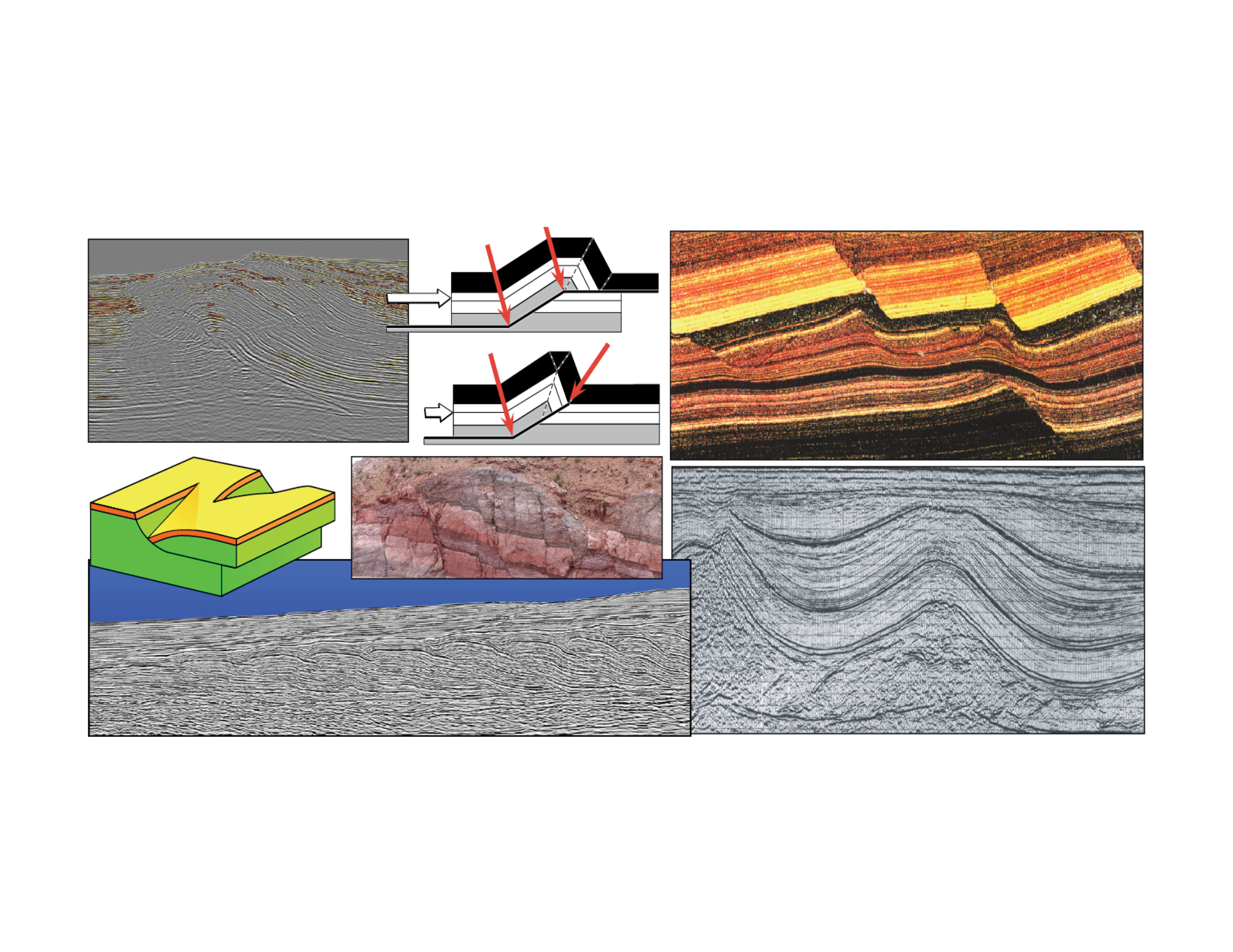
The course addresses interpretation of 2-D and 3-D seismic reflection data for unraveling the geometry and kinematic evolution of crustal structures, principally in sedimentary rocks. Topics include understanding how structures manifest themselves in seismic data and approaches to effective interpretation and kinematic analysis. Structural systems addressed include extensional, fold and thrust belts, salt tectonics and inversion. Applied topics include interpretation and analysis approaches, determination of geologic and basin history, fault system analysis, fault permeability structure and geomechanical evaluations, such as in situ stress determination and application to induced seismicity risking. Practical exercises are based on global seismic datasets and are reinforced by active in-class discussion.

Duration and Logistics

Classroom version: A 5-day classroom course, comprising a mix of lectures (40%), analysis of case studies (30%) and integrated exercises (30%). The manual will be provided in digital format and participants will be required to bring a laptop or tablet computer to follow the lectures and exercises.

Virtual version: Ten 3.5-hour interactive online sessions presented over 10 days. A digital manual and exercise materials will be distributed to participants before the course. Some reading and several exercises are to be completed by participants off-line.

Level and Audience

Fundamental. The course is intended for geoscientists who wish to strengthen their seismic interpretation and analysis skills by applying key interpretation techniques and strategies to a wide range of structural types and application goals.

Objectives

You will learn to:

  1. Understand the manifestation of 3-D structures in reflection seismic data.
  2. Develop effective structural interpretation perception – learning to think ‘kinemechanically’.
  3. Generate interpretations with geometric admissibility and kinematic compatibility.
  4. Understand imaging scale, artefacts and interpretation pitfalls.
  5. Gain experience in interpretation and analysis in all structural regimes.
  6. Understand how faults form, grow, interact, reactivate and impact fluid flow.
  7. Gain an introductory understanding of geomechanics as applied to interpretation.
  8. Become acquainted with fault stress analysis and fault seal risking.
Engineering of Resource Plays for Technical Professionals (G003)

Tutor(s)

Yucel Akkutlu: Professor, Texas A&M University.

Overview

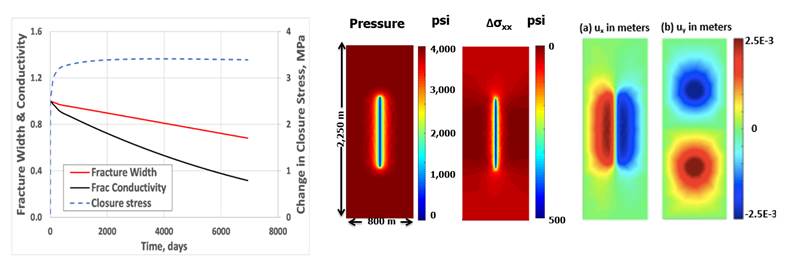
This course presents the terminology, methodology and concepts of drilling, completion and reservoir engineering as applied to unconventional resource plays, including oil-rich shales, gas shales and coal-seam gas. It will cover the latest practices as well as discuss future directions in unconventional resource engineering. Case studies are used to illustrate particular challenges presented by these plays. The environmental impacts on air and water resources are considered. Participants will learn to become more effective members of multi-disciplinary resource evaluation teams by developing a solid understanding of appropriate engineering concepts and terminology.

Duration and Logistics

Classroom version: A 3-day course comprising a mix of lectures (70%), case studies (20%) and exercises (10%). The manual will be provided in digital format and participants will be required to bring a laptop or tablet computer to follow the lectures and exercises.

Virtual version: Five 4-hour interactive online sessions presented over 5 days, including a mix of lectures (70%), case studies (20%) and exercises (10%). A digital manual and hard-copy exercise materials will be distributed to participants before the course.

Level and Audience

Intermediate. The course is designed for technical professionals and managers who want to understand the role of the engineer in resource play projects. In particular, geoscientists, petrophysicists and drilling, completion and stimulation engineers would benefit from the course.

Objectives

You will learn to:

  1. Discuss aspects of reservoir, drilling, completion and stimulation engineering with engineering members of unconventional project teams.
  2. Contrast engineering approaches to conventional and unconventional projects.
  3. Assess resource estimates, production forecasts and economic evaluations for unconventional plays.
  4. Review the sampling procedures adopted by reservoir engineers.
  5. Predict the hydrocarbon phase change in reservoirs.
  6. Assess the demand for and disposal of water associated with fracturing and producing unconventional reservoirs.
  7. Assess the impact of unconventional projects on air quality.
  8. Discuss recent advances in the optimization of resource plays.

The Transportation and Geological Storage of Hydrogen (G576)

Tutor(s)

Katriona Edlmann: Chancellor’s Fellow in Energy, The University of Edinburgh.

Overview

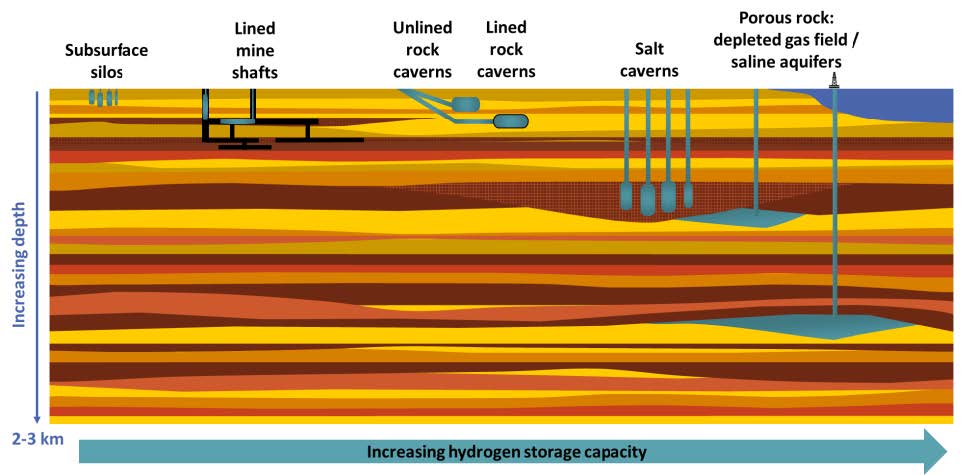
The course will focus on the need for geological storage of hydrogen, introducing the geological storage options available for the secure storage and withdrawal of hydrogen from these different geological stores. The main body of the course will explore the key considerations involved in geological hydrogen storage, including hydrogen flow processes and thermodynamics; geomechanical responses to rapid injection and withdrawal cycles; geochemical and microbial interactions during storage; and the operational considerations and monitoring of hydrogen storage sites that may impact storage integrity, withdrawal rates and hydrogen purity.

Duration and Logistics

Classroom version: A 1.5-day course comprising a mix of lectures, case studies and exercises. The manual will be provided in digital format and participants will be required to bring a laptop or tablet computer to follow the lectures and exercises.

Virtual version: Three 4-hour interactive online sessions presented over three days. Digital course notes and exercise materials will be distributed to participants before the course. Some exercises may be completed by participants off-line.

Level and Audience

Advanced. The course is largely aimed at geoscientists, but engineers will also find the course instructive. Intended for sub-surface scientists, with an emphasis on geoscience topics. Participants will probably have a working knowledge of petroleum geoscience.

Objectives

You will learn to:

  1. Describe the different geological storage options available and their capacity and spatial constraints.
  2. Understand hydrogen as a fluid in the subsurface, including its thermodynamic and transport properties.
  3. Characterize the geomechanical considerations for storage integrity and associated risks, including caprock sealing considerations.
  4. Appreciate the impact of geochemical and microbial interactions in subsurface hydrogen stores and the relevant monitoring and management tools.
  5. Describe the operational engineering considerations and monitoring of hydrogen storage sites.

Geochemical effects of CO2 on Reservoir, Seals and Engineered Environments during CCS (G544)

Tutor(s)

Richard Worden: Professor in the Department of Earth Ocean and Ecological Sciences, University of Liverpool, UK.

Overview

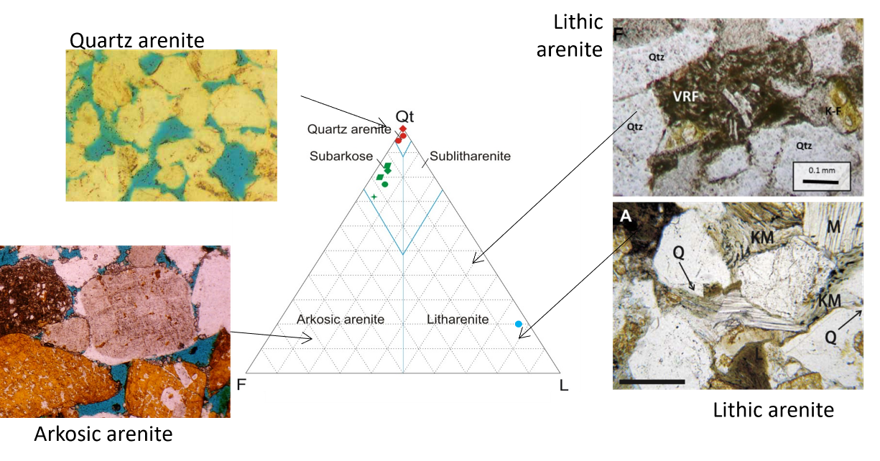
The geochemistry of saline aquifers, depleted oil/gas fields in the context of CO2, and other waste gas, injection is considered. The reactions of CO2 with different reservoir rocks and top-seals, and their constituent minerals, and the cement and metal work used in the construction of wells are central to this course. The course includes reference to numerous CCS and CO2-EOR case studies, CCS-pilot sites, experiments, geochemical modelling, reaction-transport modelling, monitoring of CCS sites, microbiological processes in CCS systems, and the risk of halite scale formation.

Duration and Logistics

Classroom version: A 3-day course comprising a mix of lectures, case studies and exercises. The manual will be provided in digital format, and participants will be required to bring a laptop or tablet computer to follow the lectures and exercises.

Virtual version: Five 3.5-hour interactive online sessions presented over 5 days. Digital course notes and exercise materials will be distributed to participants before the course. Exercises will be used throughout the course; these will include calculations, largely based on spreadsheets. Quizzes will be used to test knowledge development.

Level and Audience

Advanced. The course is largely aimed at specialist geoscientists, but petroleum engineers and petrophysicists who are working on, or plan to work on, CCS projects will also find the course instructive. A foundation knowledge of geochemistry is assumed.

Objectives

You will learn to:

  1. Appraise the types and sources of information needed to define geochemical aspects of CCS sites.
  2. Evaluate the role of CO2 pressure in influencing reactions at CCS sites.
  3. Assess the information that can be gathered from natural analogues of CCS projects.
  4. Evaluate the role of composition of the injected gas (role of contaminants) in influencing reactions at CCS sites.
  5. Gauge the role of water composition in influencing reactions at CCS sites.
  6. Characterize the role of mineral composition (rock type) in influencing reactions at CCS sites.
  7. Manage examples of mineral dissolution in CCS systems.
  8. Predict possible examples of mineral precipitation in CCS systems.
  9. Gauge CO2 interaction with cements and pipes used in well completions.
  10. Assess how experimental simulation, geochemical reaction modelling and reaction transport modelling can help predict if dissolution or precipitation will occur.
  11. Validate the links between geochemical processes and geomechanical and petrophysical properties in CCS systems.
  12. Use geochemical tracers to track process in CCS systems.
  13. Characterize the microbiological processes that may occur at CCS sites.
  14. Predict the geochemical formation damage in CCS.
  15. Quantify the role of CCS in basalt hosts in comparison to sedimentary hosts.

The Hydrogen Landscape: Production, Policy and Regulation (G575)

Tutor(s)

Katriona Edlmann: Chancellor’s Fellow in Energy, The University of Edinburgh.

Overview

Future energy scenarios foresee a prominent and growing role for hydrogen. Demand is likely to rapidly exceed the capacity of typical above-ground energy storage technologies, necessitating the need for the geological storage of hydrogen in engineered hard rock caverns, solution mined salt caverns, depleted gas fields and saline aquifers. This course will provide participants with an overview of the current hydrogen landscape, including its likely role in the energy transition, production and economic challenges.

Duration and Logistics

Classroom version: A 1-day course comprising a mix of lectures, case studies and exercises. The manual will be provided in digital format and participants will be required to bring a laptop or tablet computer to follow the lectures and exercises.

Virtual version: Two 4-hour interactive online sessions presented over two days. Digital course notes and exercise materials will be distributed to participants before the course. Some exercises may be completed by participants off-line.

Level and Audience

Fundamental. Intended for subsurface scientists involved in hydrogen projects.

Objectives

You will learn to:

  1. Appreciate the role of geoscience in the hydrogen economy and the contribution hydrogen can make to the energy transition in support of Net Zero emission targets.
  2. Describe the different processes involved in hydrogen production and the associated lifecycle carbon intensity of this production.
  3. Recall details of the developing hydrogen supply chains, including infrastructure considerations, distribution networks and pathways for market growth.

Seals, Containment and Risk for CCS and Hydrogen Storage (G570)

Tutor(s)

Richard Swarbrick: Manager, Swarbrick GeoPressure.

Overview

This course examines the nature and properties of seals as they relate to containment for permanent storage of CO2 and cyclical storage of hydrogen and/or compressed air. The course will provide a grounding in the geomechanics of seals and how seals and their properties are created in the subsurface. While most data and analysis relating to seals has been acquired from and applied to the containment of oil and gas, this course will show how such data can be applied to CCS and gas storage. Particular attention will be given to the different sealing requirements of CO2 and hydrogen relative to oil/gas and water.

Duration and Logistics

Classroom version: A 3-day course comprising a mix of lectures, case studies and exercises. The manual will be provided in digital format and participants will be required to bring a laptop or tablet computer to follow the lectures and exercises.

Virtual version: Five 3.5-hour interactive online sessions presented over 3 to 5 days comprising a mix of lectures and exercises. The course manual will be provided in digital format.

Level and Audience

Advanced. This course is aimed at geoscientists and engineers working in energy transition with responsibility for projects to assess and manage gas storage

Objectives

You will learn to:

  1. Evaluate the nature of containment seals and their properties in the deep earth (>1km/0.62 miles below surface).
  2. Apply knowledge of seal integrity to estimates of column heights and associated storage volumes.
  3. Assess the concepts of seal integrity and how to predict risk of seal breach/failure.
  4. Appraise current knowledge of seal behaviour using case studies.
  5. Manage the requirements for permanent CO2 storage using CCS versus short-term/cyclic storage for hydrogen air.
  6. Characterize data requirements and limitations to assess seal integrity and risk (data sourced mainly from oil/gas boreholes).
  7. Evaluate different trapping requirements for gas storage (currently data-poor) relative to oil/gas (historically data-rich).
  8. How geochemical fluid-rock reactivity may impact seals to gas storage over time.

Carbon Capture and Storage Value Chain: Network Design and Operational Technologies (G571)

Tutor(s)

Matthew Healey: Managing Director, PACE CCS.

Overview

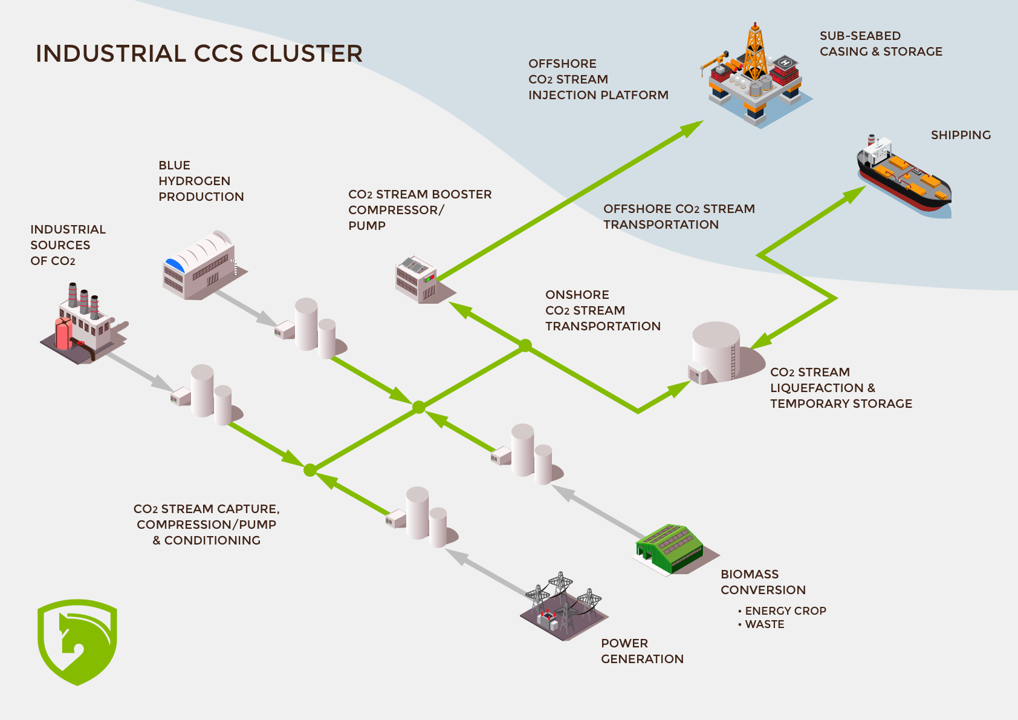
This course is designed to provide awareness of the design and operation of CCS systems. Participants will gain knowledge and understanding of technical issues (flow assurance, process, safety, etc.) encountered in the design and operation of whole-chain CCS systems.

Duration and Logistics

Classroom version: A 2-day in-person classroom course. An electronic copy of the manual will be provided by the tutor at the end of the course.

Virtual version: Four 3.5-hour interactive online sessions presented over 4 days, including a mix of lectures and discussion. The course manual will be provided in digital format.

Level and Audience

Advanced. This course is suitable for all technical staff engaged in carbon capture and storage with an emphasis on the operations, facilities and engineering side of the business. Project managers and engineers will also find many aspects of the course useful.

Objectives

You will learn to:

  1. Compare the primary CO2 capture technologies.
  2. Review the fundamental subsurface geoscience aspects of CCS, including reservoirs, leakage and monitoring.
  3. Establish how CO2 can be transported safely and efficiently via ship and pipeline.
  4. Assess the thermodynamic behavior of CO2 including the impact of impurities in CO2 streams.
  5. Describe the operating philosophy and modes of CO2 transport networks, both single and multiphase.
  6. Outline the design specifications of CCS networks with a focus on pipelines.
  7. Manage safety and technical risk, including using a consequence-based risk assessment for CCS.
  8. Evaluate the thermal-hydraulic modelling of CO2 transport networks with a focus on best practices.
  9. Analyze the shipping options for CO2, including port to port or port to storage.
  10. Characterize CCS metering and associated technologies.

Induced Seismicity in Geothermal Fields (G568)

Tutor(s)

Emmanuel Gaucher: Senior Research Geophysicist, Geothermal Energy and Reservoir Technology, Karlsruhe Institute of Technology.

Overview

This course covers fundamental and practical aspects associated with induced seismicity in deep geothermal fields. A refresher of the most relevant rock mechanics and seismological aspects will be followed by a review of the main observations and modelling approaches. Monitoring concepts for risk mitigation or reservoir imaging will also be presented.

Duration and Logistics

Classroom version: A 2-day course comprising a mix of lectures, case studies and exercises. The manual will be provided in digital format and participants will be required to bring a laptop or tablet computer to follow the lectures and exercises.

Virtual version: Four 3.5-hour interactive online sessions presented over 4 days. A digital manual will be distributed to participants before the course. This course will also contain practical exercises to reinforce key learnings. (In the virtual sessions, individual simplified questions will be asked; for a classroom version of the course, attendees will work in small groups.)

Level and Audience

Intermediate. The course is intended for geoscientists wishing to learn what seismicity in geothermal fields is, how it is induced and how we could mitigate it while using it for imaging purposes. Geoscientists from the oil and gas industry sensitive to hydrofrac operations can also join to understand differences.

Objectives

You will learn to:

  1. Assess induced seismicity characteristics to gain critical information, such as location, magnitude and fault plane solutions.
  2. Evaluate the pros and cons of the methods used to determine seismic information.
  3. Design the main features of a seismic monitoring network for specific monitoring objectives within a given geological context.
  4. Propose appropriate sensor deployment type(s), data management procedures and processing sequence.
  5. Identify the main drivers for induced seismicity in a geothermal field.
  6. Predict likely operations that could induce seismicity according to subsurface properties and structures, and identify the most critical ones.
  7. Propose appropriate mitigation approaches taking account of the subsurface characteristics and operations proposed.

Carbon Capture and Storage: Legal, Regulatory, Finance and Public Acceptance Aspects (G566)

Tutor(s)

Mike Stephenson: Director, Stephenson Geoscience Consultancy Ltd.

Overview

Carbon Capture and Storage (CCS) is a new technology that has a vital place within global efforts to decarbonise. It has a unique set of challenges, opportunities and risks to be understood and accommodated within appropriate legal, regulatory, and social and public licence frameworks. The course will provide up to date and relevant information to help in understanding opportunities and in managing risk. The course will cover: the role of CCS within a decarbonised energy system; risks of capture, transport and storage; aspects of monitoring; the importance of test and demonstration sites; legal and regulatory; finance; and public acceptance and social licence.

Duration and Logistics

Classroom version: A 1-day course comprising a mix of lectures, case studies and exercises. The manual will be provided in digital format and participants will be required to bring a laptop or tablet computer to follow the lectures and exercises.

Virtual version: Two 3.5-hour interactive online sessions presented over 2 days. A digital manual will be distributed to participants before the course, which will be a mix of lectures and exercises.

Level and Audience

Fundamental. This course will cater for in-company legal specialists, project managers, marketing and communications specialists; as well as planners and environmental scientists in regulatory roles in regions considering the development of CCS.

Objectives

You will learn to:

  1. Understand the place of CCS within a decarbonized energy system.
  2. Demonstrate the basics of the science and risk in capture, transport and storage.
  3. Illustrate the role of monitoring and MMV (Measurement, Monitoring and Verification).
  4. Examine how legal and regulatory frameworks respond to the challenges of CCS.
  5. Establish how CCS could be financed.
  6. Relate to and understand public opinion and social licence in relation to CCS.

Geomodelling for CO2 Storage (G560)

Tutor(s)

Matthew Jackson: Chair in Geological Fluid Dynamics, Imperial College London.

Overview

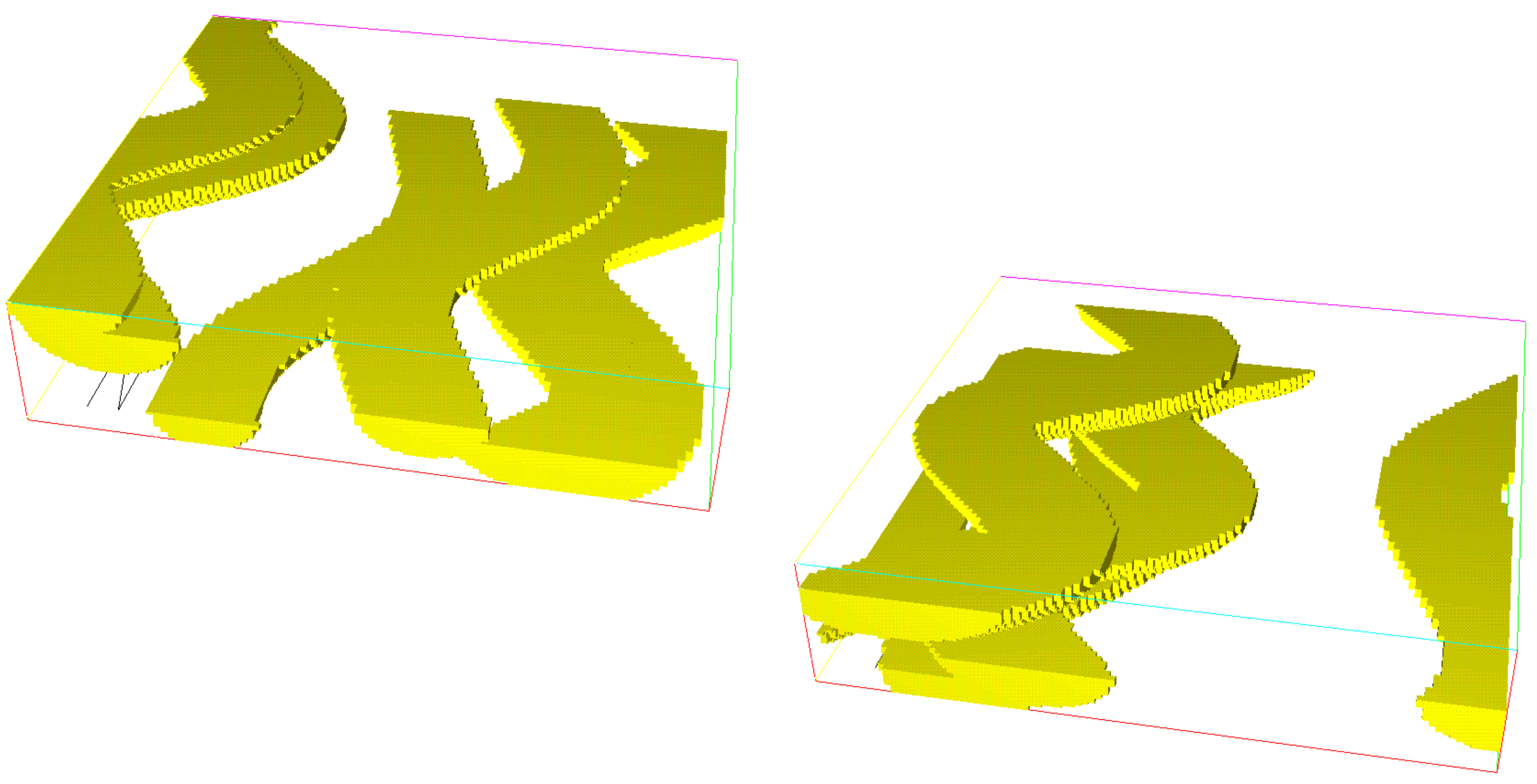
This course provides an overview of all subsurface aspects of geomodelling relevant to CO2 storage. The course includes an introduction to the principles and practice of geomodelling; reservoir characterization for CO2 storage, including geological, geophysical and petrophysical considerations; methods used to produce 3-D geomodels; approaches to uncertainty characterization and quantification; and an overview of available software tools. The course does not provide hands-on training in these software tools, but rather provides the background understanding for software tool selection and associated training from vendor(s). The concepts and methods are illustrated using numerous practical examples of geomodelling studies.

Duration and Logistics

Classroom version: A 3-day course comprising a mix of lectures, case studies and exercises. The manual will be provided in digital format and participants will be required to bring a laptop or tablet computer to follow the lectures and exercises.

Virtual version: Five 3.5-hour interactive online sessions presented over 5 days. A digital manual and exercise materials will be distributed to participants before the course. Some reading and exercises are to be completed by participants off-line.

Level and Audience

Advanced. The course is intended for professionals with experience of, or background in, a related subsurface geoscience area and those directly working on CO2 storage projects.

Objectives

You will learn to:

  1. Characterize the underlying aims and concepts of ‘fit for purpose’ reservoir geomodelling.
  2. Prepare different types and associated applications of geomodels for CO2 storage.
  3. Validate reservoir characterization data for CO2 storage, including geology, geophysics and petrophysics.
  4. Assess methods for quantitative 3-D geomodel construction, including advantages and disadvantages of each.
  5. Manage performance metrics for geomodels.
  6. Appraise the importance of, and methods for, quantitative uncertainty assessment.
  7. Rate the different software tools used for geomodelling.
  8. Evaluate practical examples of geomodelling for CO2 storage.