World-class training for the modern energy industry

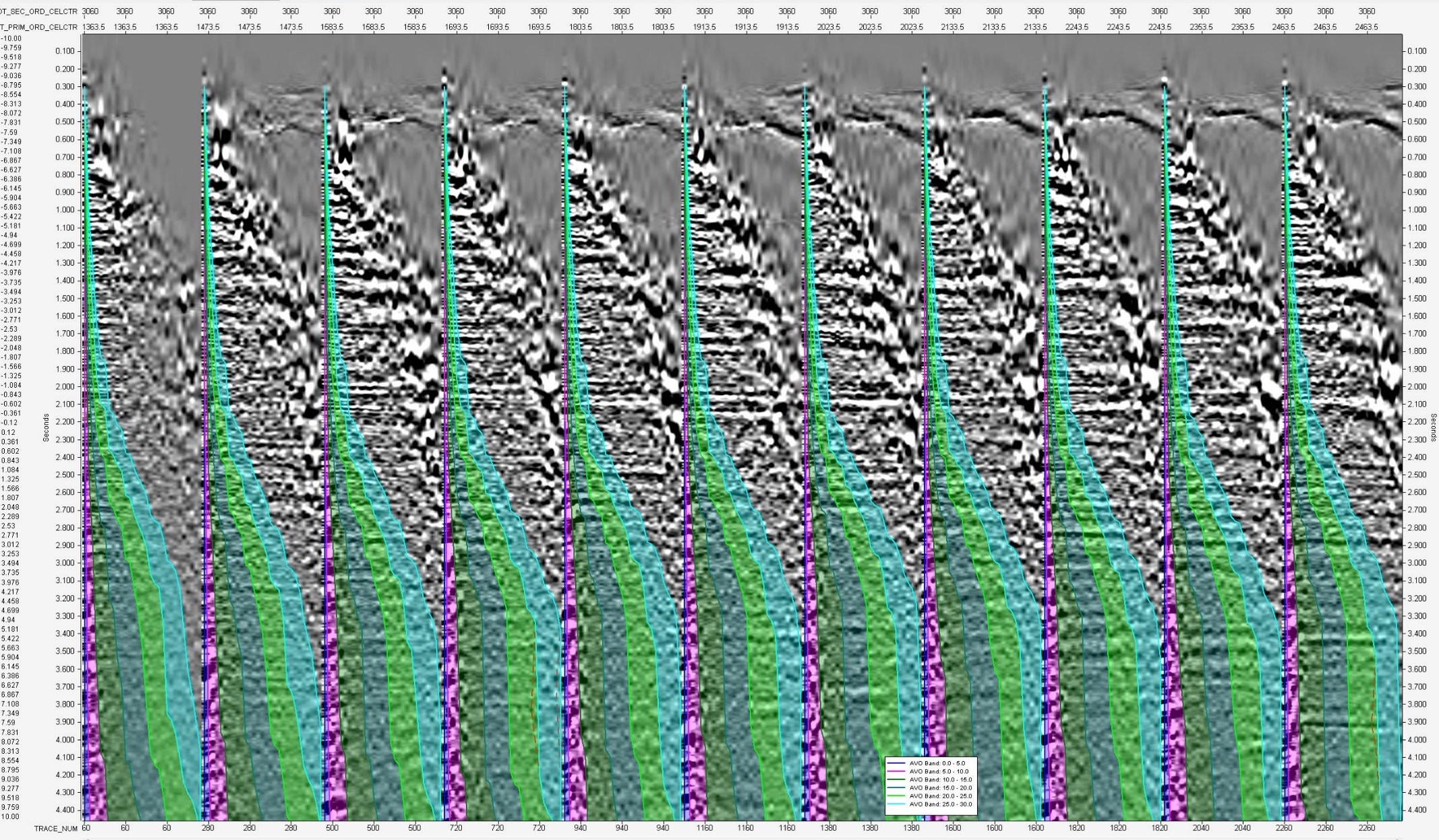
Seismic Processing Workflows (G072)

Tutor(s)

Rob Hardy: Director, Tonnta Energy Limited.

Overview

This course will provide participants with the skills needed to liaise with specialists and implement workflows for seismic data acquisition and processing. Using modern case histories and basic theory, the course covers fundamentals, established workflows and advanced technology. Participants will use interactive processing tools to improve their understanding of the latest techniques and learn how to apply them effectively and efficiently to meet their objectives.

Duration and Logistics

Classroom version: A 3-day in-person course, comprising a mix of lectures with examples (90%), laptop-based exercises and discussion (10%). The manual will be provided in digital format and participants will be required to bring a laptop or tablet computer to follow the lectures and exercises.

Virtual version: Six 3-hour interactive online sessions presented over 6 days, comprising a mix of lectures, discussion and interactive exercises using case histories to illustrate the basic theory and impact of the techniques discussed. The participants will use a series of web-based software modules to experience the processing options available and learn how to combine the basic tools together to build a flow which meets objectives. A digital manual and exercise materials will be distributed to participants before the course. Some reading and several exercises are to be completed by participants off-line.

Level and Audience

Intermediate. This course is aimed at geoscientists seeking an overview of seismic acquisition techniques and processing methods, and those who wish to liaise effectively with specialists to improve their decision making and deliver objectives. A geophysics refresher is provided but it is helpful if participants have a basic knowledge of seismic acquisition and processing terminology and are actively working with seismic data.

Objectives

You will learn to:

  1. Compare the most common seismic acquisition and processing techniques used in seismic exploration and production, and become more proficient in the terminology used to describe them.
  2. Establish how survey design, earth model building and selection of migration algorithm can affect accuracy of interpretation in depth.
  3. Optimize the impact of seismic processing parameter selection for specific objectives such as amplitude interpretation for exploration and reservoir characterization.
  4. Demonstrate a typical seismic processing workflow covering data preparation, parameterization, noise and multiple suppression, velocity model building, and the imaging process, discussing likely issues at each step.
  5. Compare newer acquisition and processing techniques alongside their potential benefits and pitfalls.
  6. Liaise effectively with specialists, develop workflows and optimize decisions based on quality and cost.

Modern and Ancient Tide- and Wave-influenced Depositional Systems: Subsurface Uncertainties in Shallow Marine Reservoirs, SE England, UK (G070)

Tutor(s)

Howard Johnson: Shell Professor of Petroleum Geology, Head of the Petroleum Geoscience and Engineering Section, and Director of Petroleum Geoscience, Imperial College London.

Overview

Tide- and wave-influenced marginal marine hydrocarbon reservoirs offer a range of subsurface interpretation and development challenges. This course will use both modern and ancient systems to analyze the architecture, internal characteristics, distribution and reservoir quality of a variety of sand-dominated deposits. Modern deposits of the North Norfolk coastline will be used to explore the range of depositional processes operating and the resultant spatial distribution and internal attributes of potential reservoir units. These will be compared with Lower Cretaceous outcrops preserving a range of tidal-influenced and marine embayment deposits. Focus will be placed on the key development challenges in these marginal marine clastic systems.

Duration and Logistics

A 5-day field course comprising a mix of fieldwork, classroom lectures and practical sessions. Classroom learning and field observations will be supported and reinforced by exercise work. The course will be based in Hunstanton with easy access to the coastal field area. Transport will be by coach.

Level and Audience

Intermediate. The course is intended for geologists and reservoir engineers with a knowledge of petroleum geoscience who are working on marginal marine reservoir systems, particularly those preserving evidence of tidal influence.

Exertion Level

This field course requires an EASY exertion level. The first field day is in a quarry at Leighton Buzzard and involves a walk of about 2km (1.25 miles) to the main quarry face. The remaining field locations on the Norfolk coast are accessed by walks of less than 3.5km (2 miles) along flat sandy beaches and tidal channels that may be muddy and slippery in parts.

Objectives

You will learn to:

  1. Interpret the depositional processes and environments that occur in fluvial-, tide- and wave-influenced clastic coastal depositional systems and relate these to the recognition of their ancient equivalents.
  2. Relate individual modern environmental systems to the larger regional-scale, including modern and ancient marine embayment and coastal barrier systems.
  3. Consider the range of geological controls on the reservoir architecture of clastic coastal deposits and relate this understanding to prediction of reservoir sand presence, geometry and rock properties.
  4. Analyze shallow marine sands in outcrop, with particular focus on internal heterogeneity, including potential permeability barriers and baffles.
  5. Assess the broader scale outcrop setting, in terms of the basinal depositional framework and use this understanding to inform prediction of reservoir distribution.
  6. Place clastic coastal depositional systems into their sequence stratigraphic significance, including addressing reservoir occurrence in transgressive and regressive settings.
  7. Use the modern and ancient examples discussed in the classroom and observed in the field to consider implications for exploration and development, particularly with regards to the subsurface reservoirs of the North Sea.

Progressive Deformation in the Arbuckle and Wichita Mountains: Implications for Mid-Continent and Resource Plays, Oklahoma (G083)

Tutor(s)

Kevin Smart: Manager, Earth Science Section, Space Science and Engineering Division, Southwest Research Institute.

David Ferrill: Institute Scientist, Space Science and Engineering Division, Southwest Research Institute.

Overview

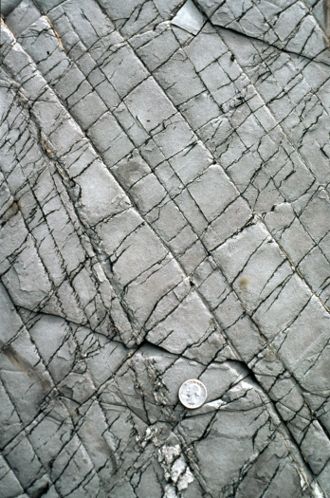
This field seminar will explore natural deformation in Paleozoic rocks in and around the Wichita and Arbuckle uplifts in southern Oklahoma. Investigating mechanical stratigraphy and the regional tectonic setting provides the context for understanding deformation features, such as joints, shear fractures, folds, faults and stylolites. Outcrop observations will be tied to the deformation conditions under which they developed, and related to the subsurface (cores, logs and stress data), to illustrate the critical importance of understanding deformation in the subsurface, including both pre-existing natural deformation and as analogs for deformation produced by induced hydraulic fracturing.

Duration and Logistics

A 5-day field course, comprising a mix of field exercises (85%) and classroom work (15%). The course will start in Lawton, Oklahoma, and end near Ardmore, Oklahoma.

Level and Audience

Intermediate. The course is aimed at geoscientists, petrophysicists, reservoir engineers and production engineers working in mechanically layered, deformed rocks in Oklahoma or other relatively gently deformed sedimentary foreland basins. It will be of particular interest to any geoscientists, petrophysicists and engineers working in unconventional reservoirs, including those in the Anadarko Basin.

Exertion Level

This course requires an EASY exertion level. Fieldwork is in southern Oklahoma, where the climate can be variable according to the season. Transportation is by SUVs. Most driving is on black-top roads, and most outcrops are adjacent to roads or within inactive quarries with uneven ground, where long strenuous hikes are not needed to access the exposures.

Objectives

You will learn to:

  1. Identify small-scale deformation features that are common in the SCOOP/STACK plays of the Anadarko basin and other unconventional reservoirs.
  2. Interpret stress conditions and stress evolution from small-scale deformation features.
  3. Characterize mechanical stratigraphy based on lithostratigraphy and rock strength information.
  4. Relate deformation styles to the tectonic setting of southern Oklahoma.
  5. Assess the role of mechanical stratigraphy, stress conditions and pre-existing deformation features on rock behavior, including fracture prediction in unconventional and conventional reservoirs.
  6. Consider, in general terms, the behavior of lithological units under different well completion strategies.
  7. Evaluate geomechanical issues for common petroleum and unconventional resource applications such as well design, borehole stability and hydraulic fracturing.

Salt Tectonics of the Gulf of Mexico (G092)

Tutor(s)

Mark Rowan: President, Rowan Consulting, Inc.

Overview

The objective of this 3-day course is to provide geoscientists with a detailed explanation of those aspects of salt tectonics applicable to the northern and southern Gulf of Mexico (GoM) salt basins. It consists primarily of lectures, with examples from the GoM and other basins, that are supplemented by practical exercises. The emphasis is on fundamental mechanics and processes, structural geometries and evolution, salt-sediment interaction and the implications for hydrocarbon exploration and production.

Duration and Logistics

A 3-day in-person classroom course, comprising a mix of lectures (75%) and seismic exercises (25%). The manual will be provided in digital format and participants will be required to bring a laptop or tablet computer to follow the lectures and exercises.

Level and Audience

Intermediate. The course is intended for geoscientists working the Gulf of Mexico and is also applicable to salt basins around the world.

Objectives

You will learn to:

  1. Understand the implications of layered-evaporite sequences for velocity-model building and seismic interpretation.
  2. Describe how halite differs from other lithologies and how that impacts deformation in salt basins.
  3. Characterize the ways in which extension, contraction and differential loading trigger salt flow and diapir initiation / growth.
  4. Interpret typical salt and stratal geometries associated with salt evacuation and diapirism.
  5. Predict how drape folding around passive diapirs impacts stratal geometries, faulting and reservoir distribution in diapir-flank traps.
  6. Understand why and how allochthonous salt forms and how salt sheets / canopies evolve.
  7. Assess the effects of salt on various aspects of the petroleum system, including trap formation, reservoir presence, hydrocarbon maturation and migration and seal.

Trap and Seal Analysis: Theory and Application (G090)

Tutor(s)

Russell Davies: Director, Redlands Fault Geological Consulting LLC.

Overview

This course introduces the concepts and methods in trap and seal analysis, particularly in relation to fault characterization, including fault mapping and fault seal, as applied to cross-fault flow resistance in traps for hydrocarbons and carbon containment in subsurface reservoirs. The course additionally includes the analysis of caprock (top seal) for predicting seal capacity and evaluating risks associated with capillary and mechanical controls. Overall, the course emphasizes the importance of an integrated approach to trap and seal analysis in subsurface reservoirs. The lectures introduce fundamentals and advanced concepts for faulting and flow for the prediction of fault behavior in subsurface traps and the concepts discussed are applied in simple exercises to reinforce learning.

Duration and Logistics

Classroom version: A 4-day classroom course, comprising a mix of lectures (65%) and hands-on exercises (35%). The manual will be provided in digital format and participants will be required to bring a laptop or tablet computer to follow the lectures and exercises.

Virtual version: Five 4-hour interactive online sessions presented over five days. Digital course notes and exercise materials will be distributed to participants before the course. Some exercises may be completed by participants off-line.

Level and Audience

Intermediate. The course is intended for geoscientists (geologists and geophysicists) and petroleum engineers, so they can apply these principles in their subsurface projects.

Objectives

You will learn to:

  1. Analyze fault geometries and architecture, apply this knowledge to make robust fault interpretations.
  2. Assess fault rock types and properties and likely impacts on fluid flow across and along faults.
  3. Conduct juxtaposition seal analysis and employ triangle diagrams.
  4. Apply algorithms, such as SGR and CSF, for predicting clay contents across faults.
  5. Assess the relationship between threshold pressure and fault seal capacity against the clay content predicted across fault surfaces.
  6. Characterize faults as potential migration and leakage pathways.
  7. Evaluate the geomechanical and capillary properties of top seal units.

Engineering of Resource Plays for Technical Professionals (G003)

Tutor(s)

Yucel Akkutlu: Professor, Texas A&M University.

Overview

This course presents the terminology, methodology and concepts of drilling, completion and reservoir engineering as applied to unconventional resource plays, including oil-rich shales, gas shales and coal-seam gas. It will cover the latest practices as well as discuss future directions in unconventional resource engineering. Case studies are used to illustrate particular challenges presented by these plays. The environmental impacts on air and water resources are considered. Participants will learn to become more effective members of multi-disciplinary resource evaluation teams by developing a solid understanding of appropriate engineering concepts and terminology.

Duration and Logistics

Classroom version: A 3-day course comprising a mix of lectures (70%), case studies (20%) and exercises (10%). The manual will be provided in digital format and participants will be required to bring a laptop or tablet computer to follow the lectures and exercises.

Virtual version: Five 4-hour interactive online sessions presented over 5 days, including a mix of lectures (70%), case studies (20%) and exercises (10%). A digital manual and hard-copy exercise materials will be distributed to participants before the course.

Level and Audience

Intermediate. The course is designed for technical professionals and managers who want to understand the role of the engineer in resource play projects. In particular, geoscientists, petrophysicists and drilling, completion and stimulation engineers would benefit from the course.

Objectives

You will learn to:

  1. Discuss aspects of reservoir, drilling, completion and stimulation engineering with engineering members of unconventional project teams.
  2. Contrast engineering approaches to conventional and unconventional projects.
  3. Assess resource estimates, production forecasts and economic evaluations for unconventional plays.
  4. Review the sampling procedures adopted by reservoir engineers.
  5. Predict the hydrocarbon phase change in reservoirs.
  6. Assess the demand for and disposal of water associated with fracturing and producing unconventional reservoirs.
  7. Assess the impact of unconventional projects on air quality.
  8. Discuss recent advances in the optimization of resource plays.

Induced Seismicity in Geothermal Fields (G568)

Tutor(s)

Emmanuel Gaucher: Senior Research Geophysicist, Geothermal Energy and Reservoir Technology, Karlsruhe Institute of Technology.

Overview

This course covers fundamental and practical aspects associated with induced seismicity in deep geothermal fields. A refresher of the most relevant rock mechanics and seismological aspects will be followed by a review of the main observations and modelling approaches. Monitoring concepts for risk mitigation or reservoir imaging will also be presented.

Duration and Logistics

Classroom version: A 2-day course comprising a mix of lectures, case studies and exercises. The manual will be provided in digital format and participants will be required to bring a laptop or tablet computer to follow the lectures and exercises.

Virtual version: Four 3.5-hour interactive online sessions presented over 4 days. A digital manual will be distributed to participants before the course. This course will also contain practical exercises to reinforce key learnings. (In the virtual sessions, individual simplified questions will be asked; for a classroom version of the course, attendees will work in small groups.)

Level and Audience

Intermediate. The course is intended for geoscientists wishing to learn what seismicity in geothermal fields is, how it is induced and how we could mitigate it while using it for imaging purposes. Geoscientists from the oil and gas industry sensitive to hydrofrac operations can also join to understand differences.

Objectives

You will learn to:

  1. Assess induced seismicity characteristics to gain critical information, such as location, magnitude and fault plane solutions.
  2. Evaluate the pros and cons of the methods used to determine seismic information.
  3. Design the main features of a seismic monitoring network for specific monitoring objectives within a given geological context.
  4. Propose appropriate sensor deployment type(s), data management procedures and processing sequence.
  5. Identify the main drivers for induced seismicity in a geothermal field.
  6. Predict likely operations that could induce seismicity according to subsurface properties and structures, and identify the most critical ones.
  7. Propose appropriate mitigation approaches taking account of the subsurface characteristics and operations proposed.

Reservoir Characterization for Carbon Capture and Underground Storage, Devon and Dorset, UK (G556)

Tutor(s)

Gary Hampson: Professor of Sedimentary Geology, Imperial College London.

Matthew Jackson: Chair in Geological Fluid Dynamics, Imperial College London.

Overview

This course provides a field-based overview of reservoir characterization relevant to carbon capture and underground storage (CCS) and focuses on widely exploited reservoir depositional environments and their associated heterogeneity. The course links geological heterogeneity observed in well-exposed outcrop analogues with flow and transport processes during CO2 injection and plume migration, and also discusses the characterization and modelling of heterogeneity using typical subsurface datasets. The concepts are illustrated using numerous practical examples.

Duration and Logistics

A 5-day field course with a combination of field activities and exercises, plus classroom sessions. A manual and exercise materials will be distributed to participants on the course. Transport is by small coach.

Level and Audience

Intermediate. The course is intended for professionals with experience of, or background in, a related subsurface geoscience area, and / or recent graduates in a relevant topic.

Exertion Level

This class requires an EASY exertion level. Field locations are mainly accessed by hikes of 1–2km (roughly 1 mile) across some irregular terrain, including sandy beaches, coastal paths and pebbly / rocky beaches.

Objectives

You will learn to:

  1. Describe and explain types of geological heterogeneity associated with reservoirs, storage units and aquifers developed in common depositional environments.
  2. Evaluate how these heterogeneities can be characterized and quantified in the subsurface and represented in static and dynamic reservoir models.
  3. Consider the impact of these heterogeneities on fluid flow and transport in the context of CO2 storage.
  4. Understand reservoir characterization requirements for the prediction of CCS.

Hydrogen Masterclass: Production, Geological Storage and Operational Engineering (G552)

Tutor(s)

Katriona Edlmann: Chancellor’s Fellow in Energy, The University of Edinburgh.

Overview

Future energy scenarios foresee a prominent and growing role for hydrogen. Demand is likely to rapidly exceed the capacity of typical above-ground energy storage technologies, necessitating the need for the geological storage of hydrogen in engineered hard rock caverns, solution mined salt caverns, depleted gas fields and saline aquifers. This course will firstly provide participants with an overview of the current hydrogen landscape, including its likely role in the energy transition, production and economic challenges. The course will then focus on the need for geological storage, introducing the geological storage options available for the secure storage and withdrawal of hydrogen from these different geological stores. The main body of the course will then explore the key considerations involved in geological hydrogen storage including hydrogen flow processes and thermodynamics, geomechanical responses to rapid injection and withdrawal cycles, geochemical and microbial interactions during storage, and the operational considerations and monitoring of hydrogen storage sites that may impact storage integrity, withdrawal rates and hydrogen purity.

Duration and Logistics

Classroom version: A 3-day course comprising a mix of lectures, case studies and exercises. The manual will be provided in digital format and participants will be required to bring a laptop or tablet computer to follow the lectures and exercises. 

Virtual version: Five 4-hour interactive online sessions presented over 5 days. Digital course notes and exercise materials will be distributed to participants before the course. Some exercises may be completed by participants off-line.

Level and Audience

Intermediate. The course is largely aimed at geoscientists, but engineers will also find the course instructive. Intended for sub-surface scientists, with an emphasis on geoscience topics. Participants will probably have a working knowledge of petroleum geoscience. However, the main subject matter of this course, the geoscience of hydrogen production and storage, is covered from basic principles.

Objectives

You will learn to:

  1. Appreciate the role of geoscience in the hydrogen economy and the contribution hydrogen can make to the energy transition in support of Net Zero emission targets.
  2. Describe the different processes involved with hydrogen production and the associated lifecycle carbon intensity of this production.
  3. Recall details of the developing hydrogen supply chains, including infrastructure considerations, distribution networks and pathways for market growth.
  4. Describe the different geological storage options available and their capacity and spatial constraints.
  5. Understand hydrogen as a fluid in the subsurface, including its thermodynamic and transport properties.
  6. Characterize the geomechanical considerations for storage integrity and associated risks, including caprock sealing considerations.
  7. Appreciate the impact of geochemical and microbial interactions in subsurface hydrogen stores and the relevant monitoring and management tools.
  8. Describe the operational engineering considerations and monitoring of hydrogen storage sites.

Systems to Classify, Categorise and Report Geological CO2 Storage Capacity (G542)

Tutor(s)

Bob Harrison: Director, Sustainable Ideas Ltd.

Overview

While large scale carbon capture and storage (CCS) implementation continues to be debated, when it happens, a subsurface carbon storage management system will be needed. Such a framework must be capable of describing objective estimates of CO2 storage with respect to quantity and quality of available data, give a range of uncertainty in the estimation and provide injection project status from cradle to grave. This course reviews the subsurface carbon storage frameworks that are currently on offer worldwide.

Duration and Logistics

Classroom version: A 1.5-day course comprising a mix of lectures, case studies and exercises. The manual will be provided in digital format and participants will be required to bring a laptop or tablet computer to follow the lectures and exercises.

Virtual version: Three 3.5-hour interactive online sessions presented over 3 days. Digital course notes and exercise materials will be distributed to participants before the course.

Level and Audience

Intermediate. The course is intended for energy industry professionals, government regulatory bodies and energy sector investors.

Objectives

You will learn to:

  1. Appreciate the requirement for an auditable carbon storage reporting system.
  2. Gain familiarity with the different systems to report geologic carbon sequestration.
  3. Understand the pros and cons and limitations of the reporting systems on offer.
  4. Appreciate the key uncertainties in storage capacity estimates and how they may alter over time with increasing knowledge and experience.
  5. Be aware of bias in reporting and how to mitigate against it.
  6. Understand the need for appropriate ‘project boundaries’ to allow project comparison.